

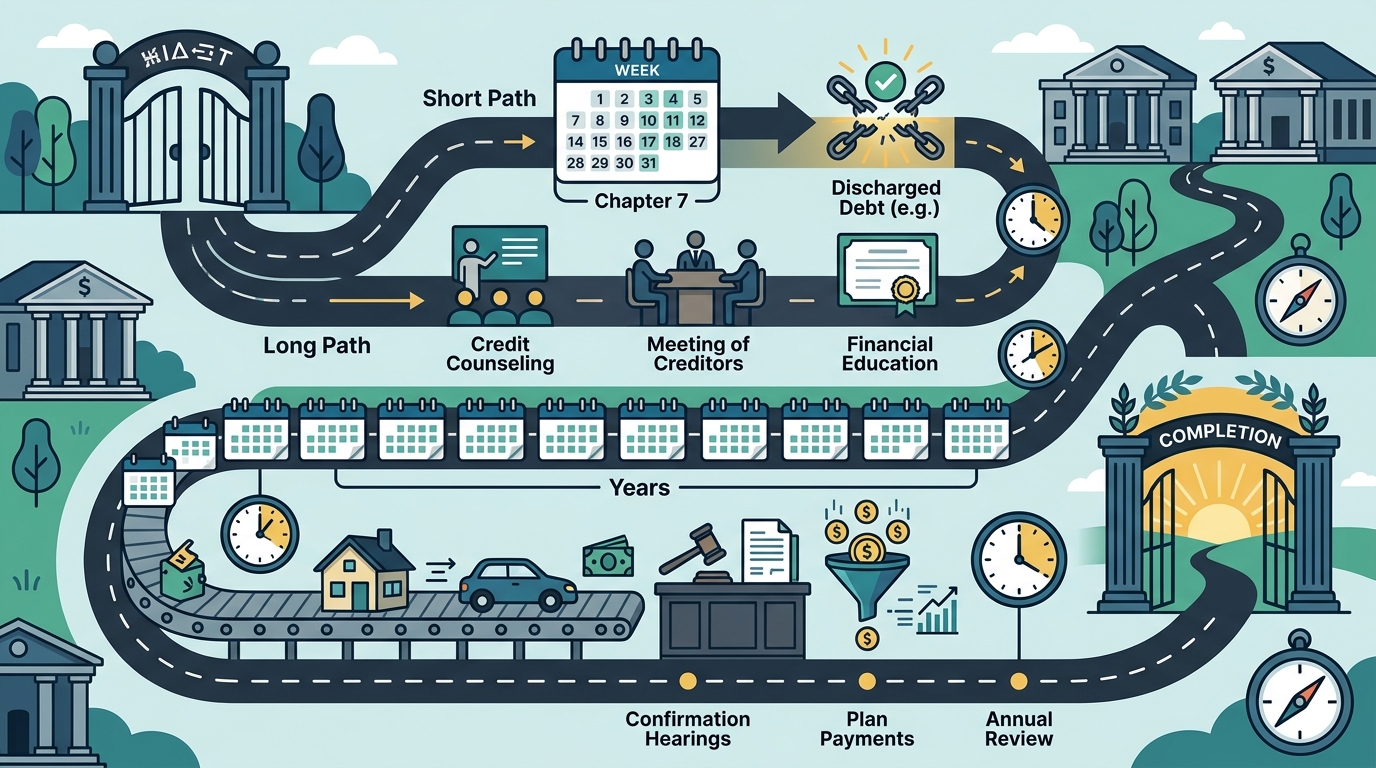
Understanding the duration of bankruptcy is critical for anyone facing financial distress. The timeline varies significantly based on the chapter filed, asset complexity, and court schedules. Generally, Chapter 7 cases conclude in three to six months, while Chapter 13 plans span three to five years. This guide breaks down every phase to help you plan effectively.
Chapter 7 Bankruptcy Timeline
Chapter 7, often called liquidation bankruptcy, is the fastest route to debt relief. It is designed for individuals who meet specific income requirements and have limited non-exempt assets. The process is straightforward and typically resolves within a few months.
Initial Consultation and Filing
The journey begins with a thorough consultation. Your attorney reviews your financial situation, debts, and assets to determine eligibility. Once you decide to proceed, the petition is filed with the bankruptcy court. This filing triggers an automatic stay, which immediately halts most creditor collection actions, including wage garnishments and foreclosure proceedings. According to the United States Courts, the automatic stay provides immediate legal protection to debtors upon filing. Learn more about automatic stays.
The Meeting of Creditors
Approximately 20 to 40 days after filing, you will attend the Meeting of Creditors, also known as the 341 meeting. This is a mandatory hearing where the trustee reviews your paperwork and asks questions under oath. Creditors may attend but rarely do in Chapter 7 cases. The trustee ensures that the information provided is accurate and that no assets are being hidden. Read about creditor rights.
Discharge of Debts
Following the 341 meeting, there is a 60-day waiting period during which creditors can object to the discharge. If no objections are filed, the court will issue a discharge order. This typically occurs about 60 to 90 days after the filing date. The discharge legally eliminates your personal liability for most unsecured debts, such as credit card balances and medical bills. Understand debt discharge rules.
Chapter 13 Bankruptcy Timeline
Chapter 13 bankruptcy is a reorganization plan for individuals with a regular income. It allows you to keep your assets, such as your home, while catching up on missed payments over time. The timeline is significantly longer because it involves a court-approved repayment plan.
Plan Confirmation
After filing, you must propose a repayment plan that lasts three to five years. The plan details how much you will pay to secured and priority creditors, as well as unsecured creditors. The court must confirm this plan before payments begin. Confirmation hearings usually occur 20 to 50 days after filing. View DOJ bankruptcy guidelines.
Repayment Period
Once the plan is confirmed, you make monthly payments to a Chapter 13 trustee. The trustee then distributes these funds to your creditors. The duration depends on your income relative to the median income in your state. If your income is above the median, the plan must be five years. If it is below the median, the plan may be three years. This long-term commitment requires strict adherence to the payment schedule.
Discharge Completion
After you complete all payments under the plan, the court grants a discharge. This discharge is broader than in Chapter 7 and may include some debts that are non-dischargeable in Chapter 7, such as certain tax obligations. The entire process from filing to discharge takes three to five years. Explore financial planning resources.
Key Stages of the Process
Regardless of the chapter, certain stages are universal in the bankruptcy process. Understanding these stages helps reduce anxiety and ensures you meet all deadlines.
Credit Counseling
Before filing, you must complete a credit counseling course from an approved agency. This course educates you on budgeting and financial management. You must receive a certificate of completion and file it with the court. Failure to complete this step will result in your case being dismissed. Learn about credit counseling.
Financial Management Course
After filing, before your discharge is granted, you must complete a debtor education course. This course focuses on money management and financial responsibility. Like the pre-filing course, you must file the certificate of completion. This step is mandatory for all debtors seeking relief.
Asset Liquidation or Retention
In Chapter 7, non-exempt assets may be liquidated by the trustee to pay creditors. However, many filers retain all their assets due to exemption laws. In Chapter 13, you keep all assets as long as you make plan payments. Understanding your state's exemption laws is crucial for protecting your property. Explore our asset protection services.
Chapter 7 vs. Chapter 13 Comparison
Choosing between Chapter 7 and Chapter 13 is a pivotal decision. The table below summarizes the key differences in timeline, eligibility, and outcomes.
| Feature | Chapter 7 | Chapter 13 |
|---|---|---|
| Duration | 3-6 months | 3-5 years |
| Asset Retention | May lose non-exempt assets | Keep all assets |
| Income Requirement | Must pass means test | Regular income required |
| Debt Discharge | Most unsecured debts | Broader discharge scope |
| Credit Impact | 7 years on report | 10 years on report |
Factors Affecting Duration
While general timelines exist, several factors can extend the process. Complexity in asset valuation, objections from creditors, or administrative errors can cause delays. Additionally, court backlogs in your jurisdiction may impact scheduling. Working with an experienced attorney helps mitigate these risks by ensuring all paperwork is accurate and filed promptly. Meet our experienced team.
Case Complexity
Cases involving business assets, complex real estate holdings, or disputed debts take longer to resolve. The trustee must investigate these assets thoroughly, which extends the timeline. If you have significant assets, proper planning is essential to avoid unnecessary delays.
Court Schedules
Different bankruptcy courts have varying workloads. Some districts may have longer wait times for the 341 meeting or confirmation hearings. Your attorney will monitor court updates and adjust your strategy accordingly to keep the process moving. Read our latest bankruptcy updates.
Key Takeaways
- Chapter 7 bankruptcy typically concludes in 3 to 6 months, offering rapid debt relief.
- Chapter 13 bankruptcy requires a 3 to 5-year repayment plan but allows asset retention.
- The automatic stay provides immediate protection from creditor actions upon filing.
- Both chapters require pre-filing credit counseling and post-filing debtor education.
- Chapter 7 discharge eliminates most unsecured debts, while Chapter 13 offers broader discharge options.
- Court backlogs and case complexity can extend the timeline beyond average estimates.
- Consulting with a local bankruptcy attorney is crucial for accurate timeline expectations.
Frequently Asked Questions
Can I file for bankruptcy if I have a lot of debt?
Yes, bankruptcy is designed for individuals with overwhelming debt. There is no maximum debt limit for Chapter 7, but Chapter 13 has specific debt caps. An attorney can help determine the best chapter for your situation.
How does bankruptcy affect my credit score?
Bankruptcy significantly impacts your credit score initially. A Chapter 7 filing remains on your credit report for 7 years, while Chapter 13 remains for 10 years. However, many filers see their scores improve within a few years as they rebuild credit responsibly.
What happens to my house in Chapter 7?
In Chapter 7, you can keep your house if the equity falls within your state's homestead exemption limits. If the equity exceeds the exemption, the trustee may sell the property. Chapter 13 allows you to catch up on mortgage arrears and keep your home.
Do I have to pay my attorney upfront?
Attorney fees vary, but many firms offer payment plans. The fees must be approved by the bankruptcy court to ensure they are reasonable. Contact us for fee details.
Can I file for bankruptcy again?
Yes, but there are waiting periods. You must wait 8 years from a previous Chapter 7 discharge or 2 years from a Chapter 13 discharge to file for Chapter 7 again. Waiting periods differ for other combinations.
What is the means test?
The means test determines your eligibility for Chapter 7 by comparing your income to the median income in your state. If your income is below the median, you automatically qualify. If it is above, further calculations determine eligibility.
Contact PM Bankruptcy
Navigating bankruptcy requires expert guidance to ensure a smooth and efficient process. PM Bankruptcy is dedicated to providing compassionate and effective legal representation. We help clients in the Pacific Northwest understand their options and achieve financial freedom. Visit our homepage to learn more about our services. Schedule your consultation today to start your journey toward debt relief.