

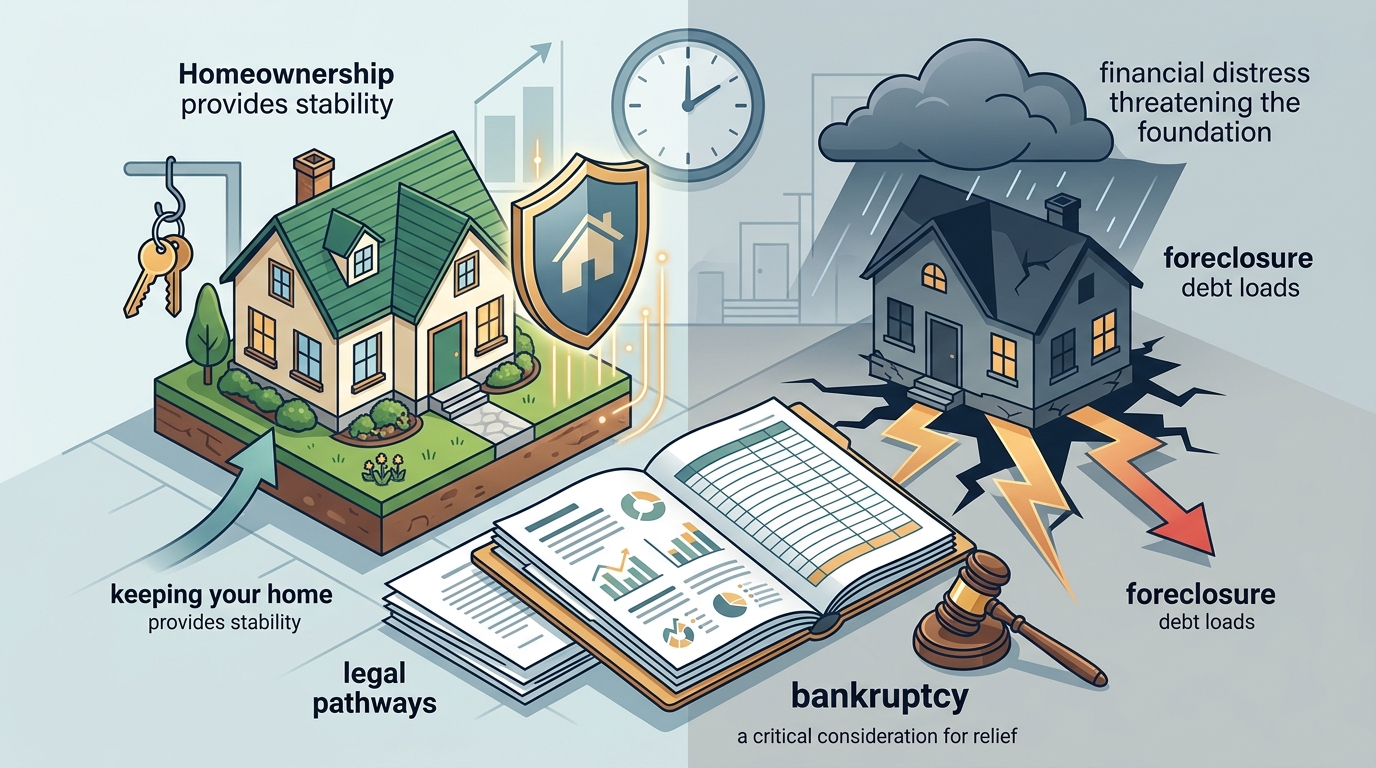
Homeownership provides stability, but financial distress can threaten that foundation. According to recent housing market data, millions of homeowners face foreclosure risks due to unmanageable debt loads, making bankruptcy a critical consideration for those seeking relief. Understanding the legal pathways available is essential before making any decisions that could impact your property rights.
Understanding Chapter 7 Bankruptcy and Equity
Chapter 7 bankruptcy is often referred to as "liquidation" bankruptcy. It is designed to wipe out most unsecured debts, such as credit card balances and medical bills. However, the treatment of your home depends heavily on the equity you hold in the property.
Equity is the difference between your home's current market value and the amount you owe on your mortgage. If your equity falls within the allowable exemption limits for your state, you may be able to keep your home. The trustee in a Chapter 7 case will not force the sale of your home if the equity is fully exempt.
For many homeowners, Chapter 7 provides a fresh start by eliminating the debt that was causing the financial strain. This can allow you to catch up on mortgage payments over time. However, it does not eliminate the mortgage lien itself. You must continue making payments to avoid foreclosure.
If you have significant non-exempt equity, the trustee may sell the home to pay creditors. This is less common in states with high homestead exemptions but remains a risk in others. Consulting with a bankruptcy attorney is crucial to evaluate your specific equity situation.
Chapter 13: The Repayment Plan Advantage
Chapter 13 bankruptcy is a reorganization plan that allows you to keep your assets while repaying debts over three to five years. This chapter is often the preferred option for homeowners who want to stop foreclosure and catch up on missed mortgage payments.
Under Chapter 13, you propose a repayment plan that covers your arrears. The court approves the plan, and you make monthly payments to a trustee. The trustee then distributes these funds to your creditors, including your mortgage lender.
This approach provides a powerful tool against foreclosure. Once the bankruptcy petition is filed, an automatic stay goes into effect. This legal order stops all collection activities, including foreclosure proceedings. Lenders cannot proceed with a sale while the stay is active.
By spreading the arrears over the life of the plan, you make the catch-up payments more manageable. This can provide the breathing room needed to stabilize your finances. Many individuals find that Chapter 13 services offer the best chance of retaining their home.
Homestead Exemptions and State Laws
Homestead exemptions are state laws that protect a certain amount of equity in your primary residence from creditors. These exemptions vary widely by jurisdiction. Some states offer unlimited homestead protection, while others have strict caps.
Understanding your state's exemption limits is vital. If your equity is below the exemption threshold, your home is safe from liquidation in a Chapter 7 case. If it exceeds the limit, you may lose the home unless you can pay the non-exempt portion to the trustee.
Some states allow you to choose between federal and state exemption systems. This choice can significantly impact your ability to keep your home. It is important to review these options with a legal professional who understands local laws.
Additionally, some states have specific rules for married couples filing jointly. The exemption amounts may differ based on filing status. Proper planning can maximize your protection. Visit our resources page for more information on state-specific guidelines.
Handling Mortgage Arrears and Foreclosure
When you fall behind on mortgage payments, the risk of foreclosure increases. Bankruptcy can interrupt this process, but it requires careful management. The automatic stay provides immediate relief from foreclosure actions.
In a Chapter 13 case, you can cure the default through the repayment plan. This means you pay the missed payments over time while staying current on new monthly payments. This dual payment structure is key to saving your home.
However, you must stay current on ongoing mortgage payments. Failure to do so can result in the lender seeking relief from the automatic stay. This would allow them to proceed with foreclosure despite the bankruptcy filing.
Communication with your lender is also important. Some lenders may be willing to work out a modification outside of bankruptcy. However, bankruptcy offers legal protections that voluntary modifications do not. Learn more about common bankruptcy questions to understand your options.
Choosing the Right Path for Your Situation
Selecting between Chapter 7 and Chapter 13 depends on your income, equity, and debt levels. Chapter 7 is suitable for those with lower income and limited equity. Chapter 13 is ideal for those with regular income who need to catch up on debts.
Consider your long-term financial goals. Do you want to eliminate debt quickly or restructure payments over time? Each path has different implications for your credit score and future borrowing ability.
Professional guidance is essential. A bankruptcy attorney can analyze your financial picture and recommend the best course of action. They can help you navigate the complexities of exemption laws and repayment plans.
Do not wait until foreclosure is imminent. Early intervention can preserve more of your assets. Contact PMBankruptcy.com to schedule a consultation and discuss your specific needs.
Key Takeaways
- Chapter 7 bankruptcy can protect your home if your equity is within state exemption limits.
- Chapter 13 allows you to catch up on mortgage arrears over three to five years.
- The automatic stay immediately halts foreclosure proceedings upon filing.
- Homestead exemptions vary by state and significantly impact asset protection.
- Continuing monthly mortgage payments is required to keep your home in bankruptcy.
- Professional legal advice is crucial for determining the best bankruptcy chapter.
- Early consultation can prevent foreclosure and preserve home equity.
Frequently Asked Questions
Does filing for bankruptcy stop foreclosure immediately?
Yes, filing for bankruptcy triggers an automatic stay that immediately stops most foreclosure actions. This provides temporary relief while your case is reviewed.
Can I keep my home if I have significant equity?
You may keep your home if your equity falls within the allowable homestead exemption limits for your state. Non-exempt equity may require payment to the trustee.
What is the difference between Chapter 7 and Chapter 13 for homeowners?
Chapter 7 eliminates unsecured debt but may require liquidation of non-exempt assets. Chapter 13 creates a repayment plan to catch up on mortgage arrears while keeping assets.
How long does it take to catch up on mortgage payments in Chapter 13?
Typically, you have three to five years to repay the arrears through your Chapter 13 plan. This makes the catch-up payments more manageable.
Will bankruptcy affect my credit score?
Yes, bankruptcy will impact your credit score. However, it can also help you rebuild credit by eliminating overwhelming debt and providing a fresh start.
Can I refinance my home after filing for bankruptcy?
Refinancing options may be limited immediately after filing. However, many individuals are able to refinance after completing their bankruptcy plan and rebuilding credit.
Do I need an attorney to file for bankruptcy?
While not legally required, an attorney is highly recommended. They can help you navigate complex laws, maximize exemptions, and ensure proper filing procedures.
Protect Your Home Today
Do not let financial distress force you out of your home. Understanding your rights and options is the first step toward retaining your property. Our team at PMBankruptcy.com specializes in helping homeowners navigate bankruptcy with confidence.
Contact us today to schedule a consultation. We will review your financial situation and recommend the best strategy to protect your home and achieve financial freedom. Visit our contact page to get started.