

Choosing the right bankruptcy path is one of the most critical financial decisions you will make. According to recent federal judicial statistics, Chapter 7 filings consistently outnumber Chapter 13 cases by a significant margin, reflecting its role as the primary tool for immediate debt relief. Understanding the structural mechanics of each option is essential for protecting your assets and securing a viable financial future. This guide breaks down the core distinctions to help you navigate the complex landscape of consumer bankruptcy with confidence.
Understanding Chapter 7 Liquidation
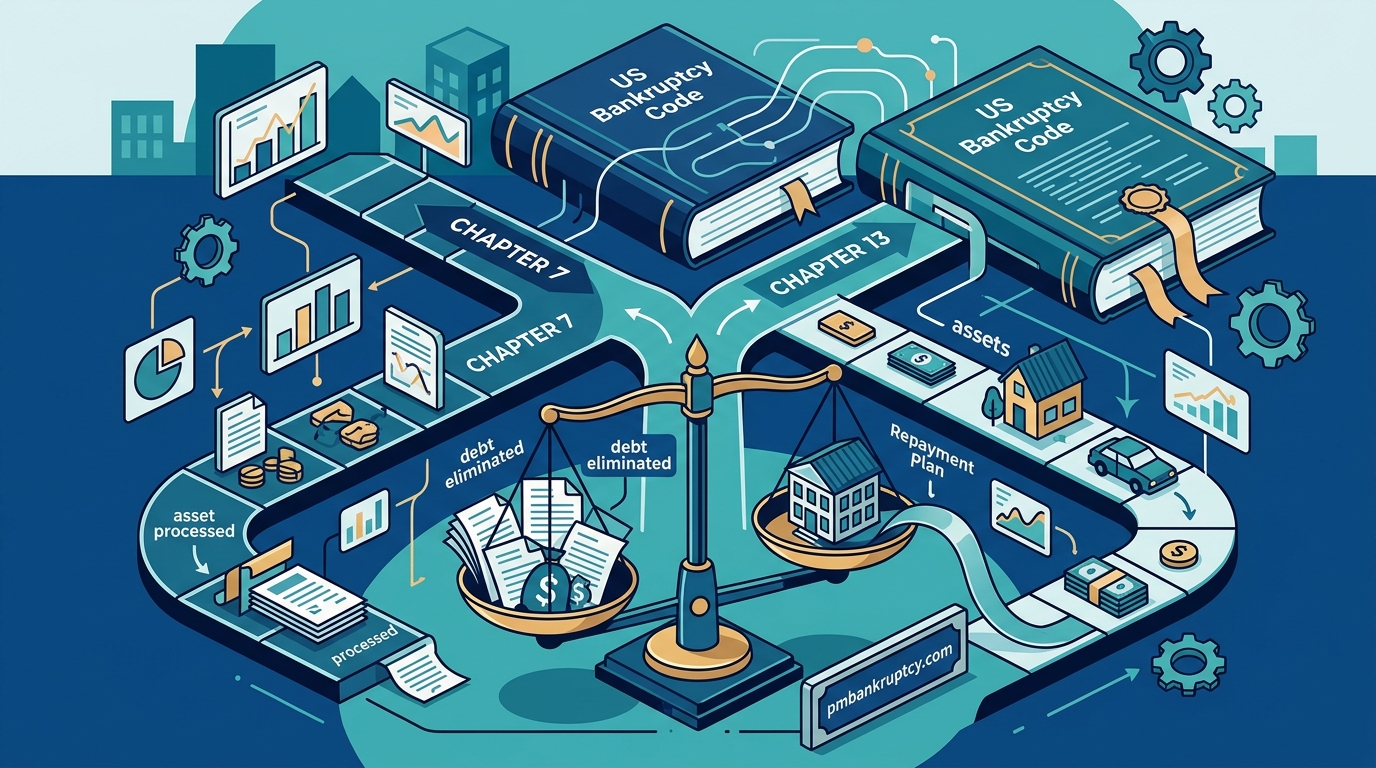
Chapter 7 bankruptcy is often referred to as "straight bankruptcy" or "liquidation." It is designed for individuals who have limited income and cannot afford to pay their debts over time. The primary goal is to provide a fresh start by eliminating most unsecured debts, such as credit card balances and medical bills.
Chapter 7 is a legal process that allows eligible debtors to discharge their unsecured debts through the liquidation of non-exempt assets. While the term "liquidation" sounds alarming, most Chapter 7 cases are "no-asset" cases. This means that all of the debtor's property is either exempt under state or federal law, or the value is too low to warrant sale by the bankruptcy trustee.
The process is relatively quick. Typically, the entire case is resolved within three to six months. Once the discharge is granted, you are no longer legally obligated to pay the discharged debts. Creditors are prohibited from attempting to collect these debts through calls, letters, or lawsuits.
For more details on how liquidation works, you can explore the bankruptcy services overview provided by our firm. We help clients navigate the nuances of federal bankruptcy code to ensure their rights are protected throughout the process.
Understanding Chapter 13 Reorganization
Chapter 13 bankruptcy is known as a "wage earner's plan" or "reorganization." It is designed for individuals with a regular income who want to keep their property, particularly their home, while catching up on missed payments. Instead of liquidating assets, you propose a repayment plan to pay back all or part of your debts over three to five years.
Chapter 13 is a court-approved repayment plan that allows debtors to retain their assets while restructuring their debts over a period of three to five years. This option is particularly beneficial for homeowners facing foreclosure. By filing for Chapter 13, you can stop foreclosure proceedings and reinstate your mortgage by paying the arrears over the life of the plan.
The repayment plan is based on your disposable income. The court and trustee will review your budget to determine how much you can afford to pay each month. This amount is then distributed to your creditors according to the priority of their claims. Secured debts, such as car loans and mortgages, are typically paid in full or brought current, while unsecured debts may receive a smaller percentage or nothing at all, depending on your income and the value of your non-exempt assets.
If you are considering a repayment plan, it is crucial to work with experienced legal counsel. Our team at PM Bankruptcy specializes in crafting feasible Chapter 13 plans that align with your financial reality while satisfying court requirements.
Asset Protection Comparison
One of the most significant factors influencing your choice between Chapter 7 and Chapter 13 is how each handles your property. The treatment of assets varies drastically between the two chapters.
In Chapter 7, non-exempt assets are sold by the trustee to pay creditors. However, exemptions play a vital role. Each state has its own set of exemptions, and some states allow you to choose between state and federal exemptions. Common exemptions include homestead exemptions for your primary residence, vehicle exemptions for your car, and personal property exemptions for household goods.
In Chapter 13, you generally keep all of your property. The value of your non-exempt assets affects the amount you must pay into your repayment plan. If you have significant non-exempt equity, your monthly payments will be higher to compensate creditors for that value. This ensures that creditors receive at least as much as they would have in a Chapter 7 liquidation.
Understanding your exemption limits is critical. You can learn more about asset protection strategies by consulting with our attorneys who can analyze your specific property holdings and applicable exemption laws.
Eligibility Requirements
Not everyone qualifies for both types of bankruptcy. The eligibility criteria are strict and designed to prevent abuse of the system.
To file for Chapter 7, you must pass the "means test." This test compares your median income to the median income in your state for a household of your size. If your income is below the median, you generally qualify. If it is above, the test calculates your disposable income to determine if you can repay a portion of your debts. If you fail the means test, you may be forced into Chapter 13.
Chapter 13 has different eligibility requirements. You must have a regular income to fund the repayment plan. Additionally, there are debt limits. As of the latest updates, unsecured debts must be less than a specific threshold, and secured debts must also fall below a certain limit. These limits are adjusted periodically for inflation. For the most current debt limits, refer to the U.S. Trustee Program guidelines.
Our attorneys at PM Bankruptcy can conduct a comprehensive eligibility analysis to determine which chapter is the most viable option for your unique financial situation.
Cost and Duration
The financial and temporal aspects of each chapter differ significantly. Chapter 7 is generally less expensive and faster. Attorney fees and court costs are typically paid upfront or in a short-term installment plan. The case closes in about four to six months.
Chapter 13 is more costly and time-consuming. Attorney fees are often paid through the repayment plan over three to five years. The total cost includes both legal fees and the actual debt repayment. However, the longer duration allows for a more structured approach to debt management and asset retention.
When evaluating costs, consider the long-term financial impact. While Chapter 13 may cost more in total, it may save you your home or car, which could be worth far more than the additional legal and repayment costs.
Key Takeaways
- Chapter 7 provides a faster discharge of unsecured debts, typically within 4-6 months, making it ideal for those with limited income.
- Chapter 13 allows you to keep your assets and catch up on missed mortgage or car payments over 3-5 years.
- Means Test eligibility is the primary gatekeeper for Chapter 7, based on your income relative to your state's median.
- Debt Limits apply to Chapter 13, restricting the total amount of secured and unsecured debt you can include in your plan.
- Asset Protection is stronger in Chapter 13, as you do not liquidate non-exempt assets but must pay their value into your plan.
- Foreclosure Stop is a key benefit of Chapter 13, halting foreclosure proceedings and allowing you to reinstate your loan.
- Credit Impact differs in duration, with Chapter 7 remaining on your credit report for 10 years and Chapter 13 for 7 years from filing.
Frequently Asked Questions
Which chapter is better for stopping foreclosure?
Chapter 13 is generally better for stopping foreclosure because it allows you to catch up on missed mortgage payments over time while keeping your home. Chapter 7 may delay foreclosure temporarily but does not provide a long-term solution for reinstating a loan.
Can I keep my car in Chapter 7?
Yes, you can keep your car in Chapter 7 if it is covered by your state's vehicle exemption. If the car's value exceeds the exemption limit, you may need to pay the difference to the trustee or surrender the vehicle.
What is the means test?
The means test is a calculation used to determine if you qualify for Chapter 7 bankruptcy. It compares your income to the median income in your state and deducts allowed expenses to see if you have disposable income to repay debts.
How long does Chapter 13 last?
A Chapter 13 repayment plan typically lasts three to five years, depending on your income relative to your state's median income. Lower-income debtors may have shorter plans, while higher-income debtors may have longer plans.
Does bankruptcy erase all debts?
No, bankruptcy does not erase all debts. Certain debts, such as student loans, child support, alimony, and most tax debts, are generally non-dischargeable. You should consult with an attorney to understand which of your debts can be eliminated.
What are the debt limits for Chapter 13?
Chapter 13 has specific debt limits for both secured and unsecured debts. These limits are adjusted periodically for inflation. You must check the current limits with the U.S. Bankruptcy Court to ensure eligibility.
Can I file for bankruptcy if I filed recently?
There are waiting periods between bankruptcy filings. You must wait eight years from a previous Chapter 7 discharge to file another Chapter 7, and two years from a Chapter 7 discharge to file Chapter 13. Different rules apply for other combinations.
Take Control of Your Financial Future
Navigating the complexities of bankruptcy requires expert guidance. Whether you need immediate relief through Chapter 7 or a structured path to asset retention with Chapter 13, our team is here to help. We provide personalized consultations to analyze your unique financial situation and recommend the best course of action. Contact PM Bankruptcy today to schedule your confidential consultation and start your journey toward financial freedom.