

Choosing the right bankruptcy path is one of the most critical financial decisions you will make. According to recent data from the United States Courts, Chapter 13 filings have seen significant fluctuations in recent years, reflecting a growing need for structured repayment plans over immediate liquidation. Understanding these distinctions is vital for anyone facing debt relief options in California. The choice between liquidation and reorganization determines your asset retention, payment obligations, and long-term credit recovery timeline. (Contact Us)
Eligibility Requirements and Income Limits
The primary barrier to entry for each chapter is fundamentally different. Chapter 7 is often referred to as "liquidation bankruptcy." It is designed for individuals who have limited disposable income and cannot afford a long-term repayment plan. The process involves a means test that compares your median income to the state median. If your income is below the median, you typically qualify automatically. However, if your income is higher, the court will evaluate your expenses to determine if you have the ability to repay creditors.
Chapter 13, known as a "wage earner's plan," requires a steady source of income. You must demonstrate the ability to make regular monthly payments to a trustee. This chapter is not available to those with irregular income streams. The eligibility criteria are stricter regarding the amount of debt you can carry. Both secured and unsecured debts must fall below specific statutory limits. These limits are adjusted periodically for inflation. Failing to meet these thresholds disqualifies you from filing under Chapter 13.
For residents in the Pacifica area, understanding your local economic context is part of the means test calculation. Your specific expenses, such as housing and transportation costs in San Mateo County, play a role in determining your eligibility. Pacific Bankruptcy helps clients navigate these complex income thresholds to ensure accurate filing.
Asset Protection and Exemptions
One of the most significant differences lies in how your property is treated. In a Chapter 7 case, a trustee may liquidate non-exempt assets to pay creditors. However, California offers robust exemption laws that protect much of your personal property. You can typically keep your home, car, and household goods if they fall within exemption limits. The key is ensuring your equity does not exceed these statutory caps.
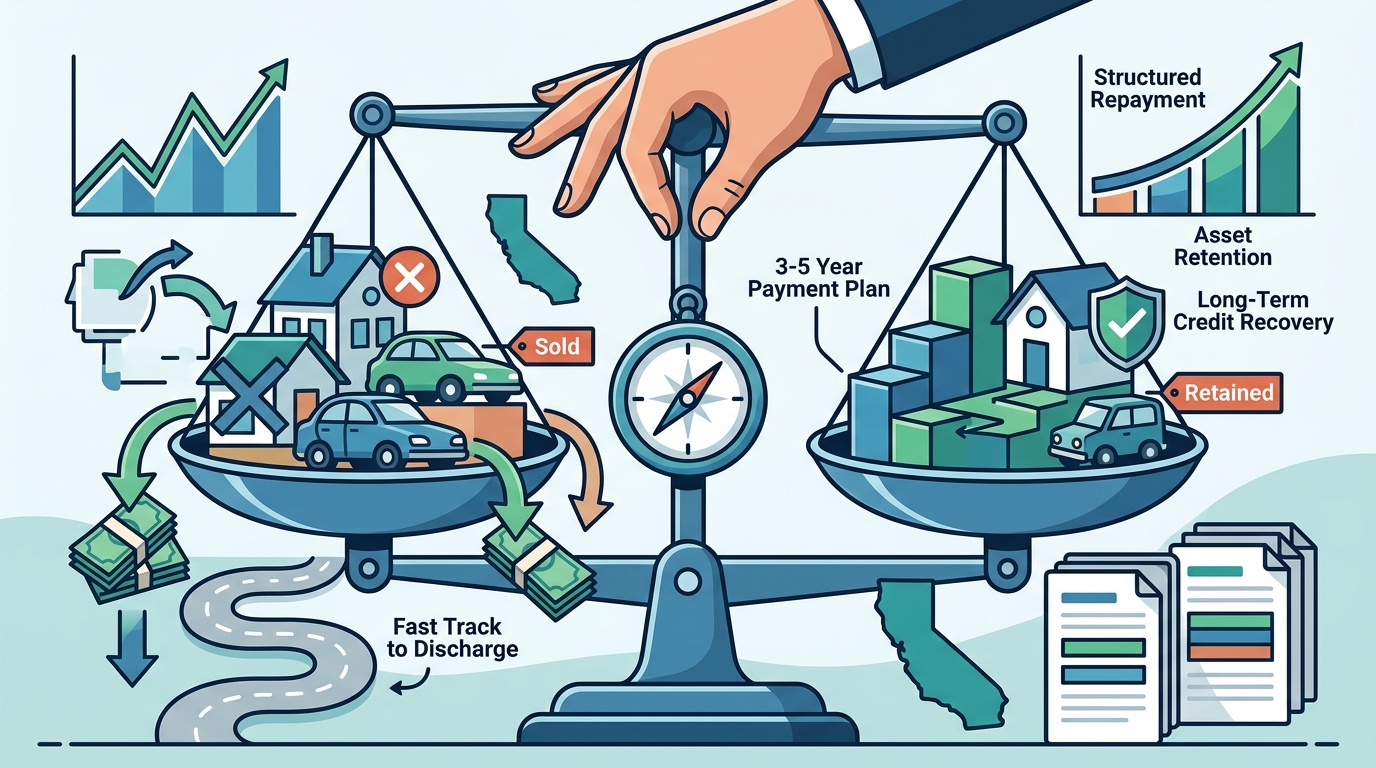
Chapter 13 allows you to keep all your property, provided you pay at least as much as your non-exempt equity would have received in a Chapter 7 liquidation. This makes Chapter 13 ideal for homeowners who have fallen behind on mortgage payments but want to avoid foreclosure. You can cure the default over the life of the plan. This option preserves your home equity while allowing you to catch up on missed payments.
The distinction is crucial for those with valuable assets. If you have significant equity in your home or expensive vehicles, Chapter 7 might risk losing those assets if exemptions are insufficient. Chapter 13 provides a shield for these assets by converting the liquidation value into a manageable payment plan. Our legal team analyzes your asset portfolio to recommend the safest path for wealth preservation.
Debt Discharge and Creditor Impact
The outcome of your bankruptcy case depends heavily on the type of debt you hold. Chapter 7 provides a quicker discharge of unsecured debts, such as credit cards and medical bills. This process typically takes three to six months. Once discharged, you are no longer legally obligated to pay these debts. However, certain debts are non-dischargeable in Chapter 7, including student loans and recent tax obligations.
Chapter 13 offers a broader scope of dischargeable debts. It can include some debts that are non-dischargeable in Chapter 7, such as certain marital property settlement obligations. The discharge occurs after you complete your repayment plan, which lasts three to five years. This extended timeline allows for a more comprehensive financial reset. Creditors are prohibited from contacting you during the repayment period.
The impact on your credit report differs in duration as well. A Chapter 7 bankruptcy remains on your credit report for ten years from the filing date. A Chapter 13 bankruptcy remains for seven years from the filing date. Despite the longer duration, Chapter 13 can help you rebuild credit faster because you are making consistent payments. Justia provides detailed comparisons of how each chapter affects long-term financial health.
Payment Structure and Duration
The financial commitment required from you varies drastically between the two options. Chapter 7 requires no monthly payments to the trustee. You pay a filing fee and attorney fees upfront or through a payment plan. The case concludes relatively quickly, allowing you to move forward with your financial life. There is no ongoing monthly obligation to the bankruptcy court.
Chapter 13 requires a monthly payment to a trustee who distributes funds to your creditors. This payment is based on your disposable income and the value of your non-exempt assets. The plan duration is determined by your income relative to the state median. If your income is below the median, the plan is typically three years. If it is above, the plan extends to five years. This structure ensures that creditors receive a fair portion of what they are owed.
Understanding the cash flow implications is essential. Chapter 13 demands disciplined budgeting for three to five years. Chapter 7 offers immediate relief but requires careful management of post-bankruptcy finances. Nolo explains how payment plans are calculated based on your specific financial situation.
Cost Comparison and Legal Fees
The cost of filing for bankruptcy includes court fees and attorney fees. Chapter 7 generally has lower total costs because the case is shorter and involves less administrative work. The filing fee is lower, and attorney fees are typically less expensive due to the streamlined process. This makes Chapter 7 an attractive option for those with limited resources.
Chapter 13 involves higher total costs due to the longer duration and complexity. The filing fee is higher, and attorney fees are typically greater because of the ongoing management required. However, the cost may be justified by the ability to save your home or car. The investment in legal counsel is critical to ensure the plan is feasible and approved by the court. Our blog offers insights into the financial planning aspects of bankruptcy.
Key Takeaways
- Chapter 7 is a liquidation process that discharges unsecured debts quickly, typically within 3-6 months.
- Chapter 13 is a reorganization plan requiring 3-5 years of monthly payments to creditors.
- Eligibility for Chapter 7 is determined by a means test comparing your income to state medians.
- Chapter 13 allows you to keep all property, including non-exempt assets, by paying their value over time.
- Chapter 13 can stop foreclosure and allow you to cure mortgage defaults over the life of the plan.
- Chapter 7 remains on your credit report for 10 years, while Chapter 13 remains for 7 years.
- Pacific Bankruptcy provides personalized guidance to determine the best chapter for your specific financial situation.
Frequently Asked Questions
Can I file for Chapter 13 if I have too much debt?
Yes, but there are statutory limits on the amount of secured and unsecured debt you can include. If your debts exceed these limits, you may need to consider Chapter 7 or other debt relief options.
Does Chapter 7 protect my house from foreclosure?
Chapter 7 provides a temporary stay against foreclosure, but it does not eliminate the mortgage lien. If you are behind on payments, you may lose your home unless you can catch up on payments or refinance.
What is the difference in credit score impact?
Both chapters negatively impact your credit score initially. However, Chapter 13 may allow for faster rebuilding because you demonstrate consistent payment behavior during the plan.
Can I convert from Chapter 13 to Chapter 7?
Yes, in some circumstances, you can convert from Chapter 13 to Chapter 7 if your financial situation changes or if the plan is not feasible. This decision requires careful legal evaluation.
How long does the bankruptcy process take?
Chapter 7 typically takes 3-6 months from filing to discharge. Chapter 13 takes 3-5 years to complete the repayment plan before discharge is granted.
Are student loans dischargeable in either chapter?
Generally, no. Student loans are difficult to discharge in both Chapter 7 and Chapter 13. You must prove "undue hardship" through a separate legal proceeding.
What happens to my co-signers in Chapter 13?
Chapter 13 offers co-debtor stay protection for consumer debts. This prevents creditors from pursuing your co-signers while you are making payments under the plan.
Take Control of Your Financial Future
Deciding between Chapter 7 and Chapter 13 requires a thorough analysis of your assets, income, and debts. The right choice can provide the fresh start you need. Pacific Bankruptcy is dedicated to guiding you through this complex process with clarity and confidence. Contact us today to schedule a consultation and explore your options. Visit our contact page to begin your journey toward financial freedom.