

Choosing the wrong bankruptcy chapter can cost you your home, your car, or your financial future. According to the latest data from the Administrative Office of the U.S. Courts, Chapter 7 filings consistently outnumber Chapter 13 cases by a significant margin, yet many filers regret their choice when they realize they missed the window to save their assets. This article outlines the critical errors people make when navigating this complex legal landscape and how to avoid them. (Contact Us)
Understanding the Basics of Each Chapter
Before diving into mistakes, it is vital to understand what each option actually does. Chapter 7 bankruptcy is often called "liquidation." It wipes out most unsecured debts like credit cards and medical bills. Chapter 13 bankruptcy is known as a "reorganization." It allows you to keep your property while paying back a portion of your debts over three to five years.
Many people assume Chapter 7 is always the better choice because it is faster. However, speed comes with a cost. You might lose non-exempt assets. Chapter 13 is slower but offers more control. It stops foreclosure immediately and gives you time to catch up on missed mortgage payments. Understanding these core definitions is the first step to avoiding costly errors.
The Income Trap: Why Means Testing Matters
One of the most common mistakes is failing the means test for Chapter 7. The means test compares your median income to the state median. If your income is too high, you are forced into Chapter 13. Many filers ignore this step until it is too late.
Another error is miscalculating your disposable income. In Chapter 13, your plan payment is based on what you can afford after expenses. If you underestimate your living costs, your plan will fail. If you overestimate them, the court may reject your proposal. Accurate budgeting is not optional. It is the foundation of a successful repayment plan.
Asset Protection Errors and Exemptions
Filers often panic about losing their home or car. The mistake here is not knowing your state's exemption laws. Exemptions protect a certain amount of equity in your property. In some states, you can keep your home if you have less than a specific equity threshold. In others, the rules are stricter.
Another critical error is failing to update your exemptions before filing. Laws change, and your financial situation changes. If you do not claim the correct exemptions, you could lose valuable assets. For example, some states allow you to exempt retirement accounts fully. Others have limits. Knowing these details prevents unnecessary losses.
Debt Qualification and Priority Obligations
Not all debts are treated equally. Priority debts like child support, alimony, and recent taxes are not dischargeable in Chapter 7. Many people mistakenly believe bankruptcy wipes out all obligations. This is false. You will still owe these debts after your case closes.
In Chapter 13, you must pay these priority debts in full through your plan. If you do not account for them, your plan will fail. Another common mistake is ignoring secured debts. If you want to keep your car, you must continue making payments. If you stop paying, the lender can repossess it. This applies to both chapters. Ignoring secured debt is a fast track to losing your property.
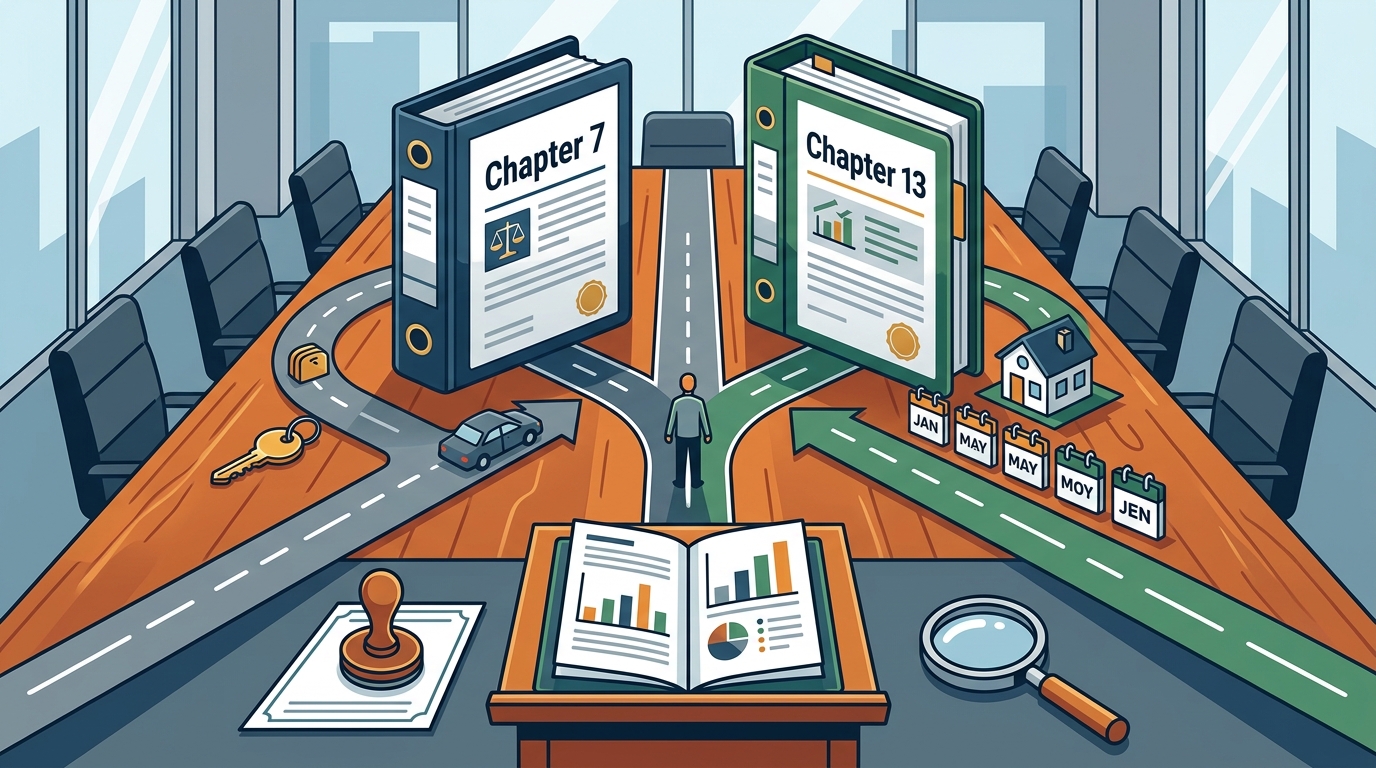
Comparing Options: A Quick Reference
Choosing between Chapter 7 and Chapter 13 can be confusing. The table below summarizes the key differences to help you make an informed decision.
| Feature | Chapter 7 | Chapter 13 |
|---|---|---|
| Duration | 3-6 months | 3-5 years |
| Asset Retention | Depends on exemptions | High (if payments made) |
| Income Requirement | Must pass means test | Must have regular income |
| Debt Discharge | Most unsecured debts | Remaining unsecured debts |
| Foreclosure Stop | Temporary only | Permanent (with plan) |
Key Takeaways
- Chapter 7 is a liquidation process that discharges unsecured debts quickly.
- Chapter 13 is a reorganization process that requires a 3-5 year repayment plan.
- Failing the means test forces you into Chapter 13 regardless of your preference.
- State exemption laws determine which assets you can keep in Chapter 7.
- Priority debts like child support must be paid in full in Chapter 13.
- Secured debts require ongoing payments to avoid repossession or foreclosure.
- Consulting with a local bankruptcy attorney is crucial for accurate assessment.
Frequently Asked Questions
Can I keep my house in Chapter 7?
You can keep your house if your equity is covered by state exemptions. If your equity exceeds the exemption limit, the trustee may sell it. However, you can often catch up on mortgage arrears in Chapter 13 to save your home.
What is the difference between secured and unsecured debt?
Secured debt is backed by collateral, like a car or house. Unsecured debt, like credit cards, has no collateral. Chapter 7 discharges unsecured debt but does not eliminate the lien on secured property.
How long does Chapter 13 last?
A Chapter 13 plan typically lasts three to five years. The length depends on your income relative to the state median. Higher incomes often require a five-year plan.
Will bankruptcy affect my credit score?
Yes, bankruptcy will lower your credit score. However, it also stops collections and foreclosure, giving you a fresh start. Many people rebuild their credit within a few years.
Can I file for bankruptcy twice?
Yes, but there are waiting periods. You must wait eight years from a previous Chapter 7 discharge to file another Chapter 7. You must wait two years from a Chapter 13 discharge to file Chapter 7.
What happens if I miss a payment in Chapter 13?
Missing payments can lead to dismissal of your case. This means your debts are not discharged, and creditors can resume collection efforts. It is vital to stay current on your plan payments.
Do I need a lawyer for Chapter 13?
While not legally required, Chapter 13 is complex. A lawyer helps ensure your plan is feasible and approved by the court. PM Bankruptcy offers guidance to navigate this process.
Contact PM Bankruptcy
Do not let fear or confusion delay your financial recovery. The mistakes outlined above are common, but they are avoidable with the right guidance. PM Bankruptcy specializes in helping individuals and families navigate Chapter 7 and Chapter 13 filings with confidence. We provide personalized assessments to determine the best path for your unique situation. Visit our services page to learn more about our approach. Contact us today to schedule a consultation and take the first step toward a debt-free future.