

How Long Does the Bankruptcy Process Take? Timeline & Steps Explained
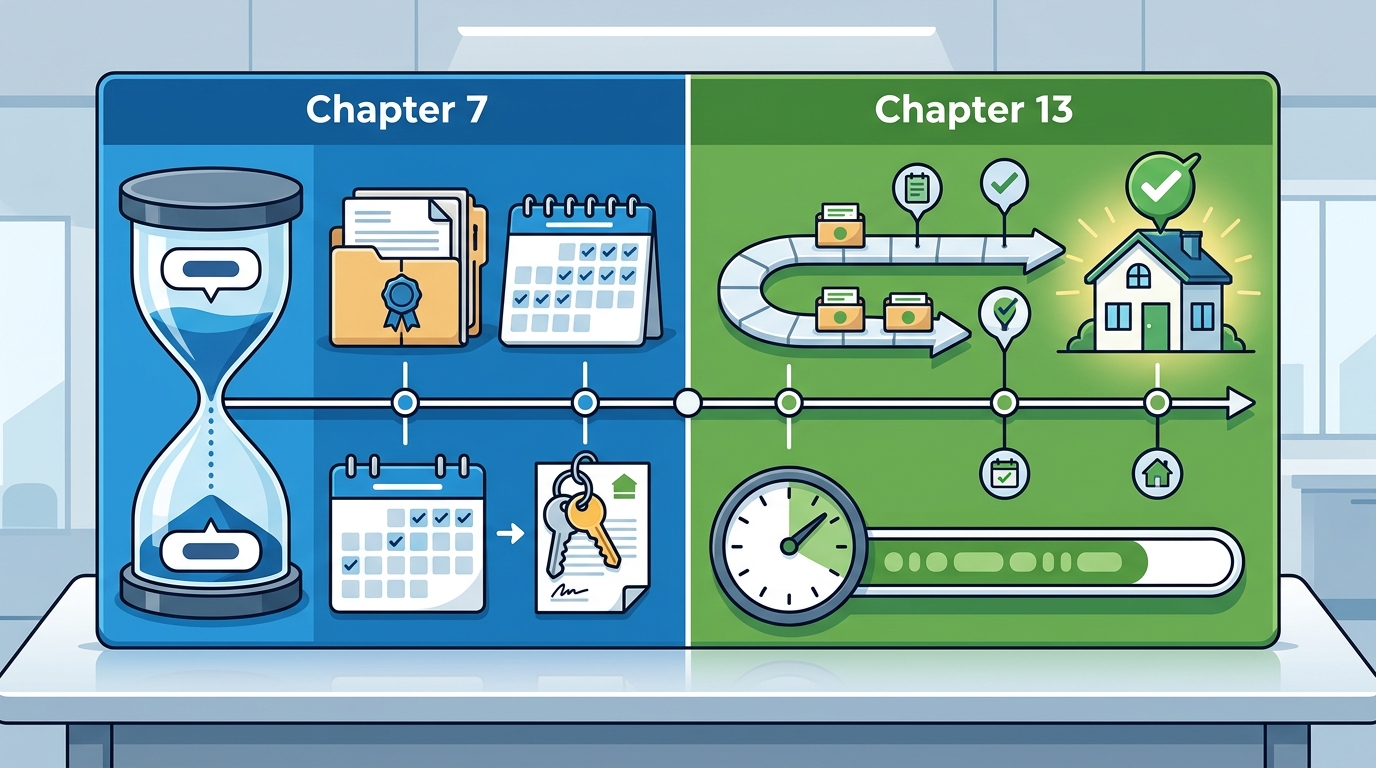
For individuals drowning in unmanageable debt, the question of time is often as pressing as the financial burden itself. The average timeline to complete a Chapter 7 bankruptcy case is approximately four to six months from the initial filing to the discharge of debts. In contrast, Chapter 13 cases typically span three to five years due to their structured repayment plans. Understanding these distinct timelines is critical for anyone considering this legal path, as it dictates how long your financial life will remain under court supervision. (https pmbankruptcy com)
Chapter 7 Bankruptcy Timeline
Chapter 7 bankruptcy, often referred to as "liquidation" or "fresh start" bankruptcy, is the most common form for individuals seeking immediate debt relief. The process is designed to be swift, allowing filers to emerge from financial distress relatively quickly compared to other options. (Customer Experience)
The Initial Filing and Automatic Stay
The journey begins with the preparation and filing of your petition. Once filed, an automatic stay goes into effect immediately. This legal order stops all collection activities, including wage garnishments, foreclosure proceedings, and harassing phone calls from creditors. According to data from the United States Courts, the automatic stay provides immediate protection to debtors, halting legal actions within days of filing. This instant relief is often the primary motivation for choosing Chapter 7. (Frequently Asked Questions)
The Meeting of Creditors
Approximately 20 to 40 days after filing, you will attend the Meeting of Creditors, also known as the 341 meeting. This is a mandatory hearing where the court-appointed trustee reviews your financial documents. While creditors are invited to attend, they rarely do in consumer cases. The trustee asks straightforward questions to verify the accuracy of your petition. This step is crucial for establishing the validity of your claim for debt discharge.
Debt Discharge
Following the 341 meeting, there is a waiting period before your debts are officially discharged. In most cases, this occurs about 60 to 90 days after the meeting of creditors. Once the discharge order is issued, you are legally free from the obligation to pay the included debts. For many filers, the entire process concludes within four to six months. This rapid resolution makes Chapter 7 an attractive option for those who need a quick financial reset.
Chapter 13 Bankruptcy Timeline
Chapter 13 bankruptcy is a reorganization plan designed for individuals with a regular income who wish to keep their property, such as a home, while catching up on missed payments. Unlike Chapter 7, this process involves a long-term commitment to a repayment plan.
The Repayment Plan Duration
The core of Chapter 13 is the repayment plan, which typically lasts three to five years. The length of this plan depends on your income relative to the median income in your state. If your income is below the median, the plan is usually three years. If it is above the median, it is typically five years. During this time, you make monthly payments to a trustee, who then distributes the funds to your creditors.
Confirmation and Completion
Before your plan begins, the court must confirm it. This confirmation hearing usually takes place within 20 to 50 days after the meeting of creditors. Once confirmed, you must adhere strictly to the payment schedule. Completing the plan is a prerequisite for receiving a discharge of remaining eligible debts. The long duration of Chapter 13 is a significant factor to consider, as it requires sustained financial discipline over several years.
Key Stages of the Process
Regardless of the chapter you file under, certain stages are universal to the bankruptcy process. Understanding these stages helps demystify the experience and reduces anxiety about the unknown.
Credit Counseling
Before filing for bankruptcy, you must complete a credit counseling course from an approved agency. This requirement is mandated by federal law to ensure that filers are making informed decisions about their financial future. The course typically takes about one to two hours and can be completed online or over the phone. Failure to complete this step will result in your case being dismissed.
Filing the Petition
Filing the petition involves submitting detailed financial documents to the bankruptcy court. This includes schedules of assets, liabilities, income, and expenses. Accuracy is paramount, as any discrepancies can lead to complications or dismissal. Your attorney will guide you through this process, ensuring that all forms are correctly completed and filed.
The Trustee's Role
A bankruptcy trustee is appointed to oversee your case. The trustee's primary responsibility is to review your financial information and ensure that you are filing in good faith. In Chapter 7 cases, the trustee may liquidate non-exempt assets to pay creditors. In Chapter 13 cases, the trustee administers your repayment plan. The trustee acts as a neutral party, balancing the interests of the debtor and the creditors.
Chapter 7 vs. Chapter 13 Comparison
Choosing between Chapter 7 and Chapter 13 is a critical decision that depends on your financial situation and goals. The table below summarizes the key differences between the two options.
| Feature | Chapter 7 | Chapter 13 |
|---|---|---|
| Duration | 4-6 months | 3-5 years |
| Debt Discharge | Most unsecured debts discharged | Remaining debts discharged after plan completion |
| Asset Protection | Non-exempt assets may be liquidated | Assets protected if plan payments are made |
| Income Requirement | Must pass means test | Must have regular income |
| Best For | Immediate debt relief | Stopping foreclosure and catching up on debts |
For more detailed information on how to choose the right chapter, you can explore our Chapter 7 Bankruptcy services or Chapter 13 Bankruptcy services at PM Bankruptcy.
Factors That Delay the Process
While the standard timelines provide a general framework, several factors can extend the duration of your bankruptcy case. Being aware of these potential delays can help you prepare and avoid unnecessary complications.
Complex Financial Situations
If your financial situation is complex, involving multiple properties, businesses, or intricate debt structures, the process may take longer. The trustee and court need more time to review and verify the additional information. Complex cases require meticulous attention to detail to ensure compliance with bankruptcy laws.
Objections from Creditors
Although rare, creditors may object to your discharge or the confirmation of your repayment plan. If a creditor files an objection, it can lead to additional hearings and legal proceedings. Resolving these objections can significantly delay the final discharge of your debts. It is essential to address any creditor concerns promptly to minimize delays.
Administrative Delays
Court backlogs and administrative issues can also impact the timeline. In some jurisdictions, the volume of cases may lead to longer waiting periods for hearings and rulings. Staying in regular contact with your attorney can help you navigate these delays and keep your case on track.
Key Takeaways
- Chapter 7 bankruptcy typically takes 4 to 6 months from filing to discharge.
- Chapter 13 bankruptcy requires a repayment plan lasting 3 to 5 years.
- The automatic stay provides immediate relief from creditor actions upon filing.
- A Meeting of Creditors (341 meeting) is required for both chapters.
- Pre-filing credit counseling is a mandatory legal requirement.
- Complex financial situations or creditor objections can extend the timeline.
- PM Bankruptcy offers expert guidance to navigate these processes efficiently.
Frequently Asked Questions
Can I file for bankruptcy if I have a high income?
Yes, but your eligibility may be limited. High-income earners may be required to file Chapter 13 instead of Chapter 7 if they fail the means test. The means test compares your income to the median income in your state to determine your eligibility for Chapter 7.
How much does it cost to file for bankruptcy?
The costs include court filing fees, attorney fees, and mandatory credit counseling fees. Total costs vary depending on the chapter filed and the complexity of your case. PM Bankruptcy provides transparent pricing and flexible payment options to make the process accessible.
Will I lose my house in Chapter 7 bankruptcy?
Not necessarily. If you have sufficient equity in your home protected by exemption laws, you can keep it. However, if you are behind on mortgage payments, Chapter 7 may not stop foreclosure. In such cases, Chapter 13 might be a better option to catch up on payments.
How long does it take to rebuild credit after bankruptcy?
Rebuilding credit is a gradual process. While bankruptcy remains on your credit report for 7 to 10 years, you can begin rebuilding your credit score shortly after discharge. Many filers see significant improvement within a few years by using secured credit cards and paying bills on time.
What happens if I miss a payment in Chapter 13?
Missing payments in Chapter 13 can lead to the dismissal of your case or conversion to Chapter 7. It is crucial to communicate with your trustee and attorney if you anticipate financial difficulties. PM Bankruptcy helps clients manage their repayment plans to avoid such outcomes.
Contact PM Bankruptcy
Navigating the bankruptcy process can be overwhelming, but you do not have to do it alone. PM Bankruptcy is dedicated to providing compassionate and expert legal guidance to help you achieve financial freedom. Whether you are considering Chapter 7 or Chapter 13, our team is here to support you every step of the way.
Take the first step toward a fresh start. Contact PM Bankruptcy today to schedule your consultation and learn how we can help you resolve your debt issues.