

Foreclosure is a terrifying prospect for any homeowner, but filing for bankruptcy is not necessarily the end of your housing security. According to recent data from the American Bankruptcy Institute, over 600,000 individuals filed for personal bankruptcy in the most recent full fiscal year, with a significant portion seeking to protect their primary residence. The key to retaining your home lies in understanding the specific legal protections available under federal and state law, particularly the homestead exemption and the automatic stay. Navigating these complex regulations requires precise legal strategy rather than generic advice. (Contact Us)
Understanding the Automatic Stay
When you file for bankruptcy, an immediate legal shield activates known as the automatic stay. This provision is codified under 11 U.S.C. § 362 and serves as a powerful tool to halt creditor actions instantly. The stay prohibits lenders from continuing foreclosure proceedings, wage garnishments, or phone calls regarding debt collection. (Frequently Asked Questions)
For homeowners facing imminent foreclosure, this stay provides critical breathing room. It stops the clock on the foreclosure process, giving you time to reorganize your finances or negotiate a new payment plan. However, it is important to note that the automatic stay is not permanent. If the lender can prove to the court that you have no equity in the home and that it is not necessary for an effective reorganization, they may file a motion for relief from stay to proceed with foreclosure. (About)
Understanding the scope of this protection is the first step in determining if bankruptcy is the right path for your housing situation. For more details on how the stay works, you can review the U.S. Code Title 11 which outlines these federal protections.
Chapter 7 vs. Chapter 13: Which Protects Your Home?
The type of bankruptcy you file significantly impacts your ability to keep your home. Chapter 7 and Chapter 13 serve different purposes and offer distinct levels of protection for real estate assets.
Chapter 7 Bankruptcy
Chapter 7 is often referred to as "liquidation" bankruptcy. It is designed to discharge unsecured debts such as credit card balances and medical bills. While it does not eliminate your mortgage debt, it can stop foreclosure if you are current on your payments. The primary risk in Chapter 7 is the potential loss of non-exempt assets. If your home equity exceeds your state's homestead exemption limit, the bankruptcy trustee may sell the property to pay creditors.
Chapter 13 Bankruptcy
Chapter 13 is a reorganization bankruptcy that allows you to keep your assets while repaying debts over a three-to-five-year period. This chapter is particularly effective for homeowners who are behind on mortgage payments. It allows you to cure the mortgage arrears over the life of the plan while maintaining current payments. This structure provides a clear path to bringing your mortgage current and avoiding foreclosure.
Choosing between these two options requires a careful analysis of your income, debt levels, and equity position. A consultation with a qualified attorney can help determine which path offers the best protection for your specific circumstances. You can learn more about the differences by visiting the Consumer Financial Protection Bureau.
Navigating Homestead Exemptions
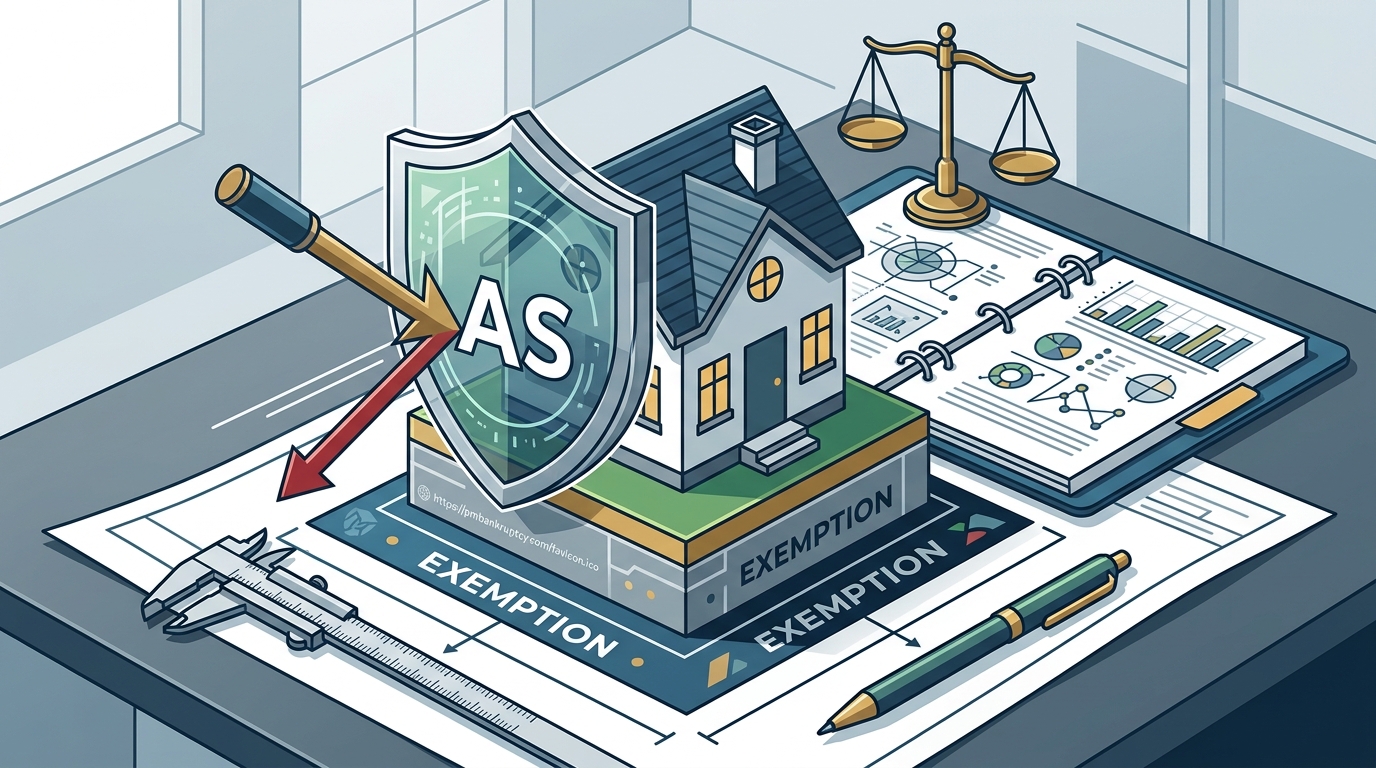
Homestead exemptions are state-specific laws that protect a certain amount of equity in your primary residence from creditors. These exemptions vary widely across the United States, with some states offering unlimited protection and others capping the amount at a few thousand dollars.
In states with generous homestead exemptions, you may be able to retain your home even in a Chapter 7 case, provided your equity does not exceed the exemption limit. For example, in Florida and Texas, there is no cap on the homestead exemption for primary residences, offering robust protection for homeowners.
Conversely, in states with lower exemption limits, you might have significant equity in your home that is not protected. In such cases, a Chapter 13 filing might be necessary to protect that equity while repaying creditors over time. Understanding your state's specific exemption laws is crucial for making an informed decision.
For a comprehensive overview of state exemption laws, refer to the Nolo Legal Encyclopedia which provides detailed state-by-state breakdowns.
Stopping Foreclosure Timelines
Time is often the most critical factor in saving a home. Foreclosure timelines vary by state, with some states requiring judicial foreclosure processes that take months or even years, while others allow non-judicial foreclosures that can move quickly.
Filing for bankruptcy before the foreclosure sale is essential. Once a home is sold at a foreclosure auction, it is generally too late to use bankruptcy to reclaim the property. The automatic stay must be in place before the sale occurs to halt the process effectively.
If you are already in the foreclosure process, acting quickly is vital. Delaying bankruptcy filing can result in the loss of the home and the associated legal protections. Immediate action can preserve your housing and provide a framework for resolving your debt issues.
Analyzing Your Home Equity
Equity is the difference between your home's current market value and the amount you owe on your mortgage. Calculating your equity is a critical step in determining your bankruptcy strategy.
If your equity is low or non-existent, you are in a stronger position to use bankruptcy to save your home. High equity levels may complicate a Chapter 7 filing, as the trustee could potentially liquidate the property. In such cases, Chapter 13 may be the more viable option, allowing you to keep the home while paying off the non-exempt equity over time.
Regularly monitoring your home's market value and mortgage balance can help you anticipate potential issues. If you are unsure about your equity position, a professional appraisal or a comparative market analysis can provide clarity. For more information on calculating equity, see Investopedia's guide on home equity.
Key Takeaways
- The automatic stay provides immediate protection against foreclosure upon filing for bankruptcy.
- Chapter 13 is often the best option for homeowners behind on mortgage payments.
- Homestead exemptions vary by state and determine how much equity is protected.
- Filing before the foreclosure sale is critical to retaining your home.
- High equity may require a Chapter 13 filing to protect the property in Chapter 7.
- Consulting with a bankruptcy attorney is essential for navigating complex exemption laws.
- Timely action can stop foreclosure proceedings and provide a path to financial recovery.
Frequently Asked Questions
Does filing for bankruptcy automatically stop foreclosure?
Yes, filing for bankruptcy triggers the automatic stay, which immediately halts foreclosure proceedings. This provides a temporary pause that allows you to address your debt issues.
Can I keep my home if I file Chapter 7 bankruptcy?
You can keep your home in Chapter 7 if your equity falls within your state's homestead exemption limits and you are current on your mortgage payments. If you are behind, Chapter 13 may be necessary.
What is the homestead exemption?
The homestead exemption is a legal provision that protects a certain amount of equity in your primary residence from creditors. The amount varies by state.
How long does the automatic stay last?
The automatic stay lasts until the bankruptcy case is closed, dismissed, or a relief from stay is granted by the court. In some cases, it may be extended if the court finds cause.
Can I file for bankruptcy if I am already in foreclosure?
Yes, you can file for bankruptcy even if you are in the foreclosure process, as long as the foreclosure sale has not yet occurred. Acting quickly is essential.
What is the difference between Chapter 7 and Chapter 13?
Chapter 7 involves liquidating non-exempt assets to discharge debts, while Chapter 13 involves a repayment plan over three to five years. Chapter 13 is often better for saving a home.
How much does it cost to file for bankruptcy?
Filing fees vary, but typically range from a few hundred to over a thousand dollars depending on the chapter filed. Additional attorney fees apply for legal representation.
Protect Your Home Today
Do not wait until it is too late to save your home. If you are facing foreclosure or financial hardship, contact PM Bankruptcy for a confidential consultation. Our experienced team can help you navigate the complexities of bankruptcy law and develop a strategy to protect your most valuable asset. Schedule your appointment today to explore your options and secure your future.