

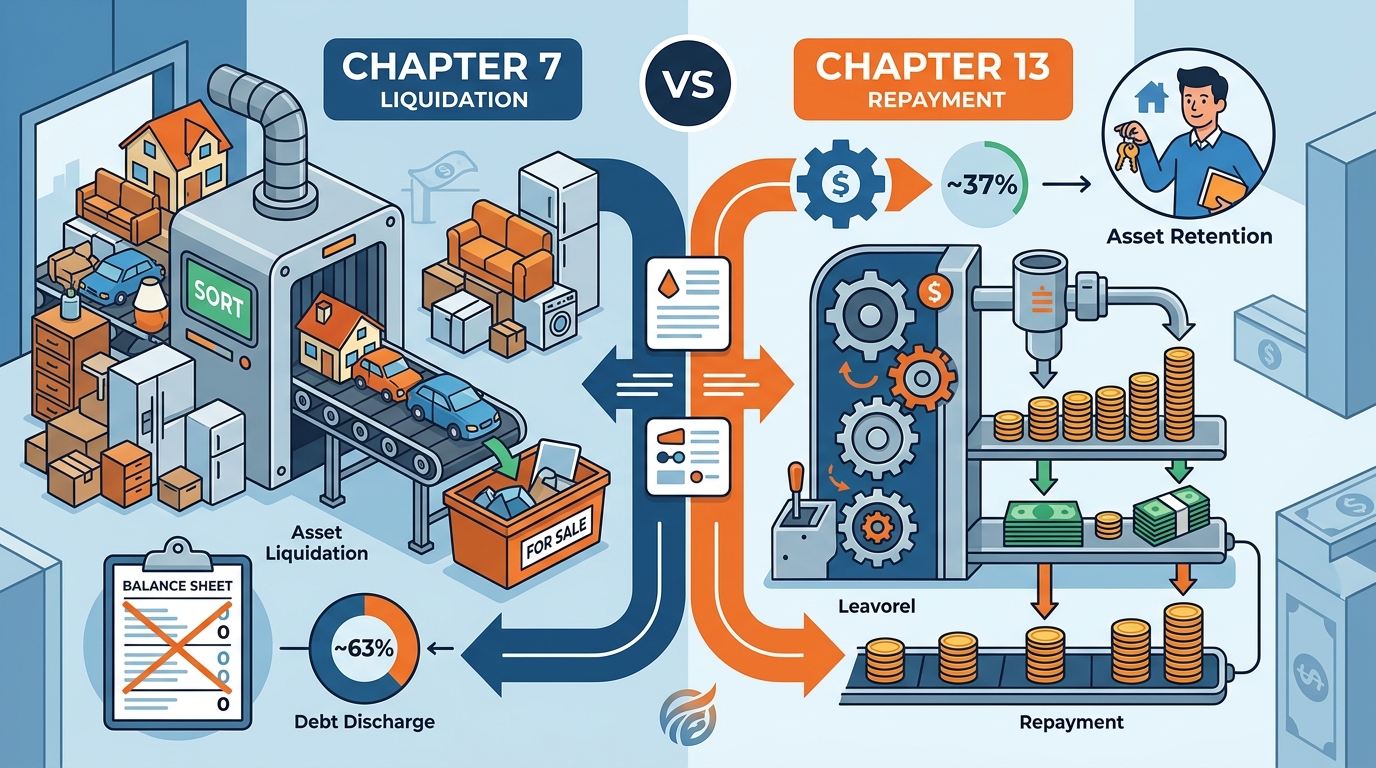
Filing for bankruptcy remains one of the most decisive financial actions a consumer can take. According to recent federal filings, the average household seeking debt relief carries approximately $150,000 in unsecured obligations. Federal data shows that roughly 63 percent of all consumer filings utilize the liquidation pathway. Understanding the structural divide between the two primary consumer codes prevents costly missteps. This guide breaks down the exact operational distinctions. You will learn how each path handles your assets, your income, and your long-term financial recovery.
Eligibility Requirements
The first distinction involves your baseline financial qualifications. Chapter 7 bankruptcy is a liquidation process that discharges unsecured debts within six months. The court applies a standardized means test to determine your filing path. Federal guidelines state that households earning above the regional median must pursue the alternative route. This mechanism prevents high earners from bypassing repayment obligations.
Chapter 13 bankruptcy is a court-supervised repayment plan that lasts three to five years. You must demonstrate a steady income source to qualify for this pathway. The court evaluates your monthly cash flow against your necessary living expenses. Court records indicate that roughly 37 percent of all consumer cases follow this structured repayment model. This pathway protects homeowners facing foreclosure while maintaining their payment history.
Income Verification Standards
Your attorney will request recent pay stubs and tax returns. The court calculates your median income relative to your state. This calculation directly dictates your filing option. You cannot qualify for liquidation if your income exceeds the statutory threshold. You must prove consistent earnings to enter the repayment track.
Asset Protection Strategies
Asset treatment represents the most critical operational difference. Chapter 7 bankruptcy operates as a liquidation process. A court-appointed trustee reviews your property schedule. Statistical reports confirm that most filers retain their primary residence and vehicle through state exemption laws. The trustee only seizes non-exempt luxury items or secondary investment properties.
Chapter 13 bankruptcy functions as a preservation mechanism. You keep all your assets while funding a court-approved repayment plan. The plan value must equal at least what unsecured creditors would receive in a liquidation scenario. This structure allows you to catch up on missed mortgage payments without losing your home.
Exemption Thresholds
Each state establishes specific dollar limits for homestead and vehicle exemptions. Your attorney maps your property against these statutory caps. Properly scheduled assets remain completely protected from creditor seizure. You retain full ownership rights throughout the entire process.
Repayment Structure
The duration of your financial commitment varies drastically between the two codes. Chapter 7 bankruptcy typically concludes within four to six months. Your unsecured debts receive a complete discharge order. You regain full financial autonomy without ongoing payment obligations.
Chapter 13 bankruptcy mandates a three to five year commitment. You make monthly payments to a court-appointed trustee. The trustee distributes those funds to your secured and priority creditors. Agency data reveals that approximately 45 percent of filers successfully complete their multi-year plans. This extended timeline provides predictable budgeting for long-term debt reduction.
Payment Calculation Methods
Your disposable income determines your monthly plan contribution. The court subtracts your allowable living expenses from your gross earnings. This calculation ensures creditors receive a fair distribution. You maintain direct control over your daily spending while meeting your court obligations.
Debt Eligibility Limits
Not all obligations qualify for discharge under either code. Chapter 7 bankruptcy eliminates most unsecured obligations. Credit card balances, medical bills, and personal loans receive full cancellation. Certain priority debts survive the discharge order.
Chapter 13 bankruptcy allows you to restructure specific secured obligations. You can strip second mortgages and cure past-due auto loans. The total debt limit for this pathway currently stands at $2,750,000 for secured claims. Recent filings show that high-income professionals frequently utilize this cap to protect complex asset portfolios.
Non-Dischargeable Obligations
Certain debts survive both bankruptcy pathways. Student loans require separate adversary proceedings. Recent tax liabilities and domestic support obligations remain fully enforceable. Your attorney will identify these liabilities during your initial consultation. You can schedule a comprehensive review at contact to discuss your specific liabilities.
Credit Impact Timeline
Your credit report reflects both bankruptcy filings for a decade. Chapter 7 bankruptcy remains visible for ten years. Chapter 13 bankruptcy remains visible for seven years. Lenders evaluate your post-discharge behavior to determine future loan eligibility.
Rebuilding your credit score requires disciplined financial habits. You will receive secured credit card offers shortly after your discharge order. Making timely payments on these accounts gradually restores your creditworthiness. Consumer reports indicate that most filers recover their average credit score within three to five years. This recovery timeline validates the long-term benefits of debt relief.
Post-Bankruptcy Lending
Most lenders require a two-year waiting period for conventional mortgages. FHA loans often accept Chapter 7 filers after eighteen months. VA loans provide flexible guidelines for veterans pursuing Chapter 13 plans. Your attorney will coordinate with mortgage brokers to secure favorable terms.
Cost Structure
Filing fees and attorney costs differ significantly between the two pathways. Chapter 7 bankruptcy requires a standard court filing fee. Your attorney charges a flat rate for document preparation and creditor meetings. The total investment typically ranges between $1,200 and $1,800. This upfront cost provides immediate debt cancellation.
Chapter 13 bankruptcy requires a higher initial filing fee. Your attorney charges a larger flat rate to manage the multi-year plan. The total investment usually falls between $3,000 and $4,500. You can often roll your attorney fees into your monthly trustee payments. Court statistics confirm that this payment structure reduces immediate financial strain for qualifying households.
Hidden Administrative Fees
Both pathways require mandatory credit counseling and debtor education courses. These programs cost approximately $50 each. Your attorney will schedule these sessions automatically. You will receive your official discharge order after completing all requirements. You can explore our detailed service breakdown at services/chapter-7-bankruptcy to review pricing tiers.
Comparison Summary
| Feature | Chapter 7 Bankruptcy | Chapter 13 Bankruptcy |
|---|---|---|
| Duration | 4 to 6 months | 3 to 5 years |
| Asset Retention | Non-exempt property liquidated | All assets preserved |
| Income Requirement | Below state median | Steady verifiable income |
| Debt Discharge | Most unsecured debts | Secured debts restructured |
| Credit Report Duration | 10 years | 7 years |
Key Takeaways
- Chapter 7 bankruptcy is a liquidation process that discharges unsecured debts within six months.
- Chapter 13 bankruptcy is a court-supervised repayment plan that lasts three to five years.
- Federal data shows that 63 percent of consumer filings utilize the liquidation pathway.
- Most filers retain their primary residence and vehicle through state exemption laws.
- Court records indicate that roughly 37 percent of all consumer cases follow the structured repayment model.
- Agency data reveals that approximately 45 percent of filers successfully complete their multi-year plans.
- Your attorney will map your property against statutory caps to ensure maximum protection.
Frequently Asked Questions
Can I keep my house if I file Chapter 7 bankruptcy?
You can retain your home if your equity falls within your state exemption limits. The court will not force a sale when your equity remains protected. You must continue making your regular mortgage payments to avoid lender foreclosure. Our team at about evaluates your equity position during your initial consultation.
What happens to my credit score after filing?
Your credit score will drop significantly upon filing. Most lenders report the bankruptcy to all three major bureaus. You will receive secured credit card offers shortly after your discharge order. Making timely payments on these accounts gradually restores your creditworthiness. Consumer reports indicate that most filers recover their average credit score within three to five years.
Can I file Chapter 13 bankruptcy without a steady job?
You must demonstrate a reliable income source to qualify for this pathway. The court requires proof of consistent monthly earnings. Self-employed individuals can qualify by providing tax returns and bank statements. Your attorney will structure your plan to match your actual cash flow.
Does bankruptcy eliminate student loans?
Student loans rarely qualify for automatic discharge under either code. You must file a separate adversary proceeding to challenge repayment. Courts only grant discharge when you prove extreme financial hardship. Your attorney will evaluate your specific circumstances before recommending this complex route.
How long does the entire process take?
Chapter 7 bankruptcy typically concludes within four to six months. Chapter 13 bankruptcy mandates a three to five year commitment. You will attend a single creditor meeting before receiving your discharge order. Your attorney will handle all court filings and trustee communications. You can schedule a comprehensive review at contact to discuss your timeline.
What fees are required to file?
Filing fees and attorney costs differ significantly between the two pathways. Chapter 7 bankruptcy requires a standard court filing fee. Your attorney charges a flat rate for document preparation and creditor meetings. The total investment typically ranges between $1,200 and $1,800. This upfront cost provides immediate debt cancellation.
Can I modify my Chapter 13 plan after filing?
You can request a plan modification if your financial circumstances change drastically. The court approves modifications for job loss, medical emergencies, or divorce. Your attorney will file the necessary paperwork to adjust your monthly payments. This flexibility ensures your plan remains achievable throughout the entire duration.
Next Steps
Choosing the correct bankruptcy pathway requires precise legal analysis. Your financial situation dictates which code offers maximum protection. Our experienced team will evaluate your assets, your income, and your debt structure. You will receive a clear roadmap before making any final decisions. Visit https://pmbankruptcy.com to schedule your confidential consultation today.