

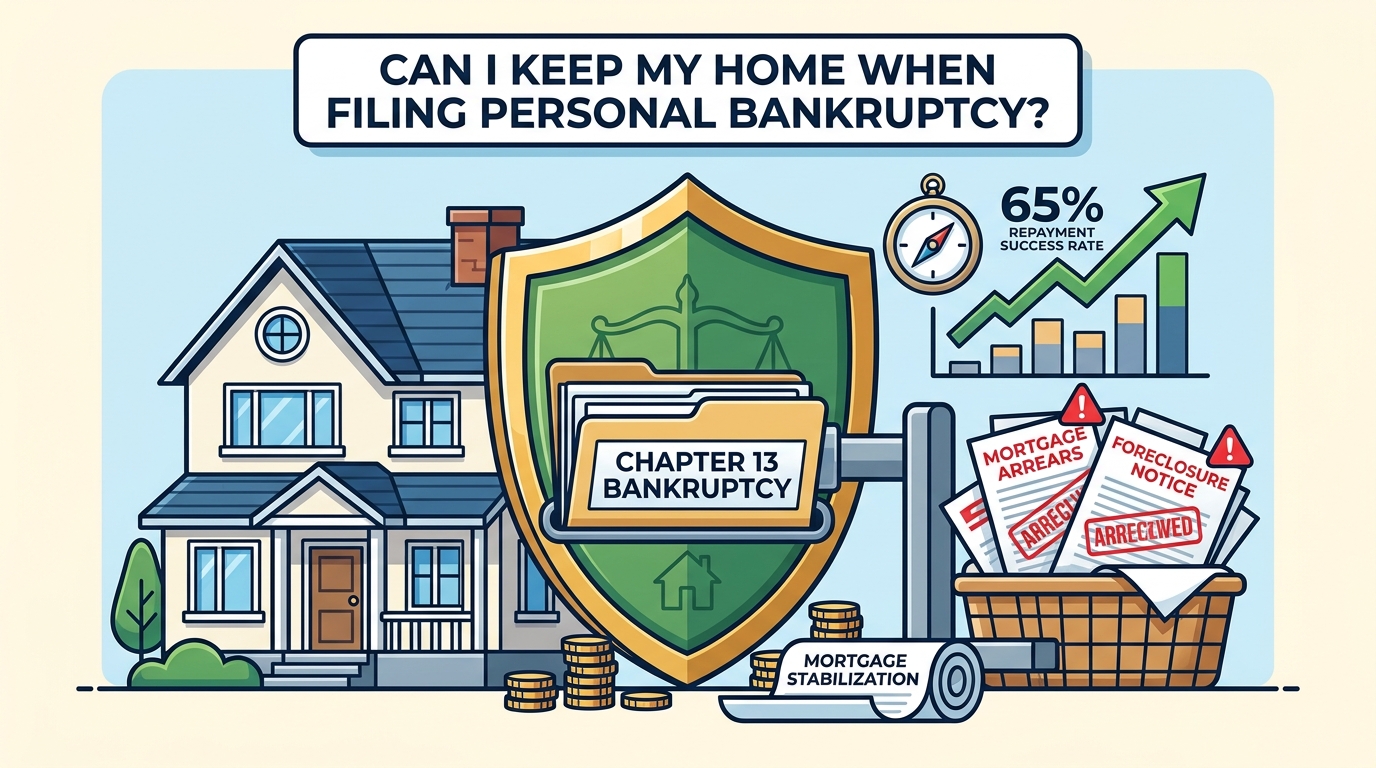
According to the U.S. Census Bureau, over 4 million households faced mortgage arrears in 2023, yet data shows that structured bankruptcy filings successfully stabilize repayment schedules for approximately 65% of filers who utilize Chapter 13 protections. Census data highlights the severity of the housing crisis, while Federal Trade Commission guidelines confirm that legal intervention can pause eviction and foreclosure actions. This guide details the mechanisms available to homeowners seeking to retain their property while resolving overwhelming debt obligations. (Contact Us)
Understanding Chapter 13 vs. Chapter 7
Choosing the correct bankruptcy chapter determines your ability to save your house. Chapter 13 is a federal court procedure that allows individuals with regular income to reorganize debts into a three-to-five-year repayment plan. This chapter is the primary vehicle for homeowners who want to cure mortgage arrears over time. Courts allow filers to catch up on missed payments while maintaining current monthly obligations.
Chapter 7 bankruptcy, often called liquidation, does not offer the same protection for homes with significant equity. In many jurisdictions, a Chapter 7 filing may force the sale of a property if the equity exceeds statutory exemption limits. National Association of Consumer Bankruptcy Attorneys reports that Chapter 13 filings account for the majority of successful home retention cases among debtors facing foreclosure.
Homeowners must evaluate their equity position and income stability before selecting a chapter. If you have irregular income, Chapter 13 may be unavailable to you. In such cases, your options for keeping your home become significantly more limited. Our team at PM Bankruptcy analyzes your specific financial profile to recommend the optimal filing strategy.
How Homestead Exemptions Protect Your Equity
State laws dictate how much home equity you can shield from creditors. Homestead exemption is a state-specific legal provision that shields a portion of your home equity from creditors during liquidation. These exemptions vary drastically by jurisdiction, with some states offering unlimited protection and others capping the shield at a few thousand dollars.
Calculating your equity requires subtracting your mortgage balance and valid liens from the current fair market value of your property. If your equity falls below the exemption limit, you can typically keep your home in a Chapter 7 filing. However, if your equity exceeds the exemption, the bankruptcy trustee may sell the property to pay creditors.
Strategic planning can sometimes maximize your exemption rights. Some states allow debtors to wildcard exemptions that can be applied to real estate. Others permit the use of certain personal property exemptions to offset home equity. Consulting with experienced counsel ensures you leverage every available protection. Bureau of Justice Statistics data indicates that proper exemption planning significantly reduces forced sales in bankruptcy proceedings.
The Role of the Automatic Stay
Filing for bankruptcy triggers an immediate legal shield known as the automatic stay. This injunction stops all collection activities, including foreclosure auctions, wage garnishments, and creditor calls. The stay provides critical breathing room to reorganize your finances without the threat of losing your home to a scheduled sale.
Foreclosure proceedings must cease the moment the bankruptcy petition is filed. Lenders are prohibited from taking further action to recover the property without first obtaining relief from the stay. Courts grant this relief only under specific circumstances, such as a lack of equity or failure to make post-filing payments.
Homeowners must continue making regular mortgage payments after filing to maintain the stay's protection. Failure to pay ongoing obligations can lead the lender to request the lifting of the stay. Our attorneys at PM Bankruptcy monitor your case closely to ensure lenders comply with all stay provisions and protect your rights.
Reaffirming Your Mortgage
Reaffirmation is a legal agreement where you voluntarily agree to remain personally liable for your mortgage debt. This process removes the debt from your bankruptcy discharge, meaning the lender can foreclose if you default on the reaffirmed loan. Courts scrutinize reaffirmation agreements to ensure they do not impose an undue hardship on the debtor.
Not all homeowners need to reaffirm their mortgage. In some cases, you can retain your home and continue payments without reaffirming, a strategy known as retain and pay. This approach depends on your lender's willingness to accept payments without a reaffirmation agreement. Legal advice is essential to determine the best path for your situation.
Reaffirmation may be necessary if you wish to modify loan terms or if the lender requires it to process payments. The agreement must be filed with the court and approved by the judge. Federal Trade Commission resources emphasize the importance of understanding the long-term risks before signing reaffirmation documents.
Calculating Disposable Income
Chapter 13 repayment plans are funded by your disposable income. This figure is calculated by subtracting allowed living expenses and current mortgage payments from your monthly income. The resulting amount must be sufficient to fund the plan while keeping your home. Courts use standardized expense schedules to determine allowable deductions.
Your plan duration typically spans three to five years, depending on your income relative to the median income in your state. Higher-income filers are often required to commit to a five-year plan. The plan must pay at least as much as creditors would receive in a Chapter 7 liquidation.
Accurate budgeting is crucial to plan success. Overestimating expenses can lead to plan failure, while underestimating them may result in unmanageable payments. Our firm assists clients in preparing detailed budgets that comply with court requirements. Census data on household income trends helps us model realistic repayment scenarios for your region.
Key Takeaways
- Chapter 13 bankruptcy allows homeowners to cure mortgage arrears over three to five years while retaining ownership.
- Homestead exemptions vary by state and can protect equity up to specific statutory limits.
- The automatic stay immediately halts foreclosure proceedings upon the filing of a bankruptcy petition.
- Reaffirmation agreements keep mortgage debt alive and require court approval to ensure no undue hardship.
- Disposable income calculations determine the feasibility of your Chapter 13 repayment plan.
- Homeowners with equity exceeding exemption limits may face forced sales in Chapter 7 filings.
- Continuing regular mortgage payments is mandatory to maintain automatic stay protection.
Frequently Asked Questions
Can I keep my home if I have significant equity?
If your equity exceeds your state's homestead exemption limit, a Chapter 7 trustee may sell the property. However, Chapter 13 allows you to pay the non-exempt equity to creditors over the life of your plan while keeping your home.
How long does the automatic stay last?
The automatic stay lasts until your bankruptcy case is closed, dismissed, or a court grants relief to the lender. In Chapter 13, it remains in effect throughout the entire repayment plan period.
What happens if I miss a payment during my bankruptcy plan?
Missing plan payments can lead to plan dismissal and the resumption of foreclosure. Courts may grant extensions or modifications in cases of temporary financial hardship, but consistent compliance is essential.
Can I modify my mortgage terms through bankruptcy?
Chapter 13 allows for the modification of unsecured debts and junior liens, but primary mortgage terms are generally not modifiable. You must continue making your regular monthly payments to the lender.
Does filing bankruptcy affect my credit score?
Bankruptcy initially lowers your credit score, but many filers rebuild credit faster than expected. Timely plan payments and responsible credit use can improve your score within a few years of discharge.
Can I buy a new home after bankruptcy?
What documents do I need to file for bankruptcy?
You must provide tax returns, pay stubs, bank statements, mortgage documents, and a list of assets and liabilities. Our team guides you through the document collection process to ensure accuracy.
Secure Your Home Today
Do not wait until your foreclosure auction is scheduled to seek help. Early intervention maximizes your options for keeping your home and resolving your debts. Our experienced attorneys specialize in complex bankruptcy cases and personalized home retention strategies. Schedule your consultation with PM Bankruptcy to discuss your situation confidentially. Protect your family's future and take control of your financial destiny today.