

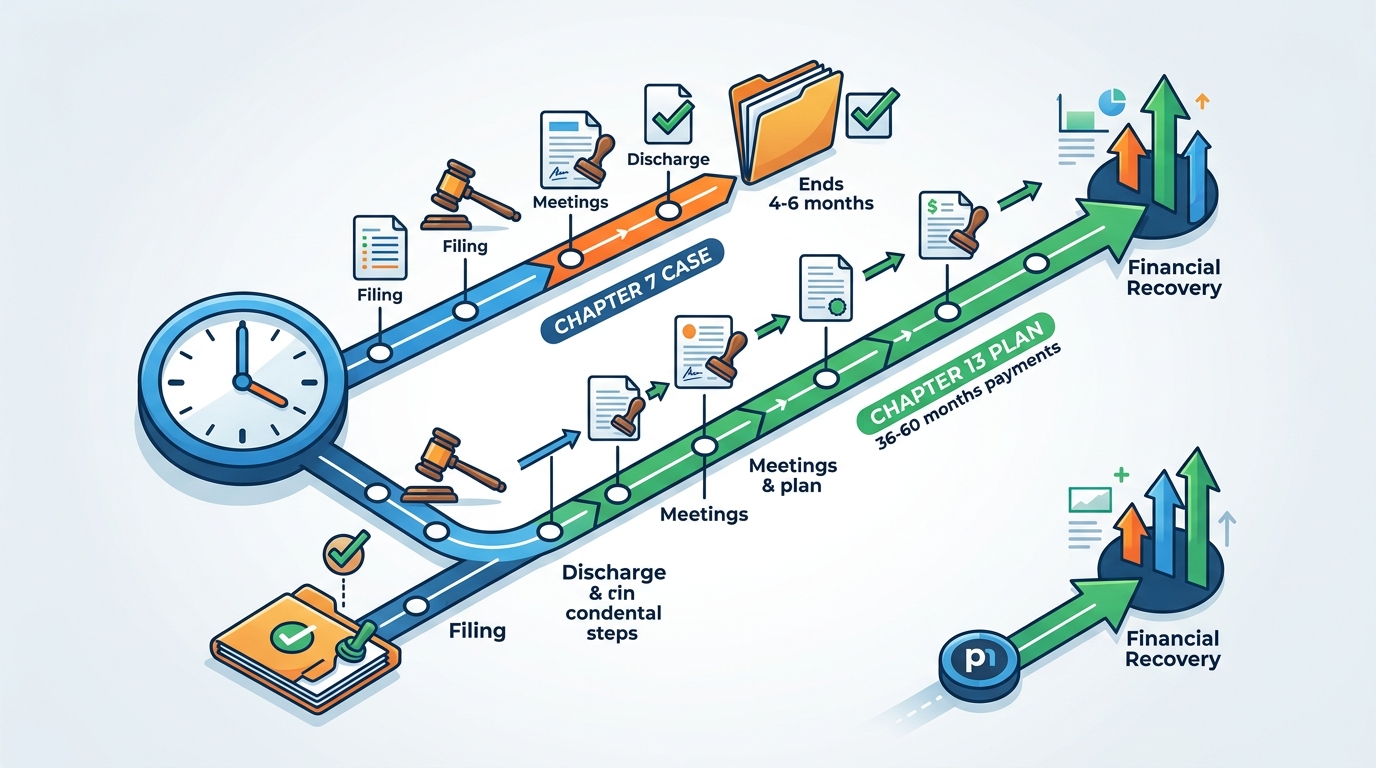
Filing for bankruptcy triggers a structured legal timeline that typically spans several months to a few years depending on your chosen chapter. According to federal court records, the average Chapter 7 case concludes within four to six months, while Chapter 13 reorganization plans require thirty-six to sixty months of consistent payments. Understanding these baseline expectations helps you plan your financial recovery and avoid unnecessary delays. This guide breaks down every procedural phase so you can navigate the system with confidence and precision. Most filers complete their initial paperwork within two weeks, but court scheduling and creditor meetings add necessary buffer time to the overall schedule.
Chapter 7 Timeline
Initial Filing and Automatic Stay
Chapter 7 bankruptcy is a legal proceeding that eliminates most unsecured debts through rapid asset liquidation. The process begins when you submit your petition to the bankruptcy court. Filing automatically triggers an immediate legal shield called the automatic stay. This stay halts all collection actions, including wage garnishments and foreclosure proceedings. Most filers complete their initial paperwork within two weeks. Your attorney will verify your income, assets, and exemptions before submission. The court then assigns a case number and schedules your first hearing. This phase typically requires four to six months from start to finish. You can explore our detailed breakdown of Chapter 7 procedures to understand how unsecured debts are handled.
Chapter 13 Timeline
Structured Repayment Plans
Chapter 13 bankruptcy is a structured repayment plan that allows debtors to retain assets while paying creditors over time. This chapter requires you to propose a court-approved repayment plan. The plan typically spans thirty-six to sixty months. You must make monthly payments to a court-appointed trustee. The trustee then distributes those funds to your creditors. This extended timeline allows you to catch up on missed mortgage payments and restructure secured debts. Our team guides you through every payment milestone to ensure compliance. Learn more about our structured Chapter 13 repayment strategies designed for long-term stability.
Mandatory Credit Counseling
Pre-Filing Requirements
Before you can file any bankruptcy petition, federal law requires you to complete a credit counseling course. This mandatory step ensures you explore all available debt management options. The counseling session usually takes sixty to ninety minutes. You can complete it online, by phone, or in person. The course must be approved by the United States Trustee Program. You will receive a certificate of completion that you must attach to your initial filing. Skipping this step will result in immediate case dismissal. Our firm coordinates these sessions to keep your timeline on track. Visit our contact page to schedule your initial consultation and counseling referral.
Asset Liquidation Process
Exemptions and Trustee Reviews
Chapter 7 cases involve a court-appointed trustee who reviews your financial disclosures. The trustee identifies non-exempt assets that can be sold to pay creditors. Most filers retain their primary home, vehicle, and personal belongings thanks to state exemption laws. The trustee will request a list of all assets and their current market values. You must cooperate fully during this review period. Failure to disclose assets can lead to case denial or fraud allegations. Our attorneys protect your exemptions by preparing comprehensive asset schedules. We also handle complex property valuations to maximize your financial recovery.
Court Hearings and Meetings
The 341 Meeting of Creditors
Every bankruptcy case requires you to attend a mandatory hearing known as the 341 meeting. This meeting occurs roughly twenty to forty days after your initial filing. Creditors may attend to ask questions about your finances, but they rarely show up. The trustee will verify your identity and confirm the accuracy of your paperwork. You must answer questions under oath. This hearing typically lasts ten to fifteen minutes. Your attorney will attend to address any legal complications. We prepare you thoroughly so you can answer confidently and move forward. Check our about our firm page to see how we advocate for clients at every hearing.
Discharge Timing and Exceptions
Final Court Orders and Debt Elimination
The discharge order represents the official conclusion of your bankruptcy case. This court document legally eliminates your responsibility for most unsecured debts. Chapter 7 discharges typically arrive sixty to ninety days after your 341 meeting. Chapter 13 discharges occur after you complete your entire repayment plan. Certain debts survive bankruptcy, including student loans, recent taxes, and child support. You must request a hardship discharge if you experience severe financial changes. Our legal team monitors court dockets to ensure your discharge order issues without delay. We also handle adversary proceedings if creditors challenge your eligibility.
Bankruptcy Option Comparison
| Chapter Type | Typical Duration | Primary Goal | Asset Handling |
|---|---|---|---|
| Chapter 7 | 4 to 6 months | Rapid debt elimination | Non-exempt assets liquidated |
| Chapter 13 | 36 to 60 months | Structured repayment | Assets retained via plan |
| Chapter 11 | Variable timeline | Business restructuring | Complex asset management |
| Chapter 12 | 36 to 60 months | Family farming relief | Agricultural equipment retained |
Key Takeaways
- Chapter 7 cases typically resolve within four to six months from initial filing.
- Chapter 13 repayment plans require thirty-six to sixty months of consistent trustee payments.
- Mandatory credit counseling must be completed before petition submission to avoid dismissal.
- The automatic stay is an immediate court order that halts all collection actions, lawsuits, and foreclosures upon filing.
- The 341 meeting occurs roughly twenty to forty days after your initial paperwork.
- According to the Federal Trade Commission, bankruptcy lowers your credit score temporarily, but it does not damage your rating forever.
- According to the National Association of Consumer Bankruptcy Attorneys, state exemption laws protect most primary residences and vehicles from liquidation.
- Discharge orders legally eliminate unsecured debt responsibilities after court approval.
Frequently Asked Questions
Can I file bankruptcy while my foreclosure is scheduled?
Yes, filing bankruptcy triggers an automatic stay that immediately pauses foreclosure proceedings. This legal shield gives you time to reorganize your finances or negotiate a loan modification. Your attorney can request a stay extension if you demonstrate good faith efforts to resolve the debt.
Does bankruptcy affect my credit score permanently?
Bankruptcy lowers your credit score temporarily, but it does not damage your rating forever. Most filers begin rebuilding their credit within twelve months of discharge. You can obtain secured credit cards and auto loans shortly after your case closes.
What happens if creditors object to my discharge?
Creditors rarely object, but they can file an adversary proceeding if they suspect fraud or concealment. Your attorney will defend your case in court and present evidence of compliance. Most objections are dismissed when filers maintain transparent financial records.
How long does it take to get a discharge after the 341 meeting?
Chapter 7 discharges typically issue sixty to ninety days after your creditor meeting. Chapter 13 discharges arrive after you complete your entire repayment schedule. Court processing times vary slightly by jurisdiction, but delays are uncommon.
Can I keep my car if I file Chapter 7 bankruptcy?
Most filers retain their vehicles by claiming state motor vehicle exemptions. If you are behind on payments, you may reaffirm the loan or redeem the vehicle at current market value. Our attorneys structure these options to keep your transportation intact.
What documents do I need to start the bankruptcy process?
You must provide recent pay stubs, tax returns, bank statements, and debt schedules. Your attorney will compile these documents into a comprehensive petition package. Missing paperwork causes court delays, so accuracy is essential.
Is bankruptcy available for business owners?
Yes, business owners can file Chapter 11 or Chapter 7 bankruptcy depending on their structure. Chapter 11 allows you to reorganize operations while maintaining control. Chapter 7 liquidates business assets to pay creditors. We handle both corporate and sole proprietorship filings.
Start Your Financial Recovery Today
The bankruptcy timeline varies based on your chapter selection, asset complexity, and court scheduling. You do not need to navigate these procedures alone. Our experienced attorneys handle every filing, hearing, and court document so you can focus on rebuilding your life. Schedule your confidential consultation today and receive a clear, customized timeline for your specific situation. Book your bankruptcy consultation now and take the first step toward lasting financial freedom.