

Understanding which debts can be discharged through personal bankruptcy is critical for anyone considering financial relief. According to the American Bankruptcy Institute, approximately 2.3 million bankruptcy petitions were filed in the United States in 2023, highlighting the widespread need for legal debt resolution. However, not all financial obligations are created equal under the law. Some debts vanish completely, while others survive the process entirely. This guide clarifies the distinction between dischargeable and non-dischargeable debts, helping you make informed decisions about your financial future. (Contact Us)
Credit Card Debt Dischargeability
Credit card debt is one of the most common forms of unsecured debt that individuals seek to eliminate through bankruptcy. When you file for Chapter 7 or Chapter 13 bankruptcy, credit card balances are typically included in the dischargeable category. This means that once your case is closed and the discharge is granted, you are no longer legally obligated to pay these balances. (Frequently Asked Questions)
However, there are exceptions. If you incurred large purchases or cash advances shortly before filing, creditors may argue that the debt was incurred with no intention of repayment. This is known as fraud or false pretenses. To avoid this, it is advisable to wait at least 90 days after making significant charges before filing for bankruptcy. For more information on how credit card debt is handled, visit our Chapter 7 Bankruptcy Services page. (About)
Medical Bills and Healthcare Debt
Medical debt is another significant burden for many Americans. Unlike student loans or tax debts, medical bills are generally dischargeable in bankruptcy. This includes unpaid hospital bills, doctor visits, and prescription costs. The financial strain of healthcare expenses often pushes individuals into bankruptcy, making this a crucial area of focus.
According to the Kaiser Family Foundation, medical debt affects millions of households across the country. Filing for bankruptcy can provide immediate relief from these pressures, allowing you to focus on recovery rather than collection calls. If you are struggling with medical debt, consider scheduling a consultation with our team to discuss your options.
Personal Loans and Unsecured Debt
Personal loans from banks, credit unions, or online lenders are typically unsecured debts. This means they are not backed by collateral like a house or car. As a result, they are generally dischargeable in bankruptcy. Whether you have a small personal loan or a larger line of credit, these debts can often be wiped clean through the bankruptcy process.
It is important to note that if you co-signed a loan, the co-signer may still be held liable depending on the type of bankruptcy filed. In Chapter 7, the co-signer might face collection efforts, whereas Chapter 13 may offer some protection. Learn more about Chapter 13 Bankruptcy to understand how it can protect your co-signers.
Utility Bills and Service Charges
Utility bills, including electricity, water, and gas, are also dischargeable in bankruptcy. However, there is a nuance here. While the debt itself can be discharged, the utility company may require a deposit to restart service if your account was terminated due to non-payment. This deposit is not a debt but a security measure.
Additionally, any late fees or penalties associated with utility bills are generally dischargeable. This can provide significant relief for individuals who have fallen behind on essential services. For guidance on managing utility debt during bankruptcy, explore our Debt Relief Options resource.
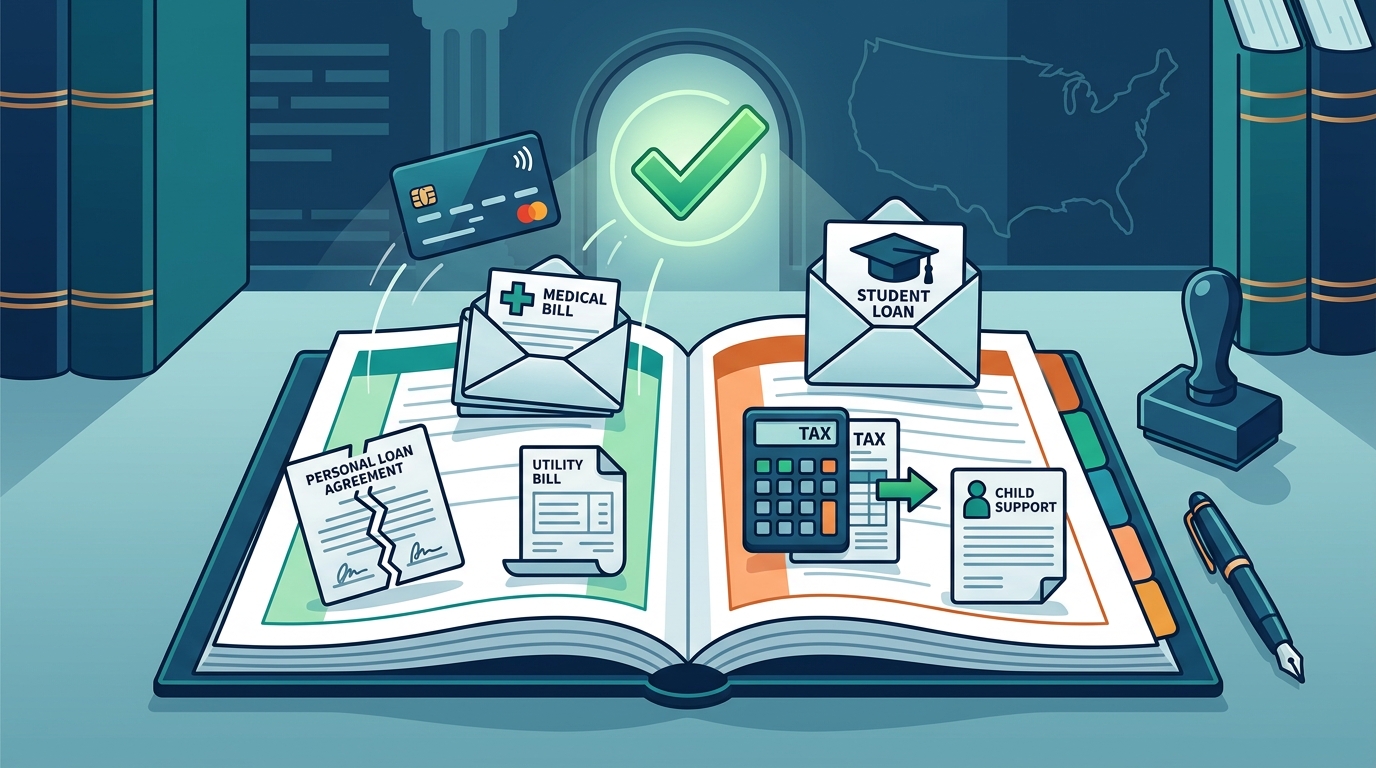
Debts That Cannot Be Discharged
While many debts can be discharged, certain obligations are protected by law and must be paid regardless of your bankruptcy filing. Understanding these exceptions is vital to avoid false hope and ensure you are prepared for post-bankruptcy financial responsibilities.
Student Loans
Student loans are notoriously difficult to discharge. Under the Bankruptcy Code, student loans are only dischargeable if you can prove "undue hardship." This is a high legal standard that requires a separate adversary proceeding. According to the Department of Education, very few student loan borrowers successfully discharge their loans through bankruptcy. If you are struggling with student debt, consider our Student Loan Analysis service.
Tax Debts
Tax debts are generally non-dischargeable if they meet specific criteria. For example, if the tax return was due within the last three years, or if you filed fraudulently, the debt will survive bankruptcy. However, older tax debts may be eligible for discharge. Consult with a tax bankruptcy specialist to determine your eligibility.
Domestic Support Obligations
Alimony, child support, and other domestic support obligations are never dischargeable. These debts are prioritized by the court to ensure that dependents are provided for. Ignoring these obligations during bankruptcy can lead to severe legal consequences.
Debts from Fraud or Willful Injury
If you incurred debt through fraud, embezzlement, or willful and malicious injury, that debt is non-dischargeable. Creditors can file a complaint to have these debts excepted from discharge. This underscores the importance of honesty and transparency during the bankruptcy process.
Key Takeaways
- Credit card debt is typically dischargeable unless incurred through fraud.
- Medical bills are generally dischargeable, providing relief for healthcare expenses.
- Personal loans and unsecured debts can often be wiped clean in bankruptcy.
- Utility bills are dischargeable, but deposits may be required for service restoration.
- Student loans are rarely dischargeable due to the "undue hardship" standard.
- Tax debts may be dischargeable if they meet specific age and filing criteria.
- Domestic support obligations like child support are never dischargeable.
Frequently Asked Questions
Can I discharge credit card debt in Chapter 7?
Yes, credit card debt is typically discharged in Chapter 7 bankruptcy. This provides a fresh start by eliminating unsecured debts. However, any debts incurred through fraud may be excepted from discharge.
Are medical bills dischargeable in bankruptcy?
Yes, medical bills are generally dischargeable in both Chapter 7 and Chapter 13 bankruptcy. This can provide significant relief for individuals facing overwhelming healthcare costs.
Can student loans be discharged in bankruptcy?
Student loans are difficult to discharge and require proving "undue hardship." This is a high legal standard that involves a separate adversary proceeding. Most borrowers do not successfully discharge student loans.
What happens to tax debt in bankruptcy?
Tax debt may be dischargeable if it meets specific criteria, such as being older than three years and filed on time. Recent tax debts or those from fraudulent returns are generally non-dischargeable.
Can I discharge child support in bankruptcy?
No, child support and other domestic support obligations are never dischargeable in bankruptcy. These debts must be paid in full regardless of your bankruptcy filing.
Are utility bills dischargeable in bankruptcy?
Yes, utility bills are dischargeable in bankruptcy. However, utility companies may require a deposit to restart service if your account was terminated due to non-payment.
What is the difference between Chapter 7 and Chapter 13 discharge?
Chapter 7 provides a quicker discharge of debts, typically within a few months. Chapter 13 involves a repayment plan over three to five years, after which remaining eligible debts are discharged. The choice depends on your income and asset situation.
Take Control of Your Financial Future
Understanding which debts can be discharged is the first step toward financial freedom. If you are overwhelmed by debt, do not wait until it is too late. Contact PM Bankruptcy today to schedule a consultation. Our experienced team is here to guide you through the bankruptcy process and help you achieve a fresh start. Visit our Services page to learn more about how we can assist you.