

Understanding the distinction between Chapter 7 and Chapter 13 bankruptcy is critical for anyone facing financial distress. According to recent data from the Administrative Office of the U.S. Courts, Chapter 7 filings consistently account for the majority of personal bankruptcy cases, yet Chapter 13 remains the preferred route for homeowners seeking to stop foreclosure. This divergence highlights that the "best" option is entirely dependent on your specific asset profile and income stability. Choosing the wrong path can lead to dismissed cases, lost assets, or unnecessary financial burden over a five-year period.
Eligibility Requirements and Means Testing
The most immediate hurdle in determining your bankruptcy path is eligibility. Chapter 7 is not available to every debtor. It requires passing a means test, which compares your median income to the median income in your state. If your income is too high, the court presumes you have the ability to repay some debts, and you are disqualified from Chapter 7.
Chapter 13, often called a "wage earner's plan," has different eligibility criteria. You must have a regular source of income to fund the repayment plan. Furthermore, there are strict debt limits. As of the latest adjustments by the Department of Justice, unsecured debts must be less than $2,750,000, and secured debts must be less than $2,750,000. If your debts exceed these thresholds, you may need to consider Chapter 11, which is typically reserved for businesses or high-net-worth individuals.
At Palm Beach Bankruptcy, we analyze your income history and debt structure to determine which chapter you qualify for. The means test is a complex calculation involving allowable expenses and income adjustments. Misinterpreting these rules can lead to case dismissal, leaving you with legal fees and no debt relief.
Asset Protection and Exemptions
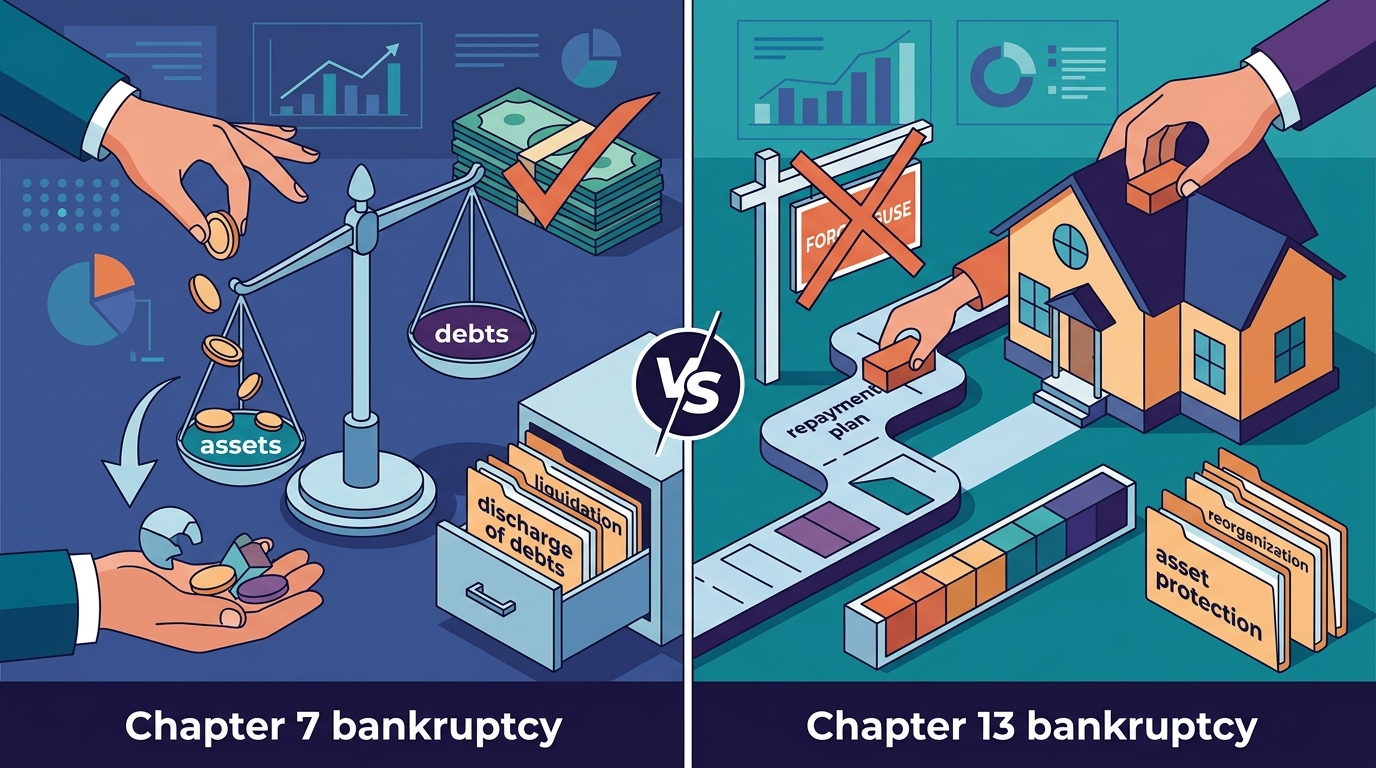
One of the primary concerns for debtors is what they will lose. Chapter 7 is known as a "liquidation" bankruptcy. In theory, a trustee can seize non-exempt assets to pay creditors. However, in practice, many Chapter 7 cases are "no-asset" cases. This means your exempt assets are worth less than the exemption limits, so nothing is sold.
Exemptions vary significantly by state. Florida, where Palm Beach Bankruptcy operates, offers robust homestead exemptions that can protect your primary residence from creditors, provided you meet certain residency requirements. This makes Chapter 7 highly attractive for homeowners in Florida who are current on their mortgage payments but struggling with unsecured debt.
Chapter 13 does not involve liquidation. Instead, it allows you to keep all your property, including non-exempt assets, as long as you pay creditors at least as much as they would receive in a Chapter 7 liquidation. This is crucial for individuals who have valuable assets that exceed exemption limits but still want to avoid liquidation.
Understanding the interplay between federal and state exemptions is vital. Federal bankruptcy exemptions provide a baseline, but most states, including Florida, require debtors to use state-specific exemptions. Consulting with experienced legal counsel ensures you maximize these protections.
Debt Discharge and Creditor Impact
The ultimate goal of bankruptcy is debt discharge. Chapter 7 provides a quicker discharge, typically within three to six months after filing. This includes credit card debt, medical bills, personal loans, and utility bills. However, certain debts are non-dischargeable in Chapter 7, such as recent tax debts, student loans (in most cases), alimony, and child support.
Chapter 13 offers a broader scope of dischargeable debts. While it still does not discharge student loans or domestic support obligations, it can discharge some debts that Chapter 7 cannot, such as certain co-signer liabilities and some tax obligations. This makes Chapter 13 a powerful tool for individuals who need to protect co-signers on loans or address complex tax issues.
Creditor behavior also differs. In Chapter 7, the automatic stay stops collection activities immediately. Creditors must cease calls, lawsuits, and wage garnishments. In Chapter 13, the automatic stay also applies, but creditors may continue to receive payments through your plan. This can be advantageous for catching up on arrears while maintaining a relationship with certain lenders.
For detailed information on dischargeable debts, refer to National Consumer Law Center guidelines on bankruptcy discharge. Understanding what can be wiped clean is essential for financial recovery.
Payment Structure and Duration
The payment structure is where the two chapters diverge most dramatically. Chapter 7 requires no monthly payments to the bankruptcy trustee. You file the petition, attend the meeting of creditors, and receive your discharge. The process is relatively inexpensive and fast.
Chapter 13 requires a monthly payment to a trustee, who then distributes funds to your creditors. This plan lasts three to five years, depending on your income relative to the state median. If your income is below the median, the plan is typically three years. If it is above, it is usually five years. During this time, you must maintain your current mortgage and car payment obligations to avoid foreclosure or repossession.
This long-term commitment requires discipline and stability. If you lose your job or experience a significant income drop during the plan, you may struggle to make payments. However, Chapter 13 allows you to modify certain secured debts, such as reducing a second mortgage to the value of the home if the home is worth less than the first mortgage. This "lien stripping" is a unique benefit of Chapter 13.
For insights on debt modification strategies, see Consumer Financial Protection Bureau resources on debt management. Planning for the long haul is critical for success in Chapter 13.
Cost Comparison and Fees
Financial cost is a major factor in the decision-making process. Chapter 7 is generally less expensive overall. Filing fees are lower, and attorney fees are typically flat-rate because the case is shorter and less complex. Total costs often range from $1,500 to $2,500, depending on the attorney and jurisdiction.
Chapter 13 is more costly due to the duration and complexity. Filing fees are higher, and attorney fees are often structured as a combination of upfront and ongoing payments. Total costs can range from $3,500 to $5,000 or more. Additionally, you are making monthly payments to creditors for three to five years, which adds up significantly.
However, the cost must be weighed against the benefit. If Chapter 13 allows you to save your home from foreclosure or keep a valuable asset, the higher cost may be justified. At Palm Beach Bankruptcy, we provide transparent fee structures and payment plans to make legal representation accessible.
Key Takeaways
- Speed of Relief: Chapter 7 provides debt discharge in 3-6 months, while Chapter 13 requires a 3-5 year repayment plan.
- Asset Retention: Chapter 13 allows you to keep non-exempt assets by paying their value to creditors, whereas Chapter 7 may liquidate them.
- Income Eligibility: Chapter 7 requires passing a means test based on median income; Chapter 13 requires regular income to fund the plan.
- Debt Limits: Chapter 13 has strict debt ceilings (e.g., $2,750,000 for secured/unsecured debts as of recent DOJ updates).
- Homeowner Benefits: Chapter 13 is superior for stopping foreclosure and catching up on mortgage arrears over time.
- Cost: Chapter 7 is generally less expensive in legal fees and total cost due to its shorter duration.
- Florida Exemptions: Florida's strong homestead exemption makes Chapter 7 viable for many homeowners who might be ineligible in other states.
Frequently Asked Questions
Can I file for Chapter 7 if I own a home?
Yes, if you live in Florida, you may be able to protect your home under the state's homestead exemption. The exemption amount depends on the size of your property and how long you have lived in the state. Consult with Palm Beach Bankruptcy experts to evaluate your specific situation.
What happens to my credit score after bankruptcy?
Both Chapter 7 and Chapter 13 will negatively impact your credit score initially. A Chapter 7 bankruptcy remains on your credit report for 10 years, while Chapter 13 remains for 7 years. However, many individuals begin to rebuild their credit within a few years by using secured credit cards and paying bills on time.
Can I discharge student loans in bankruptcy?
Generally, no. Student loans are considered non-dischargeable unless you can prove "undue hardship," which is a very high legal standard. This applies to both Chapter 7 and Chapter 13. However, Chapter 13 may allow you to restructure payments to make them more manageable.
Do I have to pay all my debts in Chapter 13?
No. In Chapter 13, you pay a portion of your unsecured debts based on your disposable income and the value of your non-exempt assets. If you have no non-exempt assets and low disposable income, you might pay only a small percentage of your unsecured debt, with the remainder discharged at the end of the plan.
How long does the Chapter 7 process take?
The typical Chapter 7 case takes about 4 to 6 months from filing to discharge. This includes the time for the meeting of creditors and the resolution of any objections. The process is significantly faster than Chapter 13.
Can I keep my car in Chapter 7?
Yes, if the value of your car is within the exemption limits. If you are behind on car payments, you may need to reaffirm the debt or redeem the vehicle to keep it. Otherwise, the lender may repossess it. Automobile debt solutions are a key part of our bankruptcy strategy.
What is the means test?
The means test is a calculation used to determine if you qualify for Chapter 7. It compares your median income to the median income in your state and deducts allowable expenses. If your disposable income is below a certain threshold, you pass the test and can file Chapter 7.
Take Control of Your Financial Future
Choosing between Chapter 7 and Chapter 13 is a complex decision that requires professional guidance. The stakes are high, involving your home, your assets, and your financial future. Do not navigate this process alone. Contact Palm Beach Bankruptcy today to schedule a consultation. We will analyze your unique financial situation, explain your options clearly, and help you choose the path that offers the most relief and protection. Your fresh start begins with the right decision.