

Understanding which debts can be wiped clean is the primary motivation for individuals considering Chapter 7 or Chapter 13 filings. According to the American Bankruptcy Institute, over 600,000 bankruptcy petitions were filed in the United States in recent years, highlighting the widespread reliance on these legal tools for financial relief. Navigating the complex landscape of dischargeable debts requires a clear understanding of federal bankruptcy codes and how they apply to your specific financial situation. This guide explores the critical distinctions between debts that can be eliminated and those that remain legally binding, providing you with the knowledge needed to make informed decisions about your financial future.
Credit Card Debt Dischargeability
Credit card debt is one of the most common forms of unsecured debt that individuals seek to eliminate through bankruptcy. Unlike secured debts, credit card balances do not have collateral attached to them, making them ideal candidates for discharge in Chapter 7 proceedings. When you file for bankruptcy, the automatic stay immediately halts collection efforts, including phone calls, letters, and lawsuits from credit card companies.
The process of discharging credit card debt involves proving that you are unable to repay the outstanding balance. In many cases, the mere fact of filing for bankruptcy is sufficient to trigger the discharge. However, there are exceptions. If you incurred large purchases or cash advances shortly before filing, the court may view these as fraudulent transfers. It is crucial to avoid new debt accumulation in the months leading up to your filing date.
For more information on how unsecured debt is handled, visit our Chapter 7 Bankruptcy Services page to learn about the liquidation process.
Medical Bills and Healthcare Costs
Medical debt is another significant burden that bankruptcy can help alleviate. Unlike many other types of debt, medical bills are almost always dischargeable in both Chapter 7 and Chapter 13 bankruptcies. This is because medical debt is considered unsecured, meaning it is not backed by any collateral. The financial strain of unexpected healthcare costs can push even the most financially responsible individuals into debt, making bankruptcy a viable option for recovery.
It is important to note that while the principal amount of medical debt can be discharged, any interest or fees that accrue after the filing date may not be eligible for discharge. Therefore, it is advisable to file for bankruptcy as soon as possible after incurring significant medical debt to minimize additional charges. Our team at PM Bankruptcy specializes in helping clients navigate these complex financial landscapes, ensuring that their medical debts are properly addressed in their bankruptcy plan.
Personal Loans and Unsecured Debt
Personal loans from banks, credit unions, or online lenders are typically unsecured debts that can be discharged through bankruptcy. These loans are often taken out for various purposes, such as home improvements, debt consolidation, or emergency expenses. When you file for bankruptcy, these loans are treated similarly to credit card debt, with the primary difference being the original loan terms and interest rates.
In a Chapter 7 bankruptcy, personal loans are usually discharged entirely, provided they were not obtained through fraud. In a Chapter 13 bankruptcy, these loans may be restructured as part of your repayment plan, allowing you to pay back a portion of the debt over three to five years. Understanding the nuances of how personal loans are treated in different bankruptcy chapters is essential for maximizing your financial relief. Learn more about our Chapter 13 Bankruptcy Options to see how restructuring can benefit your specific situation.
Utility Bills and Service Arrears
Utility bills, including electricity, gas, water, and internet services, are generally dischargeable in bankruptcy. However, there is a critical distinction between past-due balances and ongoing service obligations. While the arrears (past-due amounts) can be wiped clean, your utility companies may require a new deposit to continue service after the bankruptcy filing. This is a standard practice to mitigate the risk of non-payment.
Discharging utility bills can provide immediate relief by eliminating the pressure of past-due balances. It also allows you to restart your financial life with a clean slate regarding service providers. If you are facing disconnection of services due to unpaid bills, filing for bankruptcy can stop these actions immediately under the automatic stay. For guidance on managing utility debt during bankruptcy, contact our office at PM Bankruptcy for personalized advice.
Debts That Cannot Be Discharged
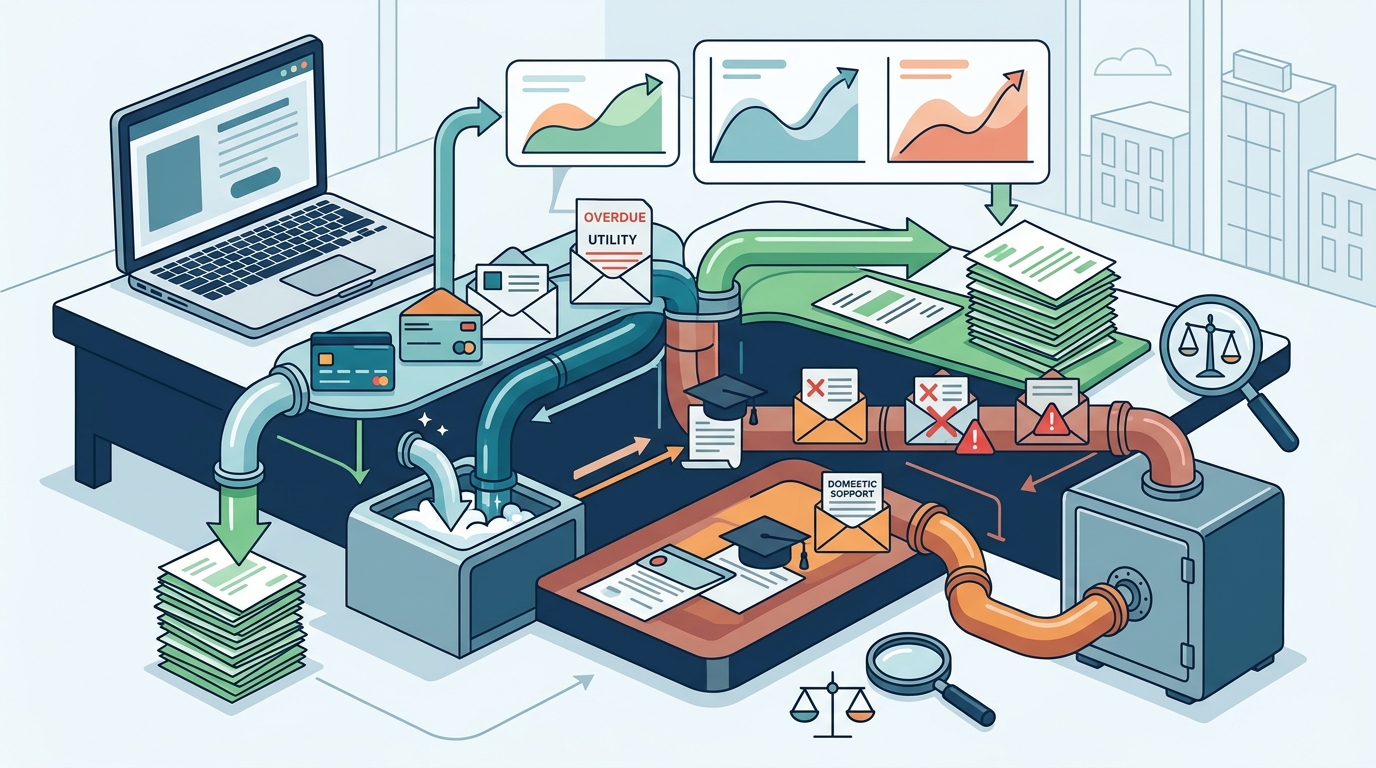
While bankruptcy offers significant relief, it is not a magic wand that eliminates all financial obligations. Certain debts are explicitly non-dischargeable under federal law. Understanding these exceptions is crucial to avoid false hopes and ensure you are fully prepared for the post-bankruptcy financial landscape.
Common non-dischargeable debts include:
- Student Loans: Generally, student loans are not dischargeable unless you can prove "undue hardship," a very high legal standard that is difficult to meet.
- Tax Debts: Recent income tax debts, typically those less than three years old, are often non-dischargeable. However, older tax debts may be eligible for discharge under specific conditions.
- Domestic Support Obligations: Child support and alimony payments are never dischargeable. These obligations are considered paramount to the well-being of dependents.
- Debts from Fraud or Willful Injury: If you incurred debt through fraud or caused willful and malicious injury to another person, that debt cannot be discharged.
For a detailed breakdown of these exceptions, review our Bankruptcy FAQs section.
Comparison of Dischargeable vs. Non-Dischargeable Debts
| Debt Type | Chapter 7 Dischargeable? | Chapter 13 Dischargeable? | Key Conditions |
|---|---|---|---|
| Credit Card Debt | Yes | Yes | Must not be recent fraudulent charges |
| Medical Bills | Yes | Yes | Unsecured debt |
| Personal Loans | Yes | Yes (via plan) | Not obtained via fraud |
| Student Loans | No | No | Requires undue hardship proof |
| Child Support | No | No | Always priority obligation |
Key Takeaways
- Credit card and medical debts are typically dischargeable in Chapter 7 bankruptcy, providing immediate financial relief.
- Personal loans can be eliminated or restructured, depending on the bankruptcy chapter filed.
- Utility bill arrears can be discharged, but new deposits may be required for continued service.
- Student loans and domestic support obligations are generally non-dischargeable under federal law.
- Filing for bankruptcy triggers an automatic stay, stopping all collection activities immediately.
- Fraudulent transfers or recent large purchases can jeopardize the dischargeability of debts.
- Consulting with a bankruptcy attorney is essential to determine which debts can be discharged in your specific case.
Frequently Asked Questions
Can I discharge student loans in bankruptcy?
Generally, no. Student loans are considered non-dischargeable unless you can prove "undue hardship" through a separate legal proceeding, which is a difficult standard to meet.
Are tax debts dischargeable in bankruptcy?
Some tax debts may be dischargeable, particularly older income taxes that meet specific criteria regarding filing dates and assessments. Recent tax debts are typically not dischargeable.
What happens to my credit card debt after filing?
Upon filing, the automatic stay stops collection efforts. If you qualify for Chapter 7, the debt is usually discharged entirely. In Chapter 13, it may be included in your repayment plan.
Can I keep my house if I file for bankruptcy?
You may be able to keep your house if you have equity within the exemption limits. Chapter 13 allows you to catch up on mortgage arrears over time, helping you retain ownership.
How long does the bankruptcy process take?
Chapter 7 typically takes about three to four months from filing to discharge. Chapter 13 plans last three to five years, after which remaining eligible debts are discharged.
Are utility bills discharged in bankruptcy?
Past-due utility bills can be discharged. However, utility companies may require a new deposit to ensure future payments are made on time.
What is the automatic stay?
The automatic stay is a legal provision that immediately stops most collection actions, including lawsuits, wage garnishments, and foreclosure proceedings, upon filing for bankruptcy.
Take Control of Your Financial Future
Understanding which debts can be discharged is the first step toward financial freedom. Whether you are facing overwhelming credit card debt, mounting medical bills, or other unsecured obligations, bankruptcy can provide the relief you need. Do not let debt dictate your future. Contact PM Bankruptcy today to schedule a consultation and explore your options for a fresh start.