
Financial distress often feels like an inescapable trap, but personal bankruptcy offers a structured legal pathway to relief. According to the American Bankruptcy Institute, over 600,000 bankruptcy petitions were filed in the United States in 2023, highlighting the widespread reliance on these legal mechanisms to reset financial health. Understanding which debts can be wiped clean is critical for anyone considering this step. This guide clarifies the legal landscape of debt discharge, helping you distinguish between obligations that vanish and those that persist. (Contact Us)
Understanding Debt Discharge
Debt discharge is the legal mechanism that eliminates your personal liability for specific debts. When a debt is discharged, creditors are permanently prohibited from attempting to collect the money from you. This protection is enforced by the bankruptcy court and applies to both the debtor and their property.
Not all debts are created equal in the eyes of the law. The Bankruptcy Code categorizes debts into two main groups: those that can be discharged and those that cannot. This distinction is vital because it determines whether bankruptcy will actually solve your financial problems or merely delay the inevitable. For many individuals, the goal is to eliminate high-interest consumer debt, while others seek to restructure secured loans to keep their homes or cars.
At PM Bankruptcy, we emphasize that the first step in any bankruptcy case is a thorough review of your financial obligations. We help clients identify which debts fall into the dischargeable category and which will require continued payment. This clarity allows for realistic planning and prevents the disappointment of assuming relief where none exists.
Chapter 7 Dischargeable Debts
Chapter 7 bankruptcy, often referred to as "liquidation" bankruptcy, is the most common form of personal bankruptcy. It provides a relatively quick discharge of unsecured debts. The primary benefit of Chapter 7 is its ability to wipe out most consumer debts without requiring a repayment plan.
Unsecured Consumer Debts
The most significant category of dischargeable debt in Chapter 7 includes unsecured consumer debts. These are debts not backed by collateral. Common examples include:
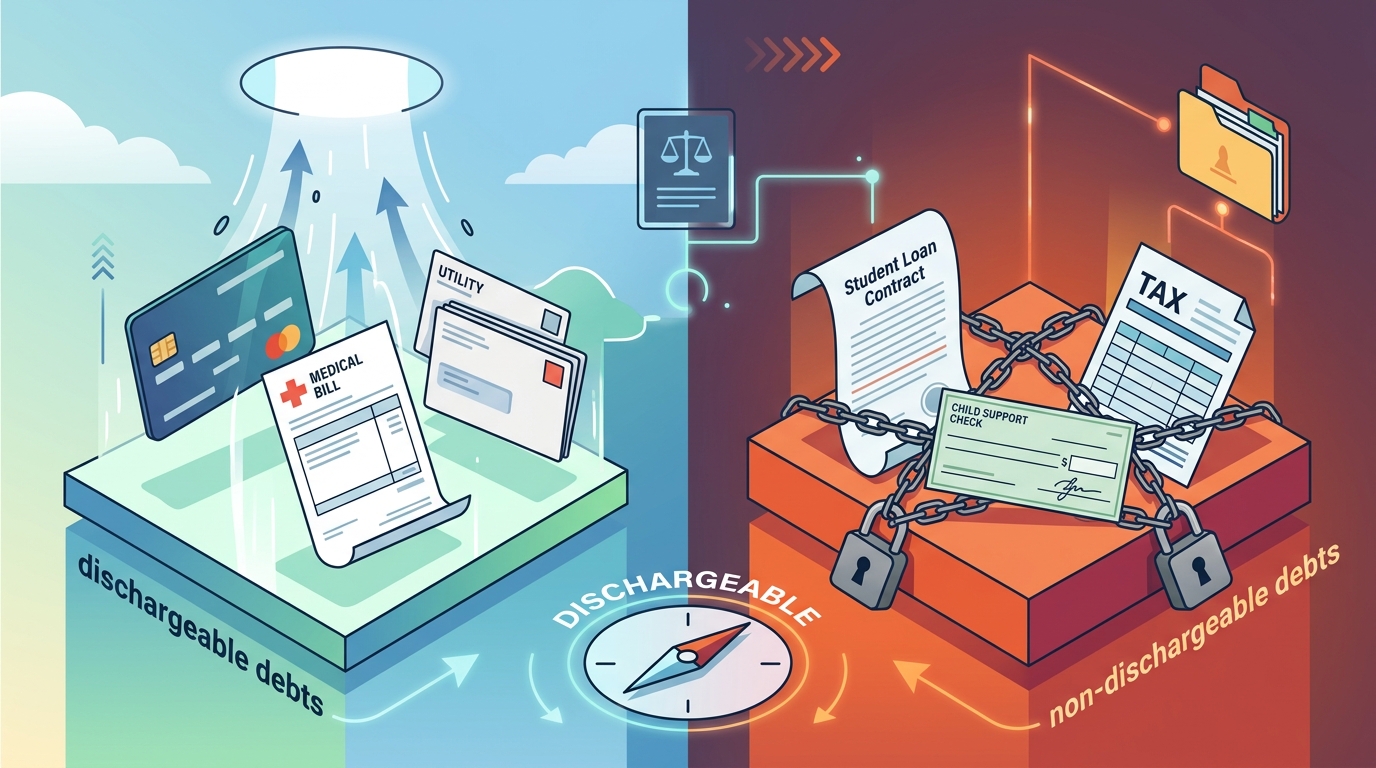
- Credit Card Debt: This is often the largest component of bankruptcy filings. Credit card balances are typically fully discharged, allowing you to start fresh without the burden of high-interest payments.
- Medical Bills: Unpaid medical expenses are a leading cause of financial hardship. These debts are generally dischargeable, providing relief for those facing catastrophic health costs.
- Personal Loans: Unsecured personal loans from banks, family members, or online lenders can be eliminated through discharge.
- Utility Bills: Past-due utility bills can be discharged, though you may need to pay a deposit to restart service with the provider.
According to data from the Federal Reserve, household debt levels have reached historic highs, with credit card debt alone surpassing $1 trillion. This statistic underscores the relevance of Chapter 7 for millions of Americans seeking relief from unmanageable consumer obligations.
Other Dischargeable Obligations
Beyond standard consumer debt, other obligations may also be discharged. These include:
- Contract Debts: Breach of contract claims can often be discharged if they do not involve fraud or willful injury.
- Taxes: In some cases, older income tax debts can be discharged if they meet specific criteria, such as being at least three years old and filed on time.
- Older Retirement Penalties: Penalties associated with older retirement plan contributions may be dischargeable.
It is important to note that while Chapter 7 offers broad discharge, it does not eliminate all debts. Secured debts, such as mortgages and auto loans, are not discharged in the sense that the lien remains. You must continue payments to keep the property, or the creditor can repossess it.
Chapter 13 Repayment Plans
Chapter 13 bankruptcy is designed for individuals with a regular income who wish to keep their assets. Instead of liquidating property, you propose a three-to-five-year repayment plan. While the goal is not immediate discharge of all debts, it offers unique discharge opportunities for certain obligations that are not dischargeable in Chapter 7.
Dischargeable Debts in Chapter 13
Upon successful completion of a Chapter 13 plan, you receive a discharge of remaining debts. This includes:
- Remaining Unsecured Debts: Any unpaid balance from credit cards, medical bills, or personal loans is wiped out.
- Second Mortgages: If a second mortgage is completely unsecured (i.e., the home value is less than the first mortgage balance), it can be stripped and discharged.
- Long-Term Debts: Chapter 13 allows you to extend the repayment period for long-term debts, reducing monthly payments.
According to the U.S. Courts, Chapter 13 filings have remained steady, indicating its role as a crucial tool for homeowners facing foreclosure. This option provides a lifeline for those who do not qualify for Chapter 7 due to income levels or who wish to protect their assets.
Unique Advantages of Chapter 13
Chapter 13 offers specific discharge benefits that Chapter 7 does not. For example, it can discharge debts arising from property settlement agreements in divorce cases. It also allows for the curing of mortgage defaults, enabling you to catch up on missed payments over time while keeping your home.
At PM Bankruptcy, we evaluate whether Chapter 13 is a viable option for clients who need to protect their equity or have non-dischargeable debts they wish to manage through a structured plan.
Non-Dischargeable Debts
Understanding what cannot be discharged is just as important as knowing what can. The Bankruptcy Code explicitly lists certain debts that survive the bankruptcy process. These debts remain your legal responsibility even after your bankruptcy case is closed.
Common Non-Dischargeable Debts
The following debts are generally not dischargeable:
- Student Loans: Student loans are extremely difficult to discharge. You must prove "undue hardship" through a separate legal proceeding, which is a high bar to clear.
- Domestic Support Obligations: Child support and alimony are never dischargeable. These obligations are prioritized to ensure the welfare of dependents.
- Recent Taxes: Income taxes filed within the last three years, payroll taxes, and fraud penalties are typically non-dischargeable.
- Debts from Fraud or Willful Injury: Debts incurred through fraud, false pretenses, or willful and malicious injury to another person or property are not dischargeable.
- Government Fines and Penalties: Fines owed to government agencies, such as traffic tickets or criminal restitution, must be paid.
This distinction is critical. Many individuals mistakenly believe that bankruptcy wipes out all financial obligations. Clarifying these exceptions prevents unrealistic expectations and ensures that clients focus on achievable goals.
Exceptions and Nuances
While student loans are generally non-dischargeable, there are rare exceptions. If you can demonstrate that repaying the loan would cause undue hardship, a court may discharge it. This process requires a separate adversary proceeding and is not guaranteed.
Similarly, some tax debts may be discharged if they meet specific criteria. For example, if the tax return was due at least three years ago and was filed at least two years ago, it may be eligible for discharge. Consulting with a bankruptcy attorney is essential to determine if your tax debts qualify.
Comparing Discharge Options
Choosing between Chapter 7 and Chapter 13 depends on your financial situation, assets, and the types of debts you hold. The table below summarizes the key differences regarding debt discharge.
| Feature | Chapter 7 | Chapter 13 |
|---|---|---|
| Debt Discharge Speed | Quick (3-6 months) | Delayed (3-5 years) |
| Unsecured Debt Discharge | Yes, most debts wiped | Yes, after plan completion |
| Asset Protection | Limited (exemptions apply) | High (keeps all assets) |
| Income Requirement | Means test required | Regular income required |
| Home Foreclosure | Does not stop foreclosure | Can stop foreclosure |
| Student Loans | Generally non-dischargeable | Generally non-dischargeable |
This comparison highlights that Chapter 7 is ideal for those with lower incomes and unsecured debt, while Chapter 13 suits those with higher incomes or significant assets they wish to protect. At PM Bankruptcy, we conduct a detailed means test analysis to determine which chapter is best for your specific circumstances.
Key Takeaways
- Dischargeable Debts: Credit card debt, medical bills, and personal loans are typically dischargeable in Chapter 7 bankruptcy.
- Non-Dischargeable Debts: Student loans, child support, and recent taxes are generally not dischargeable.
- Chapter 7 vs. Chapter 13: Chapter 7 offers quick relief, while Chapter 13 allows for asset protection and debt restructuring.
- Means Test: Your income level determines eligibility for Chapter 7 bankruptcy.
- Fraud Exception: Debts incurred through fraud or willful injury are not dischargeable.
- Tax Debts: Older income tax debts may be dischargeable if specific criteria are met.
- Professional Guidance: Consulting with a bankruptcy attorney is essential to navigate the complexities of debt discharge.
Frequently Asked Questions
Can I discharge credit card debt in bankruptcy?
Yes, credit card debt is one of the most common types of debt discharged in Chapter 7 bankruptcy. It is considered an unsecured consumer debt and is typically wiped out completely.
Are student loans dischargeable in bankruptcy?
Generally, no. Student loans are difficult to discharge and require proving "undue hardship" through a separate legal proceeding. This is a high legal bar and is rarely granted.
What is the difference between Chapter 7 and Chapter 13 discharge?
Chapter 7 provides a quick discharge of unsecured debts, usually within a few months. Chapter 13 requires a 3-5 year repayment plan before any remaining debts are discharged.
Can I discharge tax debt in bankruptcy?
In some cases, yes. Older income tax debts may be dischargeable if they meet specific criteria, such as being at least three years old and filed on time. Recent taxes are typically not dischargeable.
Does bankruptcy discharge child support?
No. Child support and alimony are domestic support obligations and are never dischargeable in bankruptcy. You remain legally responsible for these payments.
What happens to secured debts in bankruptcy?
Secured debts, such as mortgages and auto loans, are not discharged in the sense that the lien remains. You must continue payments to keep the property, or the creditor can repossess it.
How long does the bankruptcy process take?
Chapter 7 typically takes 3-6 months from filing to discharge. Chapter 13 requires a 3-5 year repayment plan, with discharge occurring after successful completion.
Next Steps
Navigating the complexities of debt discharge requires expert guidance. At PM Bankruptcy, we provide personalized consultations to help you understand your options and achieve financial freedom. Contact us today to schedule your appointment and take the first step toward a debt-free future.