

Filing for Chapter 7 bankruptcy offers a fresh financial start, but success depends on meticulous preparation. Skipping critical steps can lead to case dismissal or the loss of valuable assets. This guide outlines the essential actions required to protect your interests and ensure compliance with federal bankruptcy laws. By following a structured approach, you can navigate the complexities of the legal system with confidence and minimize potential risks to your financial future.
Evaluate Your Financial Situation
Before initiating any legal proceedings, you must conduct a thorough review of your current financial standing. This involves listing all debts, assets, income, and expenses. Understanding your net worth helps determine if Chapter 7 is the appropriate solution. Visit our homepage to learn more about how we assist clients in assessing their eligibility.
Chapter 7 bankruptcy is a liquidation process designed to discharge unsecured debts, such as credit card balances and medical bills. It is not suitable for everyone, and a careful analysis of your income and debt-to-asset ratio is essential. If your debts significantly outweigh your assets, this path may offer the relief you need.
Review your recent pay stubs, tax returns, and bank statements. Identify any non-exempt assets that could be at risk. This initial audit provides the foundation for your strategy and helps you avoid surprises during the filing process.
Complete Mandatory Credit Counseling
Federal law requires all individuals filing for Chapter 7 to complete a credit counseling course from an approved agency. This step must occur within 180 days before you file your petition. Failure to complete this course will result in the automatic dismissal of your case.
Credit counseling is a mandatory course that educates filers on budgeting and financial management. The agencies provide a certificate of completion, which you must submit to the court along with your paperwork. You can find approved agencies through the U.S. Trustee Program website.
The counseling session typically takes about 60 to 90 minutes and can be completed online or by phone. It covers your options for debt relief and helps you understand the long-term impact of bankruptcy on your credit score. Do not delay this step, as processing times can vary.
Gather Required Financial Documents
Preparing a comprehensive document package is critical for a smooth filing. The court requires detailed proof of your financial history, including income, assets, and liabilities. Missing documents can cause significant delays or requests for additional information from the trustee.
Contact our team to receive a customized document checklist tailored to your specific situation. Having these items organized before you file saves time and reduces stress during the proceedings.
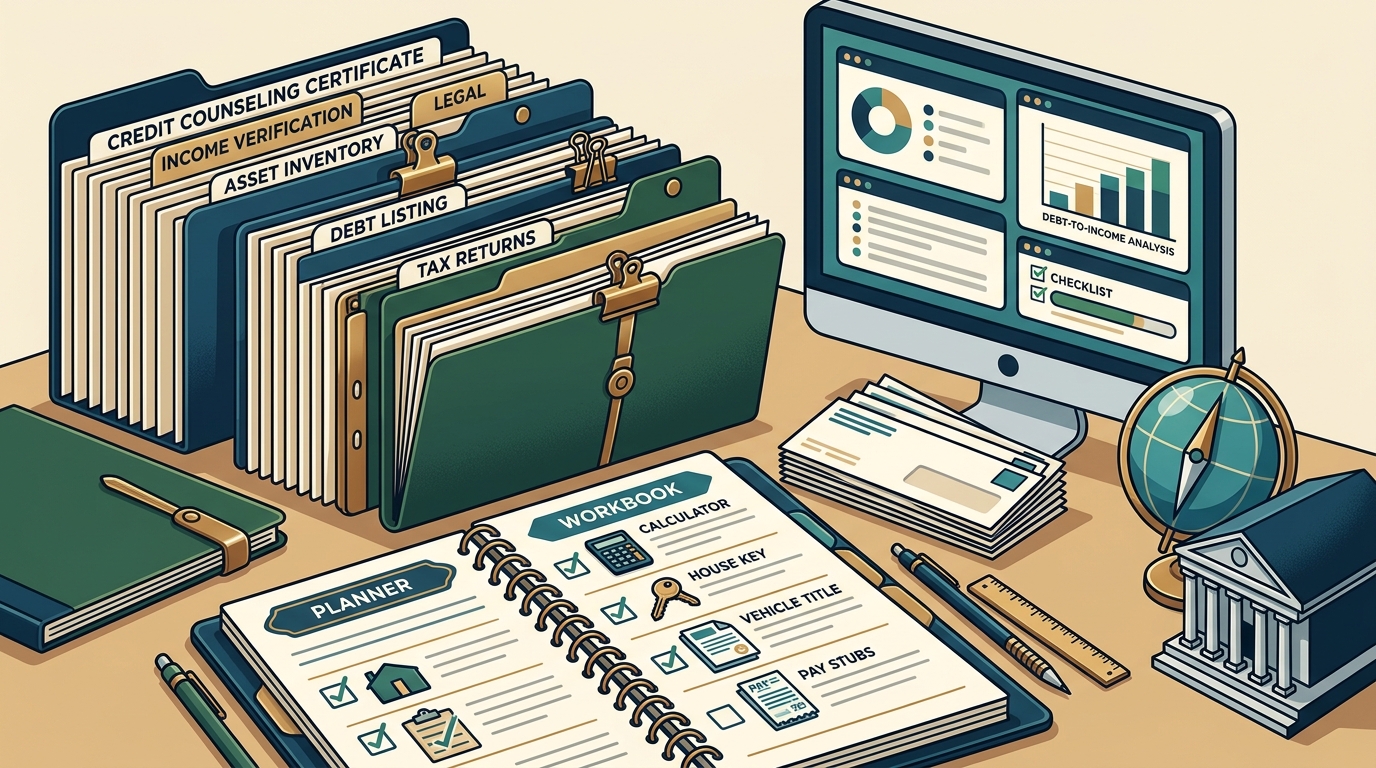
Required documents typically include recent pay stubs, tax returns for the past two years, bank statements, and proof of property ownership. You must also provide records of any transfers of assets in the last two years. Incomplete submissions are a common reason for case complications.
Income Verification
Ensure your income documentation matches your actual earnings. The court will scrutinize your gross income to determine eligibility. Discrepancies between your stated income and actual earnings can raise red flags and lead to closer scrutiny of your case.
Asset Documentation
Compile deeds, vehicle titles, and insurance policies for all assets. Accurate valuations are necessary to claim exemptions correctly. Overvaluing or undervaluing assets can impact your ability to retain property.
Understand the Means Test
The means test determines your eligibility for Chapter 7 based on your income relative to the median income in your state. If your income is below the median, you likely qualify automatically. If it is above, the test calculates your disposable income to see if you can repay a portion of your debts.
Means test is a calculation used to assess whether a debtor qualifies for Chapter 7 relief based on income and expenses. The test uses IRS national and local standards to deduct allowable expenses from your income. This ensures that those with sufficient ability to pay are directed toward Chapter 13 repayment plans.
Accurate expense reporting is vital for passing the means test. You must list actual living expenses, including housing, utilities, and transportation. Misreporting expenses can lead to objections from creditors or the trustee.
Consult with a Bankruptcy Attorney
Navigating bankruptcy laws without professional guidance is risky. An experienced attorney can identify potential pitfalls, optimize your exemptions, and ensure all paperwork is filed correctly. Legal representation significantly increases the likelihood of a successful outcome.
Schedule a consultation to discuss your unique financial challenges and explore your options. Our attorneys provide personalized advice to help you make informed decisions about your debt relief strategy.
An attorney can also represent you at the meeting of creditors, answering questions and addressing objections. They can help you negotiate with creditors and handle complex issues, such as recent home sales or large asset transfers. Professional guidance is an investment in your financial recovery.
Review Asset Exemptions
Exemptions protect certain assets from being liquidated to pay creditors. The specific exemptions available to you depend on your state's laws. Understanding these protections is crucial for retaining your home, vehicle, and personal belongings.
Each state has its own set of exemption laws, and some states allow debtors to choose between state and federal exemptions. Your attorney can help you determine which set of exemptions offers the best protection for your assets. Failing to claim exemptions correctly can result in the loss of property.
Common exempt assets include a portion of home equity, a vehicle up to a certain value, household goods, and retirement accounts. Review your asset list against the exemption limits to ensure full coverage. If you have non-exempt assets, discuss strategies with your attorney to mitigate risks.
Prepare Your Budget and Cash Flow
Creating a realistic post-bankruptcy budget is essential for long-term financial stability. Bankruptcy provides a fresh start, but maintaining financial health requires disciplined budgeting. Your budget should reflect your current income and necessary expenses.
Focus on rebuilding your credit and establishing healthy financial habits. Avoid taking on new debt immediately after filing, and prioritize building an emergency fund. A well-planned budget helps you avoid falling back into debt and ensures you can meet your ongoing obligations.
Include all recurring expenses, such as rent, utilities, and insurance, in your budget. Track your spending for a few months to identify areas where you can cut costs. This proactive approach helps you maintain financial control and avoid future financial crises.
Comparison of Debt Relief Options
| Option | Best For | Key Feature |
|---|---|---|
| Chapter 7 Bankruptcy | Low income, high unsecured debt | Quick discharge of unsecured debts |
| Chapter 13 Bankruptcy | Higher income, need to keep assets | 3-5 year repayment plan |
| Debt Settlement | Manageable income, willing to negotiate | Negotiated reduction of debt balances |
| Credit Counseling | Minor financial stress, budgeting issues | Financial education and management |
Key Takeaways
- Chapter 7 bankruptcy is a liquidation process that discharges unsecured debts.
- Mandatory credit counseling must be completed within 180 days before filing.
- The means test evaluates your eligibility based on income and expenses.
- Exemptions protect specific assets from liquidation depending on state laws.
- Gathering accurate financial documents is critical for a smooth filing.
- Consulting with a bankruptcy attorney helps navigate complex legal requirements.
- Preparing a post-bankruptcy budget ensures long-term financial stability.
Frequently Asked Questions
How long does the Chapter 7 bankruptcy process take?
The process typically takes about four to six months from filing to discharge. This timeline includes the waiting period for the meeting of creditors and the final court order. Delays can occur if additional information is requested or if objections are filed.
Can I keep my home if I file for Chapter 7?
You may keep your home if your equity falls within your state's homestead exemption limits. If your equity exceeds the exemption, the trustee may sell the property. Consult with an attorney to explore strategies for protecting your home.
What happens to my credit score after filing?
Filing for Chapter 7 will initially lower your credit score, but the impact diminishes over time. Many filers begin rebuilding their credit within a year of discharge. You can obtain secured credit cards and loans to demonstrate responsible financial behavior.
Are all debts discharged in Chapter 7?
Most unsecured debts, such as credit card balances and medical bills, are discharged. However, certain debts, including student loans and recent tax obligations, are generally not dischargeable. Your attorney can advise you on the dischargeability of specific debts.
Do I need to attend the meeting of creditors?
Yes, attending the meeting of creditors is mandatory. The trustee and creditors may ask questions about your finances and paperwork. Your attorney will accompany you to this meeting and handle any inquiries on your behalf.
Can I file for Chapter 7 if I filed previously?
You may be eligible to file for Chapter 7 if eight years have passed since your previous Chapter 7 discharge. If your previous case was a Chapter 13, the waiting period may be six years. Your attorney can determine your eligibility based on your filing history.
How do I choose the right bankruptcy attorney?
Look for an attorney with extensive experience in bankruptcy law and a track record of successful cases. Read client reviews and schedule consultations to assess their communication style and approach. Visit our services page to learn more about our expertise and client-focused approach.
Take the Next Step Toward Financial Freedom
Preparing for Chapter 7 bankruptcy requires careful planning and attention to detail. By following these steps, you can protect your assets, comply with legal requirements, and achieve a fresh financial start. Our experienced team is here to guide you through every stage of the process.
Contact us today to schedule your consultation and take the first step toward resolving your debt challenges. Let us help you navigate the path to financial recovery with confidence and clarity.