

Personal bankruptcy offers a legal mechanism to eliminate overwhelming financial obligations, providing a fresh start for individuals facing insurmountable debt burdens. Many consumers file for relief to resolve unsecured obligations that have accumulated over years of financial hardship. Understanding which liabilities can be legally discharged is essential for making an informed decision about your financial future. This guide outlines the specific debts eligible for discharge and clarifies common misconceptions regarding your obligations. Consulting with experienced legal counsel ensures you navigate the process correctly and protect your assets throughout the proceedings. (https pmbankruptcy com)
Understanding the Bankruptcy Discharge Process
A bankruptcy discharge is a court order that permanently prohibits creditors from taking any collection actions against the debtor for specific debts. When a court grants a discharge, creditors are permanently barred from attempting to collect the included debts. This protection applies to both pre-filing and post-filing collection efforts. You will receive a formal discharge order after completing all required court procedures. Our team at PM Bankruptcy helps clients navigate this critical phase to ensure their fresh start is secure. The discharge represents the ultimate goal of the bankruptcy process, wiping the slate clean for eligible obligations.
Common Dischargeable Debts in Chapter 7
Chapter 7 bankruptcy is a liquidation process that allows eligible individuals to eliminate most unsecured debts through the sale of non-exempt assets. Credit card balances are among the most common debts discharged in this chapter. Medical bills that have gone unpaid can also be wiped clean through the process. Personal loans without collateral are generally eligible for discharge. Auto deficiency balances, which occur when a vehicle is repossessed and sold for less than the loan amount, can often be discharged as well. This chapter is ideal for individuals with limited income who need immediate relief from aggressive collection efforts.
Dischargeable Obligations in Chapter 13 Filings
Chapter 13 bankruptcy involves a court-approved repayment plan lasting three to five years. Debts remaining at the end of a successful plan are typically discharged. This includes any remaining balance on credit cards or medical bills. Juvenile court debts, such as restitution obligations, can also be discharged under specific conditions. Tax obligations may be discharged if they meet strict timing and filing requirements. Chapter 13 is particularly useful for homeowners who need to catch up on mortgage arrears while keeping their property. Schedule a consultation to determine which chapter best fits your financial situation.
Medical Bills and Credit Card Debt Relief
Medical debt represents a leading cause of financial distress for many households. These bills can be discharged without affecting your ability to receive necessary healthcare services. Credit card debt is another major category eligible for elimination. This includes balances on store cards, travel rewards cards, and general-purpose credit cards. You do not need to prove fraud to have these debts discharged. The mere inability to pay is sufficient grounds for discharge. Bankruptcy also stops harassing collection calls and lawsuits related to these obligations, giving you breathing room to rebuild your finances.
Personal Loans and Utility Bills
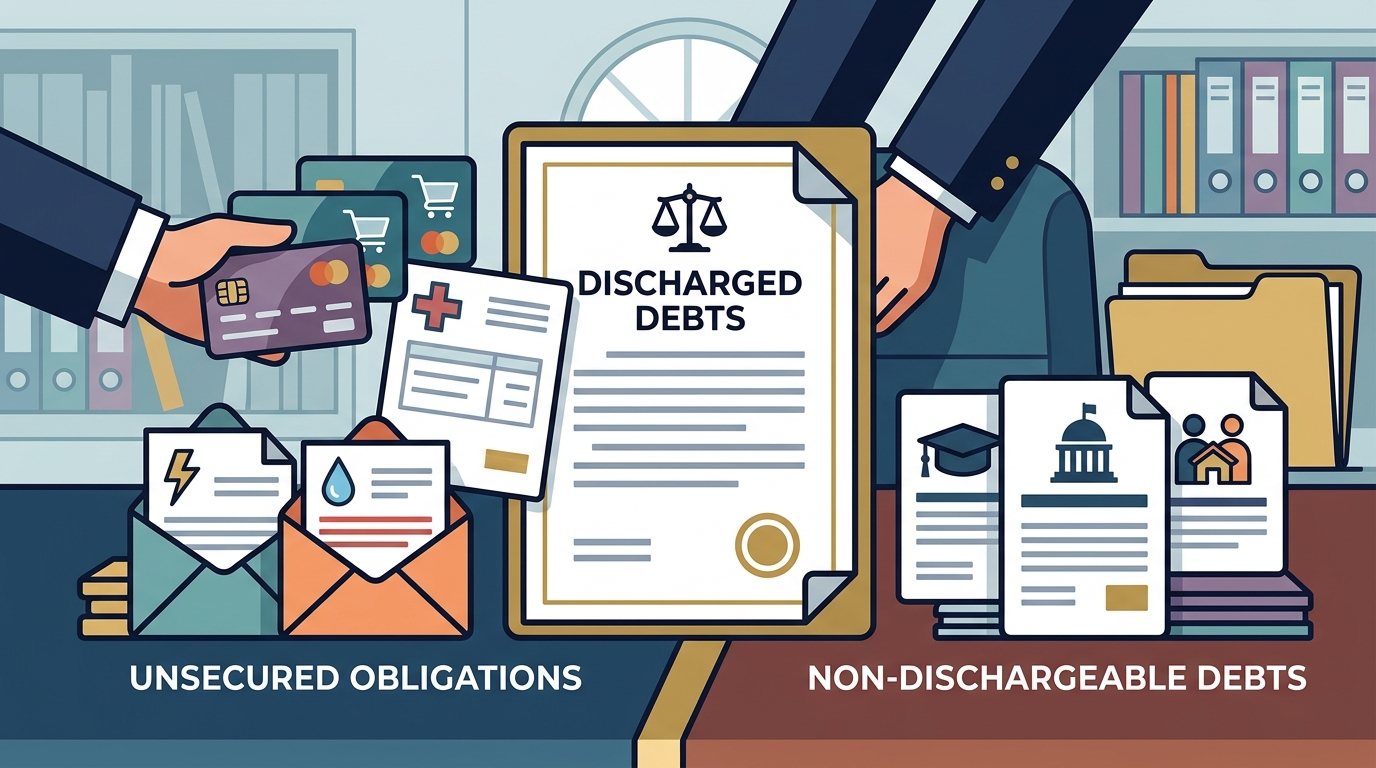
Unsecured personal loans from banks or online lenders can be discharged through bankruptcy. Signature loans without collateral are treated similarly to credit card debt. Utility bills that are past due can be discharged, though current bills must be paid to maintain service. Student loan debt is generally nondischargeable unless you can prove undue hardship. This requires a separate legal proceeding and a high burden of proof. Understanding the distinction between secured and unsecured debts is crucial for maximizing your discharge benefits. Learn more about our firm and how we assist clients with diverse debt portfolios.
Nondischargeable Debts You Must Still Pay
Nondischargeable debts are specific financial obligations that remain legally enforceable even after a bankruptcy case is closed. Student loans are the most common nondischargeable debts for most filers. Recent tax obligations, including income taxes filed within the last three years, are not discharged. Domestic support obligations, such as child support and alimony, remain fully enforceable. Fines and penalties owed to government agencies are also nondischargeable. Traffic fines and court-ordered restitution fall into this category as well. You must continue making payments on these obligations regardless of your bankruptcy filing.
Secured Debts and Asset Protection
Secured debts are tied to specific collateral, such as a home or vehicle. You can choose to surrender the collateral and discharge the debt. Alternatively, you may reaffirm the debt to keep the asset. Reaffirmation requires a new agreement with the creditor and court approval. Understanding your options for secured debts is crucial for protecting your property. Many filers successfully keep their homes by curing arrears through a Chapter 13 plan. Others may redeem vehicles by paying the current market value instead of the full loan balance. Read our blog for more insights on asset protection strategies.
Key Takeaways
- Chapter 7 bankruptcy eliminates most unsecured debts, including credit cards and medical bills.
- Chapter 13 bankruptcy discharges remaining debts after completing a three-to-five-year repayment plan.
- Student loans are generally nondischargeable unless you prove undue hardship in a separate proceeding.
- Domestic support obligations, such as child support and alimony, cannot be discharged in any bankruptcy chapter.
- Tax debts may be discharged in Chapter 13 if they meet specific age and filing requirements.
- Secured debts allow you to surrender collateral or reaffirm the loan to keep the asset.
- Consulting with a bankruptcy attorney ensures you identify all dischargeable debts and protect your exemptions.
Frequently Asked Questions
Can I discharge credit card debt if I used the card shortly before filing?
Yes, you can generally discharge credit card debt even if you used the card shortly before filing. However, cash advances or luxury purchases made within 60 to 90 days before filing may be presumed fraudulent and nondischargeable.
What happens to my mortgage if I file for bankruptcy?
Your mortgage is a secured debt that survives bankruptcy unless you surrender the property. You can continue making payments to keep your home, or you can include the mortgage in your Chapter 13 plan to cure arrears.
Can student loans be discharged in bankruptcy?
Student loans are typically nondischargeable unless you can prove undue hardship through a separate adversary proceeding. This requires demonstrating that paying the loans would prevent you from maintaining a minimal standard of living.
Are tax debts eligible for discharge?
Tax debts may be discharged in Chapter 7 or Chapter 13 if they meet specific requirements. The tax return must have been filed on time, and the tax assessment must be at least three years old.
How long does the bankruptcy discharge process take?
In Chapter 7 bankruptcy, a discharge typically occurs about four months after filing. Chapter 13 bankruptcy discharges are granted after you complete your repayment plan, which lasts three to five years.
Can I discharge debts owed to family members?
Debts owed to family members are generally dischargeable unless they involve domestic support obligations. Loans from relatives can be included in your bankruptcy schedule and discharged like any other unsecured debt.
What is the difference between discharge and dismissal?
A discharge eliminates your legal obligation to pay specific debts, while a dismissal closes your case without granting relief. Dismissal may occur if you fail to comply with court requirements or provide necessary documentation.
Take Control of Your Financial Future
Understanding which debts can be discharged is the first step toward financial freedom. Our experienced team at PM Bankruptcy is ready to help you evaluate your options and file for bankruptcy with confidence. Schedule a consultation today to discuss your specific situation and discover how bankruptcy can provide the fresh start you deserve. Contact our office to get started.