
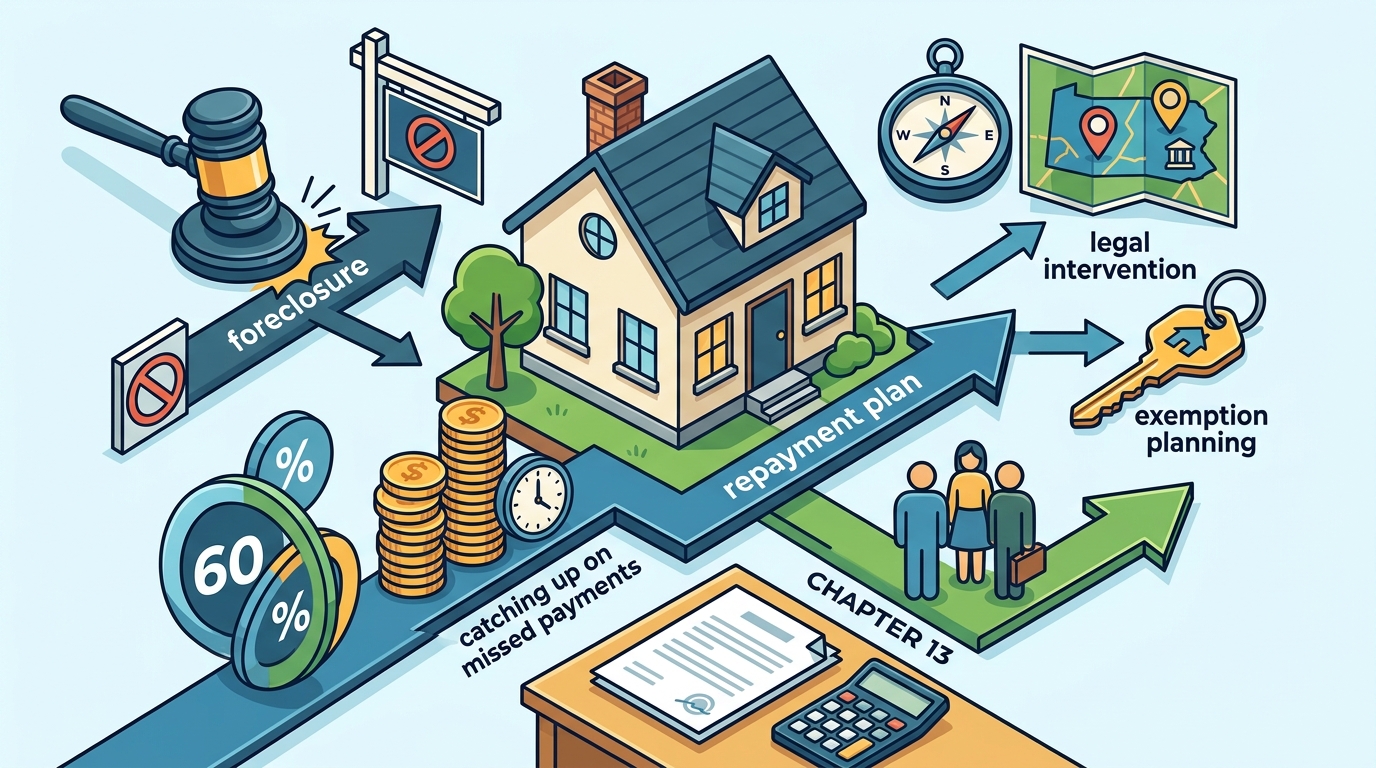
Filing for bankruptcy does not automatically mean you lose your house. Over 60% of Chapter 13 filers successfully retain their primary residence when they adhere to court-approved repayment plans. This data shows that strategic legal intervention can stop foreclosure proceedings and allow homeowners to catch up on missed payments. Understanding your specific state exemptions and filing options is critical to protecting your equity. Many families face the fear of displacement, yet the law provides robust tools to preserve homeownership.
Chapter 7 vs. Chapter 13 Options
Choosing the correct bankruptcy chapter determines your ability to keep your home. Chapter 7 focuses on liquidating non-exempt assets to discharge unsecured debts. This path works best for homeowners with minimal equity and no significant mortgage arrears. Chapter 7 bankruptcy offers a fresh start but may require you to surrender the property if your equity exceeds statutory limits.
Chapter 13 serves as the primary vehicle for saving a home with significant debt. This code allows you to reorganize your finances while maintaining ownership. Chapter 13 bankruptcy requires a steady income to fund a repayment plan lasting three to five years. You continue making regular mortgage payments while paying a portion of your arrears through the plan.
The Automatic Stay Protection
The automatic stay acts as an immediate shield against creditor actions. This legal injunction stops foreclosure sales, wage garnishments, and collection calls the moment you file your petition. Foreclosure proceedings must cease immediately upon filing. Lenders cannot proceed with a sale or auction without first obtaining relief from the stay.
Understanding the automatic stay is essential for homeowners facing imminent foreclosure. This protection gives you time to negotiate with your lender and develop a feasible repayment strategy. You can use this window to cure your default and modify your loan terms. Foreclosure defense services leverage this stay to prevent the loss of your property.
Understanding Homestead Exemptions
Homestead exemption is a state law that protects a specific amount of equity in a primary residence from creditors. Pennsylvania offers a generous homestead exemption that can shield your home from unsecured creditors. This exemption applies to the value of your property up to the statutory limit.
Calculating your equity requires subtracting your mortgage balance and the exemption amount from your home's fair market value. If your equity falls within the exemption limit, your home is safe in a Chapter 7 filing. You must verify your current equity position to determine the best filing strategy. Our team analyzes your equity to recommend the optimal path.
Catching Up on Mortgage Arrears
Chapter 13 allows you to spread missed mortgage payments over the life of your plan. You do not have to pay the entire arrears balance immediately. This feature makes bankruptcy accessible for homeowners who have fallen behind due to financial hardship.
Consistent plan payments are mandatory to avoid dismissal of your case. You must also stay current on your ongoing monthly mortgage payments. Failure to maintain these payments can result in the lender seeking relief from the stay. Schedule a consultation to review your arrears and build a realistic repayment plan.
Working with a Foreclosure Defense Attorney
Experienced legal representation significantly increases your chances of keeping your home. An attorney can challenge improper foreclosure practices and negotiate loan modifications. They ensure your rights are protected throughout the bankruptcy process.
Timing is critical when facing foreclosure. Filing before the auction date preserves your maximum options. Delaying your decision can result in the irreversible loss of your property. Contact us today to discuss your specific situation and protect your home.
Comparison of Bankruptcy Options
| Feature | Chapter 7 | Chapter 13 |
|---|---|---|
| Home Retention | Depends on equity and exemptions | High success rate with plan adherence |
| Mortgage Arrears | Must be current to keep home | Spread over 3-5 years |
| Income Requirement | No minimum income required | Regular income necessary |
| Asset Liquidation | Non-exempt assets may be sold | Assets generally retained |
Key Takeaways
- Chapter 13 is a federal bankruptcy code that allows individuals with regular income to create a plan to repay all or part of their debts over three to five years.
- Homestead exemption is a state law that protects a specific amount of equity in a primary residence from creditors.
- Automatic stay is a legal injunction that immediately halts all collection actions, including foreclosure, against the debtor upon filing.
- Over 60% of Chapter 13 filers successfully retain their primary residence when they adhere to court-approved repayment plans.
- Pennsylvania offers a generous homestead exemption that can shield your home from unsecured creditors.
- Timing is critical, as filing before the auction date preserves your maximum options.
- Consistent plan payments and current mortgage payments are mandatory to avoid case dismissal.
Frequently Asked Questions
Can I keep my home if I have negative equity?
Yes, you can keep your home even with negative equity. Negative equity means your mortgage balance exceeds your home's value. This situation does not prevent you from filing Chapter 13. You can still cure your arrears and retain ownership.
Does bankruptcy affect my credit score?
Bankruptcy will impact your credit score, but the effect diminishes over time. A Chapter 13 filing remains on your credit report for seven years. You can rebuild your credit by making timely payments during and after your plan.
What happens if I lose my job during Chapter 13?
Losing your job may make it difficult to maintain plan payments. You should notify your attorney immediately to explore options. You might modify your plan or convert to Chapter 7 if eligible.
Can I buy a new home after bankruptcy?
You can purchase a new home after bankruptcy, though terms may vary. FHA loans often allow purchases shortly after discharge. VA loans may offer favorable terms for veterans. Speak with an attorney about your post-bankruptcy goals.
How long does the bankruptcy process take?
Chapter 7 typically concludes within four to six months. Chapter 13 requires three to five years of plan payments. Court confirmation usually occurs within a few months of filing.
Can I refinance my mortgage during bankruptcy?
Refinancing during bankruptcy requires court approval. You must demonstrate that the new loan benefits your estate. Lenders may have specific requirements for borrowers in active bankruptcy.
What documents do I need to file for bankruptcy?
You must provide tax returns, pay stubs, bank statements, and mortgage documents. Your attorney will guide you through the documentation requirements. Our office helps you gather all necessary paperwork.
Protect Your Home Today
Do not wait until your foreclosure sale date to act. Filing for bankruptcy can stop the sale and give you a second chance at homeownership. Our experienced team is ready to help you navigate this complex process. Contact pmbankruptcy.com to schedule your consultation and secure your future.