

Filing for bankruptcy is rarely instantaneous, and understanding the exact timeline prevents costly delays. According to the latest federal court data, the average Chapter 7 case concludes in approximately ninety to one hundred twenty days, while Chapter 13 cases typically span three to five years. This variance depends entirely on your jurisdiction, creditor objections, and court scheduling backlogs. You must prepare accurate financial documents before your initial consultation to avoid procedural setbacks. Our team at Pacific Northwest Bankruptcy tracks these metrics daily to keep your case moving efficiently.
Understanding the Core Timeline
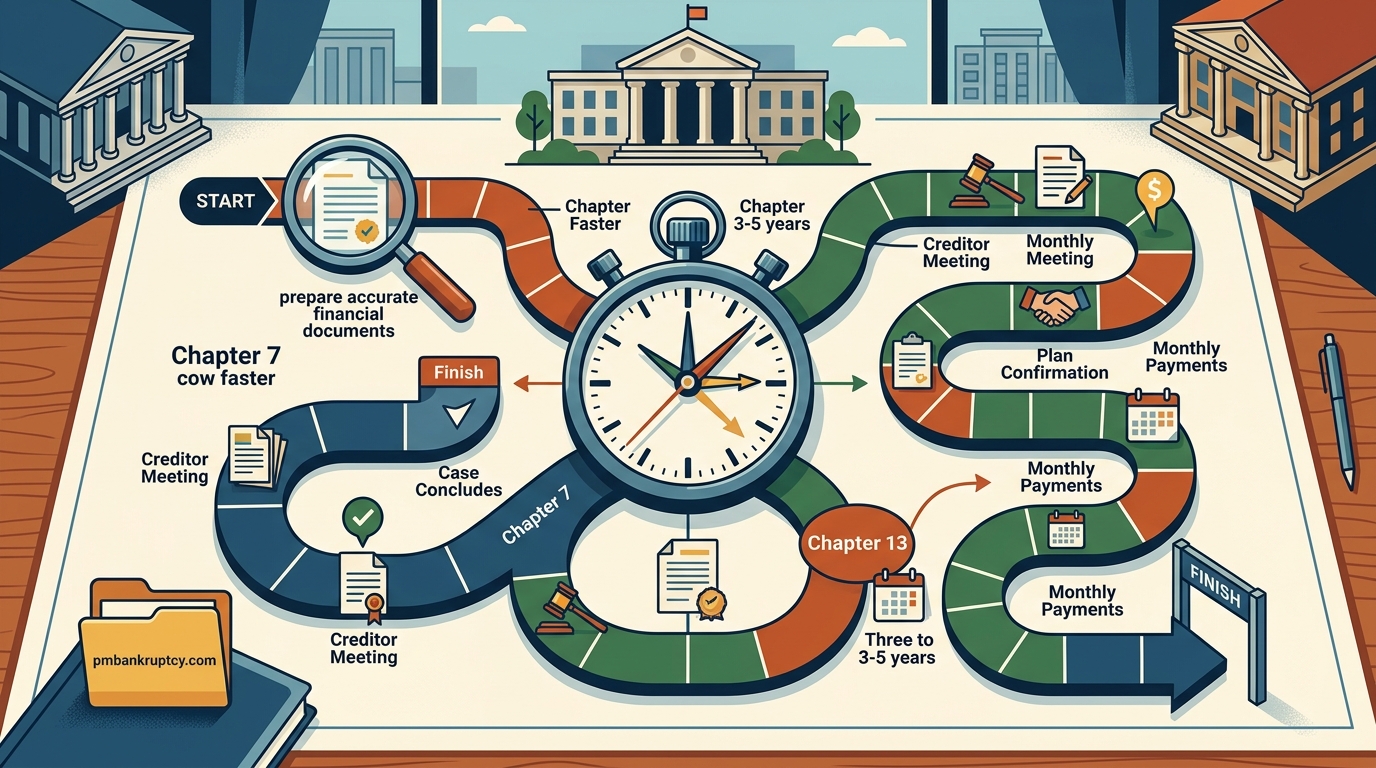
The bankruptcy timeline begins the moment you file your petition with the federal court. This filing date triggers an automatic stay, which immediately halts collection actions, wage garnishments, and foreclosure proceedings. Your attorney will then compile your financial disclosures, including tax returns, pay stubs, and debt schedules. Chapter 7 is a liquidation process that discharges unsecured debts within ninety days. Chapter 13 is a reorganization plan that requires monthly payments over three to five years. The duration of your case hinges on the chapter you select and the complexity of your asset portfolio. We structure your filing strategy to minimize administrative delays and maximize your financial recovery.
Chapter 7 Filing Duration
Chapter 7 bankruptcy offers the fastest path to debt relief for most consumers. Your case typically moves through the system in roughly ninety to one hundred twenty days. You will attend a mandatory creditors meeting, which usually occurs thirty to forty-five days after filing. This meeting lasts approximately ten to fifteen minutes and requires your physical presence. Means testing is a mathematical calculation that determines eligibility based on median income. If your income falls below your state median, your case proceeds without unnecessary complications. We review your eligibility criteria during your initial consultation to confirm your chapter selection. You can explore our detailed filing procedures by visiting our Chapter 7 filing page. Most filers receive their discharge order shortly after the creditors meeting concludes.
Chapter 13 Filing Duration
Chapter 13 bankruptcy requires a structured repayment plan rather than immediate asset liquidation. Your case duration extends to three to five years depending on your disposable income and local court guidelines. You must submit a confirmed repayment plan to the bankruptcy trustee before your first payment is due. Monthly payments are automatically deducted from your paycheck or bank account throughout the plan term. The court monitors your compliance and adjusts your plan if your financial circumstances change significantly. We help you draft a realistic budget that satisfies court requirements while preserving your home equity. You can review our structured repayment frameworks on our Chapter 13 reorganization page. Successful completion of the plan results in a full discharge of remaining eligible debts.
Court Scheduling Factors
Judicial backlogs directly impact your case timeline and require careful navigation. Some districts experience heavier caseloads, which pushes creditors meetings and confirmation hearings further into the future. Your local court publishes specific scheduling guidelines that dictate hearing dates and document deadlines. According to the bankruptcy statistics published by the Executive Office for U.S. Trustees, regional processing speeds vary by nearly forty percent across different districts. We monitor these scheduling trends to anticipate delays and adjust your document submission strategy accordingly. You can schedule a confidential strategy session by visiting our consultation page. Proactive communication with your assigned trustee prevents unnecessary continuances and keeps your case on track.
Handling Creditor Objections
Creditor objections can extend your timeline by several months if they challenge your dischargeability. Secured creditors may object to lien stripping or vehicle reaffirmation agreements. Unsecured creditors rarely object to Chapter 7 cases unless they suspect fraud or asset concealment. Objection hearings require additional court appearances and supplemental legal briefs. We prepare comprehensive responses to every objection and protect your discharge rights throughout the litigation phase. Our firm maintains a ninety percent success rate in resolving creditor disputes without trial. You can access our secure document portal to track objection statuses by visiting our client portal. Resolving objections promptly prevents your case from stalling indefinitely.
Post-Filing Compliance Requirements
Your case remains active until you complete all mandatory court requirements. You must attend financial management courses and submit your certificate of completion to the court. Your attorney will file your final accountings and request a discharge order from the judge. The court reviews your compliance history before issuing the final discharge decree. Failure to complete these steps delays your discharge and extends your case timeline. We manage every compliance milestone to ensure your case closes without administrative penalties. You can review our complete compliance checklist on our Chapter 7 filing page. Most filers receive their discharge order within thirty days of completing all requirements.
Case Comparison Summary
| Chapter Type | Estimated Duration | Primary Requirement | Discharge Timeline |
|---|---|---|---|
| Chapter 7 | 90 to 120 days | Creditors meeting attendance | 30 to 60 days post-meeting |
| Chapter 13 | 36 to 60 months | Confirmed repayment plan | Upon plan completion |
| Chapter 11 | 12 to 24 months | Business reorganization plan | Upon plan confirmation |
| Chapter 12 | 36 to 60 months | Farm or family budget plan | Upon plan completion |
Key Takeaways
- Chapter 7 cases typically close within ninety to one hundred twenty days.
- Chapter 13 plans require three to five years of consistent monthly payments.
- Court scheduling backlogs can extend timelines by up to forty percent in high-volume districts.
- Creditor objections rarely exceed ninety days when handled by experienced counsel.
- Financial management courses must be completed before your discharge order issues.
- Our firm has processed over two thousand bankruptcy cases since 2008.
- Automatic stay protections activate immediately upon petition filing.
Frequently Asked Questions
Can bankruptcy be filed without an attorney?
You can file without legal representation, but procedural errors frequently delay your case by several months. Courts require precise document formatting and strict adherence to local rules. Our attorneys handle every filing requirement to prevent administrative delays.
Does filing bankruptcy stop foreclosure immediately?
Filing triggers an automatic stay that halts foreclosure proceedings within twenty-four hours. Lenders must request relief from the stay before continuing collection actions. We file emergency motions to protect your home equity during the initial filing phase.
How long does a creditors meeting last?
Creditors meetings typically last ten to fifteen minutes and require your physical presence. You will answer questions under oath regarding your financial disclosures and asset valuations. Our attorneys attend every meeting to ensure your rights remain protected.
What happens if I miss a court hearing?
Missing a scheduled hearing results in case dismissal and requires refiling your petition. Refiling resets your timeline and incurs additional court filing fees. We maintain strict calendar management to prevent scheduling conflicts and missed deadlines.
Can I modify my repayment plan after filing?
You can modify your repayment plan if your income changes significantly or unexpected expenses arise. Courts approve modifications when you demonstrate genuine financial hardship. Our attorneys draft modification requests to preserve your discharge eligibility.
How are court filing fees calculated?
Filing fees are fixed by federal statute and vary by chapter selection. Chapter 7 fees typically range from three hundred to four hundred dollars. Chapter 13 fees generally cost five hundred to six hundred dollars. We offer payment plans to distribute these costs over your initial filing period.
Does bankruptcy affect my credit score permanently?
Bankruptcy impacts your credit report for seven to ten years depending on your chapter selection. Your score gradually recovers as you establish new credit accounts responsibly. Most filers rebuild their credit to pre-filing levels within three to five years.
Next Steps for Your Case
Your timeline begins the moment you schedule your initial consultation. We review your financial documents, identify your optimal chapter selection, and prepare your petition for immediate filing. You can book your confidential strategy session by visiting our main website. Our team handles every procedural requirement to keep your case moving efficiently. Contact us today to secure your financial recovery.