

Starting a bankruptcy case requires meticulous preparation. According to the Executive Office for U.S. Trustees, over 800,000 bankruptcy petitions were filed in 2023, highlighting the critical need for precise documentation to avoid case dismissal. Filing data shows that incomplete paperwork is the leading cause of delays. This guide outlines the exact documents you need to gather before consulting with your attorney. Organizing these items early ensures a smoother process and protects your financial interests.
Essential Financial Records for Filing
Gathering your core financial records is the first step toward filing. Courts require a comprehensive view of your financial history to evaluate your eligibility. You must collect tax returns for the most recent years to verify your income and deductions. Fraud schemes often target filers who lack complete records, so accuracy is paramount. Bank statements covering the last six months are also mandatory. These documents prove your cash flow and account balances at the time of filing.
You should also gather all outstanding debt statements. This includes credit card bills, medical invoices, and personal loan agreements. Lenders may request proof of payments made within the last year. Keeping a digital copy of every document prevents loss during the transition. Contact our team to review your specific document needs and ensure nothing is overlooked.
Income and Employment Verification
Proving your income is critical for determining your bankruptcy chapter. Bankruptcy is a legal process where individuals or businesses seek relief from debts they cannot pay. Courts require recent pay stubs to calculate your current monthly income. You must provide proof of employment for all sources of revenue. This includes wages, bonuses, commissions, and overtime pay.
If you are self-employed, you need profit and loss statements. These documents demonstrate your business earnings and expenses. Case processing times can vary based on the complexity of your income sources. You may also need to provide social security statements. These verify your benefits and contributions. Incomplete income verification often leads to requests for additional information from the trustee.
Asset and Property Documentation
Schedules are detailed financial statements required by the court to disclose assets, liabilities, and income. You must list all real estate properties, including your primary residence. Deeds and mortgage statements are required to prove ownership and equity. Vehicles also need to be documented with titles and loan balances. Credit impacts can be mitigated by accurately listing exempt assets.
You should also document personal property and financial accounts. This includes bank accounts, investment portfolios, and retirement funds. Insurance policies and valuable collectibles must be listed as well. Accurate valuations help protect your assets from liquidation. Schedule a consultation to discuss how to maximize your exemptions and protect your property.
Credit Counseling and Debtor Education
Credit counseling is a mandatory educational course designed to help debtors manage finances and avoid future insolvency. You must complete a credit counseling course before filing your petition. This course is typically available online or by phone. You will receive a certificate of completion that must be filed with the court.
After filing, you must complete a debtor education course. This course covers budgeting and financial management skills. Failure to complete both courses can result in case dismissal. Filing data indicates that filers who complete courses early avoid last-minute delays. Keep your certificates in a safe place until your case is closed. Our attorneys can guide you to approved providers and ensure you meet all deadlines.
Legal Forms and Schedules
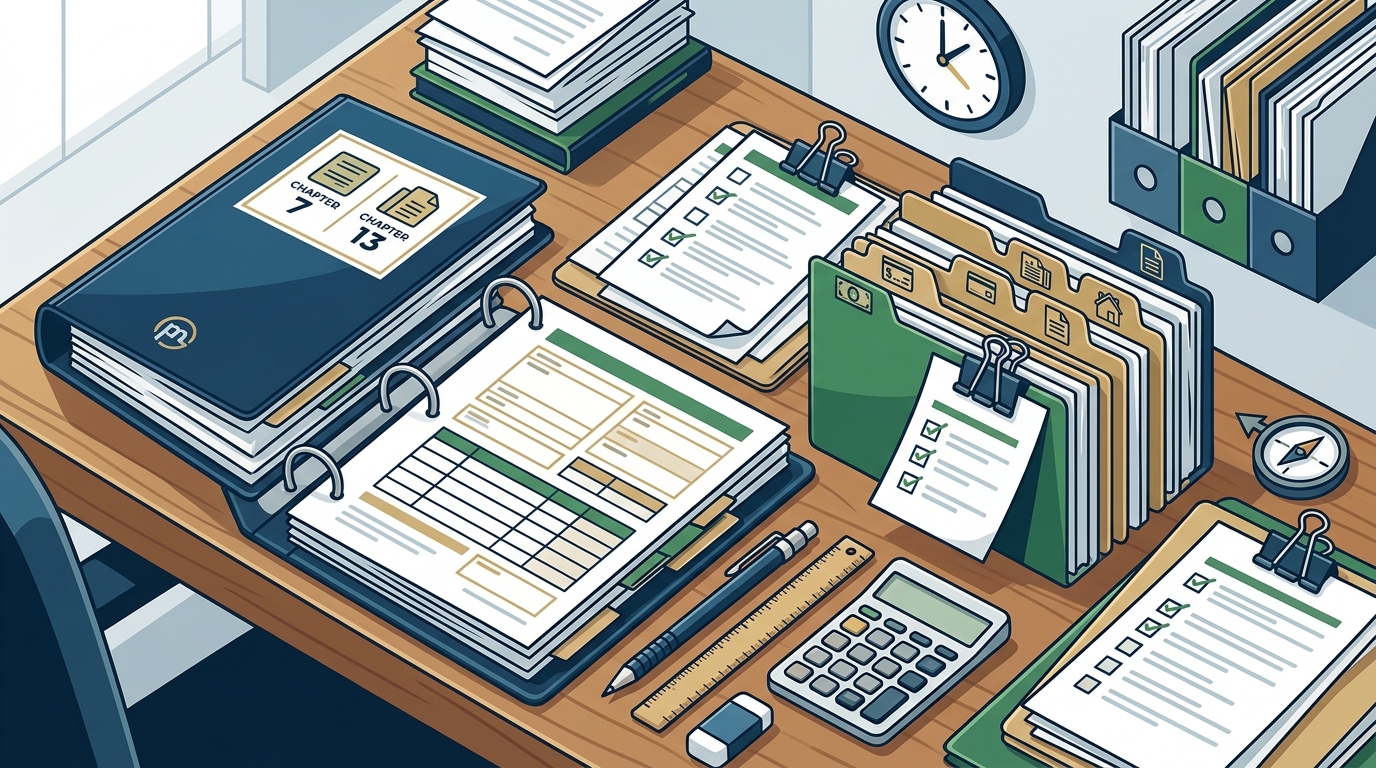
Filing your bankruptcy case requires completing specific legal forms. The petition is the official document that starts your case. You must fill out schedules that detail your assets, liabilities, and income. The statement of financial affairs asks about your recent transactions and legal issues.
You may need to provide additional forms based on your situation. These include statements of intention and monthly expense calculations. Our bankruptcy services include preparing all necessary forms with precision. Errors in these forms can lead to objections or dismissals. Review every section carefully before submission. Your attorney will verify that all forms align with your financial records.
Common Mistakes When Gathering Bankruptcy Documents
Avoiding common errors can save you time and money. One frequent mistake is submitting outdated bank statements. Courts require the most recent information to assess your current financial status. Another error is omitting debts or assets from your schedules. Full disclosure is required to receive a discharge of debts.
Failing to sign documents is also a critical error. Unsigned forms are considered incomplete and will be rejected. Visit our homepage to learn more about how we help clients avoid these pitfalls. Missing deadlines for document submission can also jeopardize your case. Keep a checklist to track your progress and ensure nothing is missed.
Key Takeaways
- Chapter 7 requires 6 months of income history and recent tax returns.
- Credit counseling must occur within 180 days before filing your petition.
- Bank statements must cover the last six months to verify cash flow.
- Real estate deeds and vehicle titles are essential for asset disclosure.
- Both credit counseling and debtor education courses are mandatory for discharge.
- Incomplete schedules are the leading cause of case delays and dismissals.
- Chapter 13 filers need a detailed repayment plan based on disposable income.
Frequently Asked Questions
What is the most important document to gather first?
Your recent tax returns are often the most critical document. They provide a comprehensive overview of your income and deductions. Courts use this information to verify your eligibility and calculate your repayment plan.
Can I file bankruptcy without a lawyer?
While it is possible to file without legal representation, it is highly discouraged. Bankruptcy laws are complex, and errors can lead to case dismissal. Our bankruptcy services ensure your case is handled correctly and efficiently.
How long does it take to gather all bankruptcy documents?
Gathering documents typically takes one to two weeks. This depends on the complexity of your financial situation. Organizing your records early can speed up the process significantly.
What happens if I miss a document deadline?
Missing a deadline can result in the trustee requesting additional information. In severe cases, your case may be dismissed. It is crucial to communicate with your attorney immediately if you encounter issues.
Do I need to list all my debts?
Yes, you must list all your debts, including those you intend to pay. Omitting debts can prevent them from being discharged. Full transparency is required to receive a fresh start.
How do I prove my income if I am self-employed?
Self-employed individuals must provide profit and loss statements. These documents show your business earnings and expenses. You may also need to provide business tax returns and bank statements.
What is the cost of filing for bankruptcy?
Filing fees vary by chapter and jurisdiction. Chapter 7 fees are generally lower than Chapter 13. Contact our team for a detailed breakdown of costs and payment options.
Can I keep my home if I file for bankruptcy?
You may be able to keep your home if you are current on your mortgage. Exemptions can also protect your equity. Your attorney will help you navigate these options to protect your property.
Start Your Bankruptcy Case Today
Do not let paperwork delay your financial freedom. Gather your documents and take the first step toward relief. Contact our team to schedule your consultation and begin your case with confidence. Our experienced attorneys are ready to guide you through every step of the process.