
Starting a bankruptcy case is a significant financial milestone that requires meticulous preparation. According to the United States Courts, over 600,000 bankruptcy petitions were filed in the United States in 2023, highlighting the widespread need for legal guidance in debt relief. Federal court data confirms that the majority of these cases involve individuals seeking relief from unsecured debt. Without the correct paperwork, your case can be dismissed, leaving you with legal fees and no debt relief. This guide outlines the essential documents you must gather to file successfully with PM Bankruptcy. (https pmbankruptcy com)
Phase 1: Financial Documentation
The foundation of any bankruptcy petition is a clear picture of your financial health. The court needs to verify your income, expenses, and assets to determine eligibility for Chapter 7 or Chapter 13 relief. The Consumer Financial Protection Bureau emphasizes that accurate income reporting is critical for the means test calculation. (Contact Us)
Pay Stubs and Income Verification
You must provide recent pay stubs covering the 60-day period prior to filing. If you are self-employed, you will need profit and loss statements. IRS guidelines require that self-employed individuals maintain clear records of business income and deductions. These documents prove your current monthly income, which is compared against the Pennsylvania median income to determine your chapter eligibility. (Customer Experience)
Bank Statements
Provide bank statements for all accounts for the last four months. This includes checking, savings, and money market accounts. The trustee will look for large deposits or transfers that might indicate asset hiding. The Executive Office for U.S. Trustees monitors these accounts closely to ensure compliance with bankruptcy laws. (Frequently Asked Questions)
Real Estate and Vehicle Titles
Include copies of all vehicle titles and real estate deeds. If you have a mortgage, provide the last few statements. These documents establish your equity in assets, which is crucial for determining what property you can keep under Pennsylvania exemption laws.
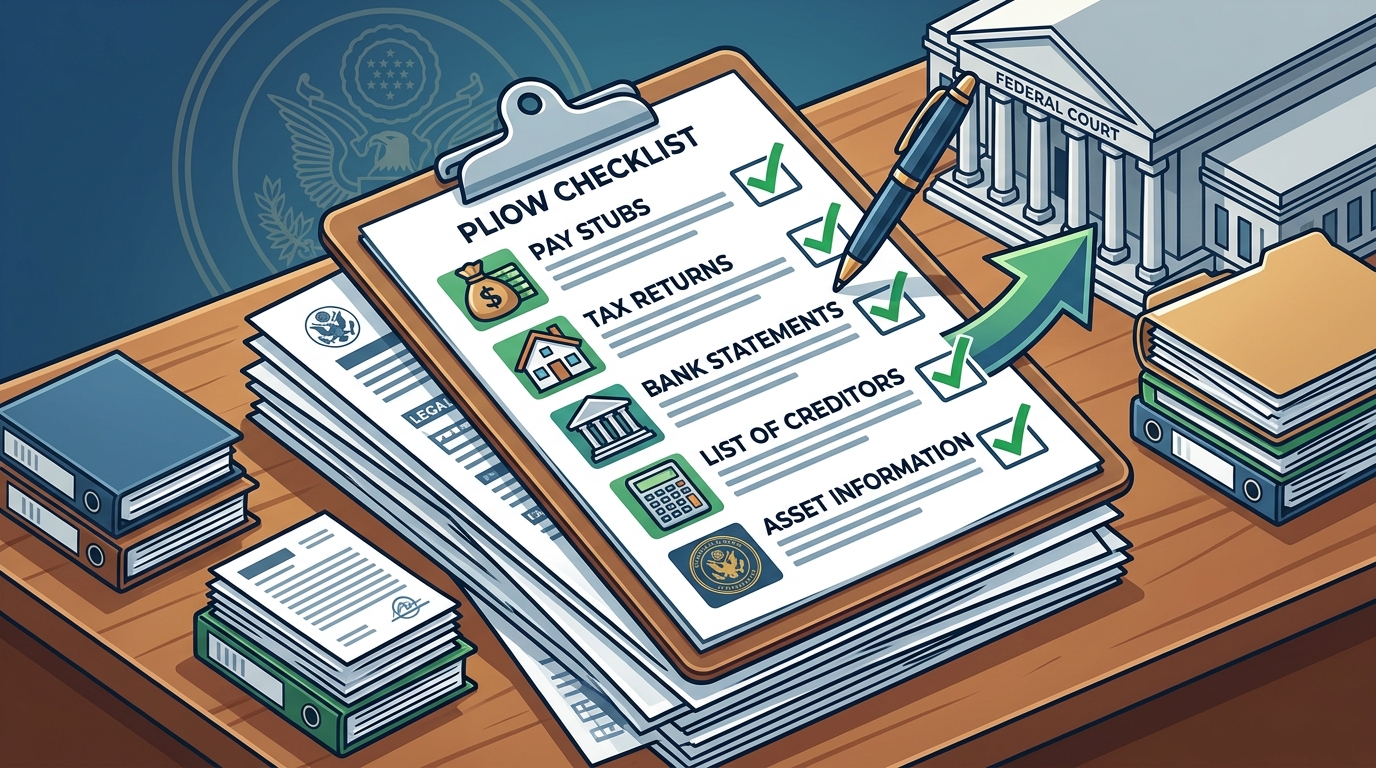
Phase 2: Creditor Details
Bankruptcy is a legal proceeding against your creditors. You must provide a complete and accurate list of everyone you owe money to. Missing a creditor can result in that debt remaining non-dischargeable, meaning you still owe it after your case closes.
Creditor Mailing Matrix
This is a spreadsheet containing the name and mailing address of every creditor. It must be formatted according to court standards. The U.S. Bankruptcy Court for the Middle District of Pennsylvania has specific formatting requirements for this matrix. Ensure that addresses are current to avoid notices being sent to old locations.
Recent Statements
For each creditor, provide the most recent statement showing the balance owed. This includes credit cards, medical bills, personal loans, and collection accounts. These statements verify the amounts you claim in your petition. The Federal Trade Commission notes that accurate debt reporting is essential for fair debt resolution.
Phase 3: Tax Return Requirements
Tax returns are a primary source of income verification for bankruptcy courts. The trustee will review your past filings to confirm your reported income matches your pay stubs and bank deposits.
Most Recent Tax Return
You must provide a copy of your most recent federal tax return. If you have not filed, you must file it before or immediately after your bankruptcy petition. IRS tax relief protocols may apply if you are in a declared disaster area, but standard filing deadlines still generally apply.
W-2s and 1099s
Include all W-2 and 1099 forms from the previous tax year. These documents provide a detailed breakdown of your income sources. Discrepancies between your tax returns and your bankruptcy schedules can raise red flags for the trustee.
Phase 4: Credit Counseling Certificates
Federal law requires you to complete credit counseling before filing. This is a mandatory step to ensure you are exploring all debt relief options.
Pre-Filing Counseling
You must complete a credit counseling course from an approved agency within 180 days before filing. The U.S. Courts website lists approved agencies that offer these courses online or by phone. You will receive a certificate upon completion, which must be filed with your petition.
Debt Repayment Plan
The counseling agency will help you create a debt repayment plan. Even if you do not follow the plan, the certificate is required. This step demonstrates to the court that you have sought professional advice before filing.
Phase 5: The Filing Process
Once you have gathered all documents, the next step is filing. PM Bankruptcy assists clients in organizing these materials and preparing the petitions for submission to the Middle District of Pennsylvania.
Review and Preparation
Our team reviews every document for accuracy. Errors in the petition can lead to delays or dismissal. We ensure that all exemptions are properly claimed under Pennsylvania law. Pennsylvania state court resources provide additional context on local legal procedures that may affect your case.
Filing the Petition
The petition is filed electronically through the court's system. You will receive a case number and a hearing date for the 341 meeting of creditors. Federal bankruptcy procedures outline the timeline for these hearings. Attend the meeting with your attorney to answer trustee questions.
Key Takeaways
- Income Verification: Pay stubs for the last 60 days are required to pass the means test.
- Tax Returns: Your most recent federal tax return must be provided to the trustee.
- Creditor List: A complete mailing matrix is essential to discharge all debts.
- Counseling: Pre-filing credit counseling is a mandatory federal requirement.
- Bank Statements: Four months of bank statements help prove your financial history.
- Asset Titles: Vehicle and property titles establish your equity and exemption claims.
- Legal Guidance: Working with PM Bankruptcy ensures accurate document preparation.
Frequently Asked Questions
How long does it take to gather bankruptcy documents?
Gathering documents typically takes one to two weeks. The most time-consuming parts are often tax returns and creditor statements. PM Bankruptcy helps streamline this process by providing checklists.
Can I file bankruptcy without a lawyer?
While possible, filing without legal assistance is risky. Errors in documentation can lead to dismissal. The National Association of Consumer Bankruptcy Attorneys recommends seeking professional help to navigate complex laws.
What happens if I miss a creditor?
If you miss a creditor, that debt may not be discharged. You must amend your petition to include them, which incurs additional fees. Accuracy is critical.
Do I need to provide tax returns from previous years?
Generally, only the most recent tax return is required. However, the trustee may request prior years if there are discrepancies. IRS bankruptcy tax guidelines clarify these requirements.
What is the 341 meeting?
The 341 meeting is a hearing where the trustee asks you questions about your petition. It is a standard part of the bankruptcy process. Federal court procedures govern the conduct of these meetings.
How do I get credit counseling?
You can complete credit counseling online or by phone through an approved agency. The certificate is valid for 180 days. The U.S. Trustee Program maintains a list of approved providers.
What if I am self-employed?
Self-employed individuals must provide profit and loss statements. Tax returns are also required. Small Business Administration resources offer guidance on financial documentation for business owners.
Contact PM Bankruptcy
Starting your bankruptcy case does not have to be overwhelming. PM Bankruptcy provides expert guidance to help you gather the right documents and file your petition correctly. We serve clients across Pennsylvania with a focus on Chapter 7 and Chapter 13 relief. Contact PM Bankruptcy today to schedule your consultation and take the first step toward financial freedom.