
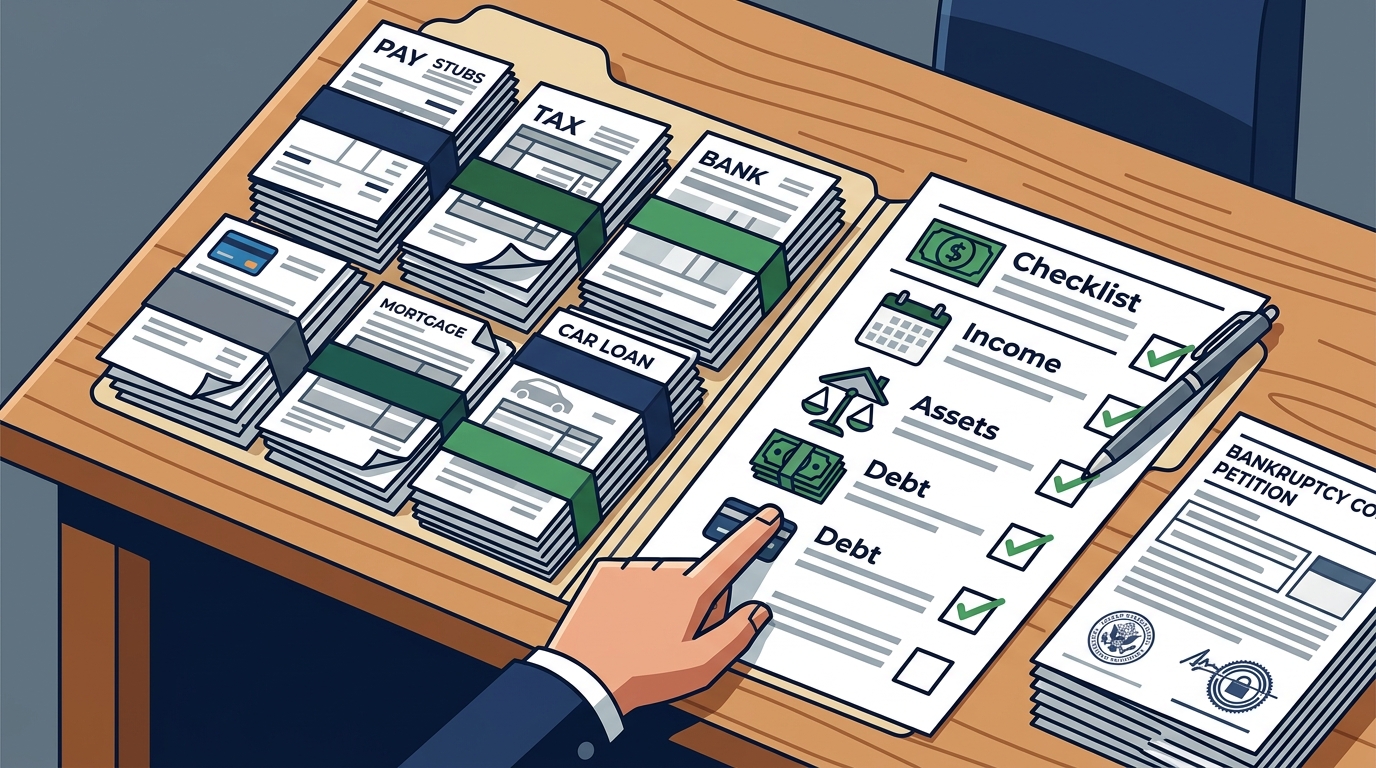
Starting a bankruptcy case is a significant financial milestone that requires meticulous preparation. According to the United States Courts, over 600,000 bankruptcy petitions were filed in the United States in 2023, highlighting the widespread nature of financial distress. Federal court data indicates that the majority of these filings are consumer bankruptcies, primarily Chapter 7 and Chapter 13. Navigating this process without the correct paperwork can lead to case dismissal, delayed discharge, or even allegations of fraud. This guide outlines the essential documents you must gather to ensure your bankruptcy petition is accurate, complete, and ready for filing. (Contact Us)
Creditor Information and Schedules
The foundation of any bankruptcy case is the accurate listing of every entity to whom you owe money. Bankruptcy law requires full transparency regarding your liabilities. Legal standards dictate that omitting a creditor can result in that debt being non-dischargeable, meaning you remain liable for it even after the bankruptcy process concludes. (Customer Experience)
Required Creditor Details
For each creditor, you must provide their full legal name, mailing address, and account number. This information must match exactly what appears on your most recent statements. Inconsistencies can cause the court to reject your schedules or delay the automatic stay, which protects you from collection actions. (Frequently Asked Questions)
Schedule A/B: Assets and Liabilities
Schedule A/B is the section of the bankruptcy petition where you list your personal property. This includes real estate, vehicles, bank accounts, investments, and household goods. You must also list your secured debts, such as mortgages and auto loans, in Schedule D. Unsecured debts, like credit cards and medical bills, go in Schedule E and F. Official bankruptcy forms provide the specific structure for these schedules. (About)
Financial History and Tax Returns
Your tax history provides a snapshot of your financial life over the past few years. The bankruptcy trustee uses this information to verify your income and identify any potential fraudulent transfers or hidden assets.
Recent Tax Returns
You are generally required to provide copies of your federal tax returns for the two most recent tax years. If you have filed extensions, you may need to provide the most recent return available. These documents help the trustee assess your ability to repay debts and determine if you have received any large refunds that should be included in your bankruptcy estate.
W-2s and 1099s
In addition to tax returns, you may need to provide W-2 forms and 1099s from the last two years. These documents verify your income sources and amounts. If you are self-employed, you may also need to provide profit and loss statements or business tax returns.
Income Verification and Pay Stubs
Proving your current income is critical for determining which chapter of bankruptcy you qualify for. In Chapter 7 cases, your income must fall below the median income for your state and household size. In Chapter 13 cases, your income determines your repayment plan amount.
Pay Stubs
You must provide pay stubs or other evidence of payment received within the 60 days before filing the bankruptcy petition. This includes wages, salaries, commissions, bonuses, and overtime. If you are unemployed, you must provide a statement of no income or evidence of any other financial support you receive.
Bank Statements
Bank statements for the last four to six months are typically required. These documents show your cash flow, including deposits, withdrawals, and recurring payments. They help the trustee verify your income and identify any large or unusual transactions that may need explanation.
Detailed Asset and Debt Lists
A comprehensive list of your assets and debts ensures that nothing is overlooked during the bankruptcy process. This list serves as the basis for your schedules and helps your attorney prepare for the 341 meeting of creditors.
Real Estate Documents
If you own real estate, you must provide the deed, mortgage statements, and any home equity loan documents. You will also need to provide an estimate of the current market value of your property. This information is crucial for determining your equity and whether you can exempt the property from the bankruptcy estate.
Vehicle Titles and Loans
For each vehicle you own, you must provide the title, registration, and loan documents. You will also need to provide the current value of the vehicle, which can be obtained from sources like Kelley Blue Book or NADA Guides. This helps determine if you can keep the vehicle and continue making payments.
Retirement and Investment Accounts
You must list all retirement accounts, such as 401(k)s, IRAs, and pensions, as well as any investment accounts. Most retirement accounts are exempt from the bankruptcy estate, but they must still be disclosed. Provide account statements and the current balance for each account.
Credit Counseling Certificates
Before filing for bankruptcy, you are required to complete a credit counseling course from an approved agency. This course helps you understand your financial situation and explore alternatives to bankruptcy.
Pre-Filing Counseling
You must complete the pre-filing credit counseling course and obtain a certificate of completion. This certificate must be filed with your bankruptcy petition. The course typically takes about 60 to 90 minutes and can be completed online or over the phone.
Debt Management Plans
If you are enrolled in a debt management plan, you must provide documentation of your enrollment and any payments made. This information helps the trustee assess your financial efforts and may impact your bankruptcy case.
Common Documentation Mistakes
Even with the best intentions, errors in documentation can derail your bankruptcy case. Being aware of these common pitfalls can help you avoid them.
Incomplete Creditor Lists
Omitting a creditor is one of the most serious mistakes you can make. If a creditor is not listed, their debt will not be discharged, and they may continue collection efforts. Always double-check your creditor list against your bank statements, credit reports, and loan documents.
Outdated Financial Information
Using outdated pay stubs or bank statements can lead to discrepancies in your income verification. Ensure that all financial documents are current and reflect your most recent financial situation.
Failure to Disclose Assets
Hiding assets or failing to disclose them can result in the dismissal of your case or even criminal charges. Be transparent about all your assets, including those you believe are exempt. Your attorney can help you determine which assets are exempt in your jurisdiction.
Key Takeaways
- Full Transparency: Disclose all creditors, assets, and debts to avoid dismissal or fraud allegations.
- Tax Returns: Provide federal tax returns for the last two years to verify income and assets.
- Income Proof: Submit pay stubs from the last 60 days and bank statements for the last 4-6 months.
- Credit Counseling: Complete pre-filing credit counseling and obtain the certificate of completion.
- Asset Valuation: Provide current values for real estate, vehicles, and other significant assets.
- Accuracy: Ensure all creditor information matches official statements to prevent delays.
- Professional Help: Work with an experienced bankruptcy attorney to navigate complex documentation requirements.
Frequently Asked Questions
What is the first document I need to file for bankruptcy?
The first document you need is the voluntary petition, which initiates the bankruptcy case. However, you must gather supporting documents like tax returns and pay stubs before filing.
How far back do I need to provide tax returns?
You typically need to provide federal tax returns for the two most recent tax years. If you have filed extensions, provide the most recent return available.
Can I file bankruptcy without a credit counseling certificate?
No, you must complete a pre-filing credit counseling course and obtain a certificate of completion before filing your bankruptcy petition.
What happens if I forget to list a creditor?
If you forget to list a creditor, their debt may not be discharged, and they can continue collection efforts. It is crucial to list all creditors accurately.
Do I need to provide bank statements for bankruptcy?
Yes, bank statements for the last four to six months are typically required to verify your income and financial transactions.
How do I determine the value of my assets?
You can determine the value of your assets using sources like Kelley Blue Book for vehicles, Zillow for real estate, and financial statements for investments.
What is the 341 meeting of creditors?
The 341 meeting is a mandatory meeting where the bankruptcy trustee and creditors can ask you questions about your petition and financial situation.
Contact PM Bankruptcy
Navigating the bankruptcy process can be overwhelming, but you do not have to do it alone. At PM Bankruptcy, we provide expert guidance and support to help you achieve financial relief. Our team understands the complexities of bankruptcy law and is dedicated to protecting your rights and interests. Contact us today to schedule a consultation and take the first step toward a fresh financial start. Visit pmbankruptcy.com to learn more about our services.