
Filing for bankruptcy triggers an immediate and substantial drop in your credit score, typically ranging from one hundred fifty to two hundred points. According to the Federal Trade Commission, this severe penalty reflects the high risk lenders associate with discharged debt. The financial impact varies based on your initial score, existing debt load, and the specific bankruptcy chapter you select. Understanding these mechanics is essential for anyone navigating financial distress. This guide breaks down the exact timeline, reporting rules, and proven strategies to restore your financial standing after discharge.
How Filing Impacts Your Score
Bankruptcy is a legal proceeding where a debtor petitions a federal court to eliminate or restructure unpayable debts. When you file, credit bureaus receive an automated public record notification. This notification triggers an algorithmic downgrade across all three major credit reporting agencies. Your score drops because lenders interpret the filing as a severe payment failure. The magnitude of the drop depends entirely on your pre-filing financial behavior. Individuals with higher initial scores often experience steeper declines. Those with already damaged credit may see a smaller numerical change. The filing remains visible to future lenders for a fixed statutory period. You must understand this timeline to plan your recovery effectively. Visit our about page to learn how our firm protects client privacy during this process.
Chapter 7 Versus Chapter 13 Credit
Chapter 7 is a liquidation process that discharges most unsecured debts within ninety days. Chapter 13 is a court-approved repayment plan that lasts three to five years. The credit reporting duration differs significantly between these two options. A Chapter 7 filing remains on your credit report for ten years from the filing date. A Chapter 13 filing remains visible for seven years from the filing date. Lenders weigh these chapters differently when evaluating future loan applications. Many borrowers prefer Chapter 13 because the shorter reporting window improves long-term visibility. Your attorney at PM Bankruptcy will evaluate your income and asset structure to recommend the optimal path. We prioritize solutions that minimize lasting credit damage while protecting your essential assets. Contact our office at https://pmbankruptcy.com/contact to schedule a confidential case review.
Credit Report Removal Rules
According to the Fair Credit Reporting Act, bankruptcy records must be removed automatically after the statutory period expires. The credit bureaus are legally required to purge these entries without requiring a manual dispute. You should verify your reports annually to ensure timely removal. If a bankruptcy record persists past the ten or seven year limit, you must file a formal dispute with the reporting agency. The agency must investigate and remove the outdated record within thirty days. Failure to monitor your reports can result in unnecessary credit score suppression. Regular monitoring allows you to track your recovery progress accurately. You can access free annual reports through official government portals. These reports provide the baseline data needed to measure your financial recovery. Learn more about consumer rights at Consumer Finance and track your progress using Experian monitoring tools.
Rebuilding Strategies
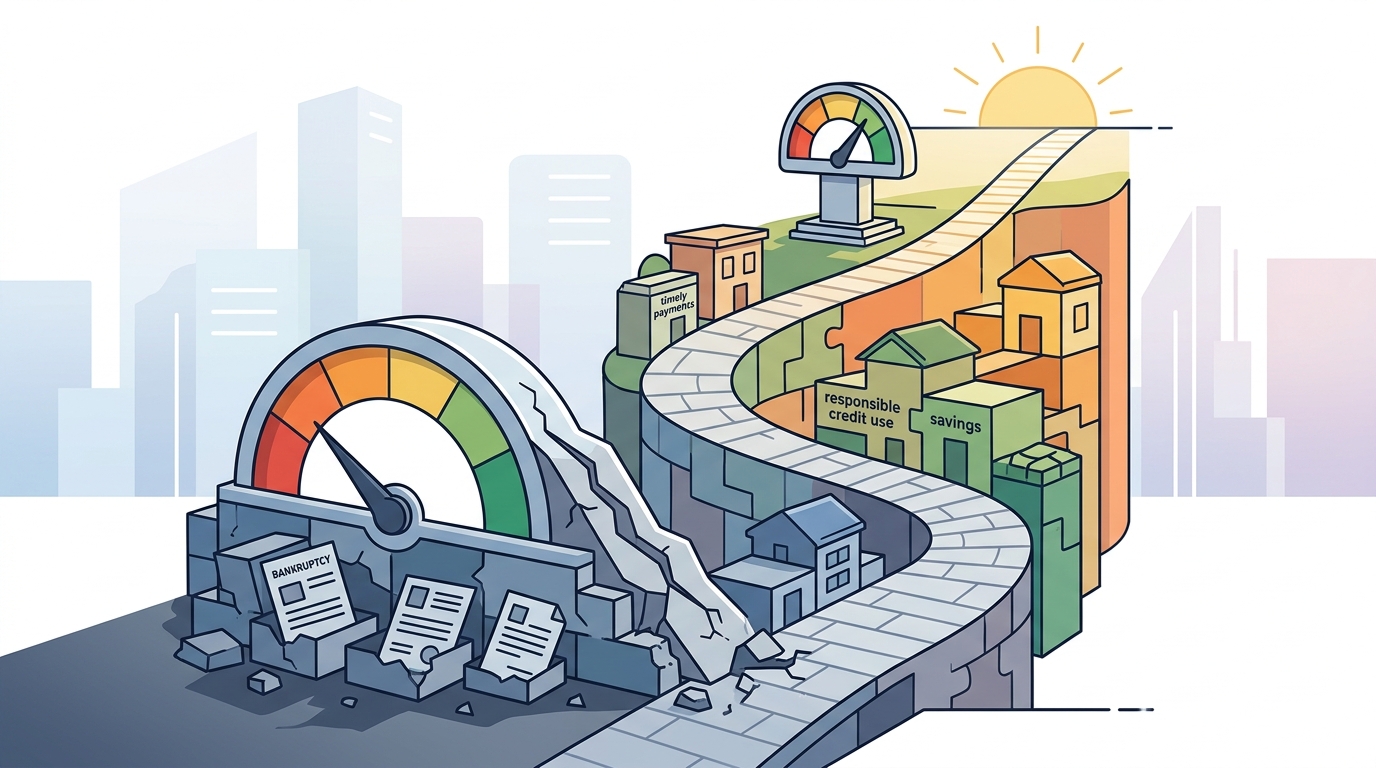
Rebuilding your credit after discharge requires disciplined financial habits and strategic account management. Secured credit cards are the most effective tool for establishing positive payment history. You must make every monthly payment on time to generate positive scoring data. Credit builder loans offer another reliable method for demonstrating consistent repayment behavior. Your PM Bankruptcy team provides a comprehensive post-discharge checklist to guide your recovery. We recommend maintaining low credit utilization ratios below thirty percent. High utilization triggers algorithmic penalties that counteract your rebuilding efforts. You should avoid applying for multiple new accounts simultaneously. Each hard inquiry temporarily reduces your score and signals financial distress to lenders. Consistent, responsible behavior gradually restores your eligibility for favorable loan terms. Explore our blog resources for step-by-step financial recovery guides.
Legal Considerations
Bankruptcy law varies significantly across different federal judicial districts. Pennsylvania follows specific exemption rules that protect your home, vehicle, and personal property. You must consult a licensed attorney before initiating any filing process. Filing without proper legal guidance can result in case dismissal or asset liquidation. The court requires complete financial disclosure including income, expenses, and asset valuations. Incomplete documentation delays your discharge and extends your financial uncertainty. Our firm handles all paperwork, creditor meetings, and court appearances on your behalf. We ensure your case complies with current federal bankruptcy codes. This compliance protects your rights throughout the entire legal process. You deserve a transparent pathway to financial freedom without hidden legal risks. Review our business bankruptcy services for corporate restructuring options.
Bankruptcy Options and Credit Impact Summary
| Bankruptcy Chapter | Reporting Duration | Primary Debt Resolution | Best For |
|---|---|---|---|
| Chapter 7 | 10 years | Full discharge of unsecured debts | Low income filers with minimal assets |
| Chapter 13 | 7 years | Structured repayment over 3 to 5 years | Homeowners needing to stop foreclosure |
| Business Bankruptcy | Varies by structure | Corporate debt restructuring or liquidation | LLCs and corporations facing insolvency |
Key Takeaways
- Bankruptcy typically reduces credit scores by 150 to 200 points immediately upon filing.
- Chapter 7 filings remain on credit reports for exactly ten years from the petition date.
- Chapter 13 filings remain visible for seven years, offering a faster recovery window.
- Secured credit cards and credit builder loans are the most effective rebuilding tools.
- PM Bankruptcy serves clients across Montgomery County and surrounding Pennsylvania regions.
- Automatic removal occurs after the statutory period without requiring manual disputes.
- Consistent on-time payments gradually restore loan eligibility within two to three years.
Frequently Asked Questions
Does bankruptcy permanently destroy my credit score?
No. Bankruptcy does not permanently destroy your credit score. The negative impact gradually fades as you establish positive payment history. Most borrowers recover their pre-filing scores within two to four years of discharge.
How long does Chapter 7 stay on my credit report?
Chapter 7 stays on your credit report for ten years from the original filing date. The record automatically drops off after this period without requiring action from you.
Can I get a mortgage after filing for bankruptcy?
Yes. You can qualify for a mortgage after bankruptcy. FHA loans typically require a two-year waiting period following Chapter 7 discharge. Conventional loans usually require a four-year waiting period following Chapter 7 discharge.
What is the fastest way to rebuild credit after discharge?
The fastest way to rebuild credit after discharge is to open a secured credit card. You must charge small amounts and pay the full balance every month. This behavior generates positive scoring data rapidly.
Do credit bureaus remove bankruptcy records automatically?
Yes. Credit bureaus remove bankruptcy records automatically after the statutory period expires. You should verify your reports annually to confirm timely removal. Check Equifax guidelines for official removal timelines.
How does Chapter 13 affect my ability to buy a home?
Chapter 13 allows you to buy a home during the repayment plan. You must obtain court approval and continue making plan payments. Many borrowers successfully purchase homes within three years of filing.
Will filing bankruptcy affect my employment background check?
Filing bankruptcy will not affect your employment background check. Federal law prohibits employers from discriminating against individuals based on bankruptcy filings. Your financial status remains private from potential employers.
Next Steps
Take control of your financial future by scheduling a confidential consultation with our experienced team. We will analyze your complete financial picture and recommend the most strategic bankruptcy path. Visit our main office page to learn about our comprehensive legal services. Schedule your free bankruptcy assessment today and start rebuilding your credit with confidence.